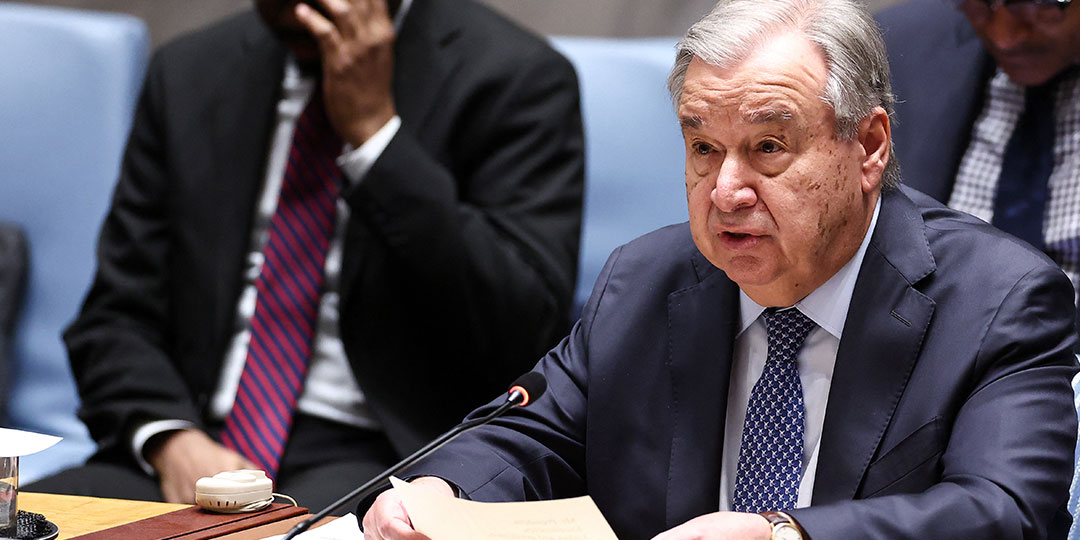

UN Secretary-General António Guterres condemned on Saturday an attack on the United Nations Interim Force in Lebanon (UNIFIL) in the country’s south that wounded three Ghanaian peacekeepers. The attack occurred Friday at the Quozah position in southwestern Lebanon amid intense clashes between Hezbollah and Israeli forces.
Ghana filed a formal complaint with the United Nations, demanding the identification and prosecution of those responsible. Accra described the attack as a grave violation of international law that amounts to a war crime, since it targeted UN personnel protected under international conventions.
The attack comes as the broader U.S.-Israeli conflict with Iran expands into Lebanon, following Hezbollah rocket fire into Israel in retaliation for the killing of Iranian Supreme Leader Ayatollah Ali Khamenei. Israel has responded with intensive air strikes on southern Lebanon and Beirut’s southern suburbs, as well as deploying ground forces to the south.
Details of the Attack and Injuries
The attack on UNIFIL headquarters occurred Friday at the Quozah position in southwestern Lebanon, where Ghanaian soldiers were positioned during intense exchanges of fire between Hezbollah and Israeli forces. Three peacekeepers sustained serious wounds in the incident.
According to a statement by UN Spokesman Stéphane Dujarric: “The Secretary-General condemns the incident that occurred on Friday, March 6, in which three Ghanaian peacekeepers belonging to UNIFIL were wounded at their position in Quozah, southwest of the country, during heavy exchanges of fire.”
The UN’s initial statement did not definitively identify which party was responsible for the attack, leaving the matter open to investigation. However, Lebanese President Joseph Aoun directly accused Israel of targeting the forces, while UNIFIL said it would conduct a full investigation into the incident.
The location of the attack in an active combat zone, combined with the intensity of fighting in the area, underscores the increasingly precarious situation facing international peacekeeping personnel in Lebanon.
Violation of International Law and Diplomatic Immunity
Ghana and the United Nations characterize the attack as a serious breach of international law and conventions designed to protect UN peacekeeping personnel. In its formal complaint, Ghana demanded “the identification and prosecution of those responsible, as the attack constitutes a grave violation of international law, amounts to a war crime, and represents an assault on the protection afforded to UN peacekeeping personnel.”
UN personnel deployed in peacekeeping missions enjoy special protection under international treaties, and they cannot be targeted or attacked under any circumstances. Guterres emphasized the need to “respect the security and safety of UN staff and property at all times” and stressed “the obligation to respect the inviolability of UN premises.”
These violations point to the deteriorating security situation in southern Lebanon and the failure of warring parties to observe international humanitarian law, particularly regarding the protection of neutral international forces.
Role of UNIFIL and Peacekeeping Operations
UNIFIL has been deployed in southern Lebanon since 1978, operating as a buffer force between Lebanon and Israel. The force comprises soldiers from various nations, including Ghanaian troops, working under the UN flag to maintain peace and stability in the region.
Following the ceasefire agreement reached in November 2024 between Israel and Hezbollah, UNIFIL expanded its role to support the Lebanese Army in implementing a plan to disarm the militant group. The force now serves as monitor of UN Security Council Resolution 1701, which formed the basis for the ceasefire accord.
Despite this crucial role, peacekeeping forces have faced violations from both sides of the conflict over the years. The attack on Ghanaian soldiers reflects a dangerous deterioration in respect for international forces by warring parties. As fighting intensifies, these troops face increasing risk of cross-fire and deliberate targeting.
Broader Context of Lebanon Conflict
The U.S.-Israeli conflict with Iran has now extended into Lebanese territory following Hezbollah’s rocket barrage into Israel Monday in retaliation for Khamenei’s assassination. Israel responded with intensive bombing campaigns against southern Lebanon and Beirut’s southern suburbs, then deployed ground forces to the south.
These military operations effectively nullified the ceasefire agreement that had brought relative calm to the region since November 2024. The area has become an active theater of war, making it increasingly difficult for international peacekeeping forces to maintain neutrality and safety.
The attack on UNIFIL personnel reflects the severity of the current situation and the warring parties’ disregard for the presence of neutral international forces. Escalating hostilities have elevated the risk of anyone not directly engaged in combat becoming a casualty of warfare.
UN Calls for Immediate De-escalation
UN Secretary-General Guterres called on all warring parties to achieve “an immediate cessation of hostilities and full respect for their obligations under UN Security Council Resolution 1701.” Dujarric emphasized that “the United Nations urges all parties to immediately de-escalate.”
This appeal reflects the international organization’s efforts to prevent the region from sliding into wider regional conflict. However, the prospects for success appear limited given current conflict dynamics and the rapid escalation of hostilities.
The UN also demanded respect for “the inviolability of UN premises” and “the security and safety of its personnel” by all parties. However, the battlefield reality suggests repeated disregard for these warnings by armed factions and military forces.
Impact on Peacekeeping Operations and Security Challenges
Escalating conflict compounds the challenges facing UNIFIL personnel in the region. It becomes increasingly difficult for UN soldiers to maintain neutrality amid intense combat operations. The attack on Ghanaian troops raises serious questions about the international force’s ability to execute its mission safely.
Continued attacks on peacekeeping forces could prompt some nations to withdraw from the mission, weakening UNIFIL’s strength and reducing its effectiveness. There have been recurring concerns that international troops could become hostages or casualties in a conflict that does not directly involve them.
For nations like Ghana that contribute peacekeeping forces, the mounting dangers pose difficult decisions about the sustainability of their deployment and the protection of their soldiers serving under the UN banner.
Investigation and Accountability Questions
The identity of those responsible for the attack remained unclear in initial UN statements. However, Lebanese President Joseph Aoun directly accused Israel of targeting the forces.
UNIFIL announced it would conduct a comprehensive investigation into the incident to determine which party was responsible and the exact circumstances of the attack. This investigation will be crucial in understanding whether the strike was intentional or resulted from the confusion and chaos typical of active combat zones.
Historically, UNIFIL troops have suffered similar incidents over the decades, coming under fire from both sides of the conflict. Yet the recurrence of such attacks reflects a troubling and growing disrespect for international forces by warring parties, undermining the entire peacekeeping mandate.
Conclusion:
The attack on Ghanaian UNIFIL soldiers constitutes a grave violation of international law and humanitarian standards. The UN and Ghana’s insistence on accountability reflects commitment to international justice and humanitarian law. However, without effective enforcement mechanisms, victims may be left without justice. The attack occurs amid dangerous escalation threatening peace and stability across the Middle East and underscores the urgent need for an immediate ceasefire and respect for international law by all parties to the conflict.