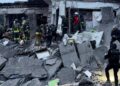
The death toll from sudden floods and landslides that swept across border areas between Nepal and China’s Tibet region has climbed to 547, with 1,437 people injured, according to Nepali authorities. Rescue teams and security forces are continuing search operations and recovering bodies in some of the worst-hit areas, especially around the Bhote Koshi River in Rasuwa district, where flash floods caused extensive destruction.
The disaster is among the most severe to hit the country in recent months. Officials are increasingly concerned about the fate of those still missing, while families continue searching for loved ones and emergency crews work to restore access to isolated communities.
Large-Scale Rescue and Recovery Operations
Police and Army Mobilized
Nepali police said 4,473 officers have been deployed in response to the disaster, which was triggered by powerful flash floods in several areas, especially along the Bhote Koshi River in Rasuwa. The army is also continuing search, rescue, and body recovery operations, as fears grow over the number of missing people.
Earlier, the army had sent 1,600 soldiers to assist with rescue work, emergency aid delivery, and the management of temporary shelters for displaced residents. With the latest reinforcements, the number of military personnel involved in rescue and relief efforts has risen to 2,800.
Roads Washed Away, Villages Cut Off
The floods and landslides washed away roads and isolated villages, making relief work more difficult. Teams on the ground are trying to clear access routes and open humanitarian corridors, but many affected areas remain hard to reach because of major infrastructure damage.
International Aid and Humanitarian Support
EU Announces Emergency Funding
On the international front, the European Union announced 2 million euros, or about $2.3 million, in humanitarian aid for flood victims. The funds are meant to meet urgent needs in health care, food, shelter, and clean water, as the humanitarian situation continues to deteriorate.
EU Crisis Management Commissioner Hadja Lahbib said the floods washed away roads and cut off villages, while families continue searching for missing relatives. She added that the disaster hit areas that were still recovering from earlier emergencies, making the situation even more difficult.
Impact on About 93,000 People
The Red Cross estimated that the landslides and flooding in the Himalayas have directly affected about 93,000 people, all of whom now need urgent humanitarian assistance. Relief officials have also warned of the risk of more flooding, adding pressure to rescue teams and local authorities.
Foreign Tourists Rescued Amid Ongoing Search Efforts
117 Foreign Tourists Saved
Nepal has also resumed rescue operations after a brief pause caused by rising river levels. Authorities said 117 foreign tourists have now been rescued from the disaster zone, including citizens of India, China, South Korea, the United States, and Italy, according to the Kathmandu Post.
The operations were temporarily suspended because rising water levels in the rivers posed a danger to both rescuers and local residents. Search teams are still working to locate those missing, as the country faces a humanitarian crisis of rare scale.
Diplomatic Missions Help Identify Missing Nationals
Foreign diplomatic missions, including the Russian embassy, are coordinating with local authorities to locate missing nationals. Officials say 8 Russian citizens are still missing based on the latest updates. Health officials have also warned of the risk of infectious disease outbreaks due to contaminated drinking water in the affected areas.
The Himalayas Remain Highly Vulnerable
Climate-Driven Risk
The Himalayas, which stretch across Nepal, India, China, and Bhutan, remain among the world’s most vulnerable regions to floods and landslides. Rising temperatures in the area are increasing faster than in many other parts of the world, according to climate-related reports, making the region more exposed to sudden storms, flash floods, and landslides.
This vulnerability is made worse by population growth and, in some places, weak infrastructure in mountainous areas.
Conclusion:
Nepal is facing one of its worst recent natural disasters, with the combined flood and landslide death toll now at 547 and injuries at 1,437. Search and rescue operations are ongoing, backed by domestic and international aid, while the risk of further flooding and disease outbreaks remains high due to damaged infrastructure and contaminated water supplies.