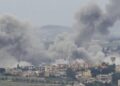

Israel’s military announced it had unleashed a new “wave of strikes” on Tehran late Tuesday, shortly after explosions were heard in the Iranian capital. The operation came as Iran launched what it described as the “most intense and heaviest” missile barrage since the conflict began, targeting Israeli cities including Tel Aviv and Haifa, as well as US military installations across the Gulf region.
The escalating exchanges represent a dramatic intensification of the US-Israeli led conflict with Iran that began on February 28. Both sides are now conducting simultaneous large-scale military operations, signaling that the conflict remains far from resolution despite statements suggesting possible negotiations.
Iran Launches Major Missile Offensive Against Israeli and US Targets
Iran’s Revolutionary Guards conducted what state media described as a three-hour missile barrage, claiming it represented the “most intense and heaviest” attack since the war’s start. The strike targeted multiple Israeli cities, with the broadcast stating that missiles were fired at Tel Aviv, Haifa, and areas described as “West Jerusalem,” referring to the sections of the contested city under full Israeli control.
Israel’s military confirmed it detected missiles heading toward the country and immediately activated its air defense systems. AFP journalists in Jerusalem reported hearing air raid sirens and explosions in the distance, confirming the intensity of the incoming fire.
Simultaneous Targeting of US Military Infrastructure
The Iranian barrage extended beyond Israeli territory to strike US military positions across the region. State broadcaster IRIB reported that the missile salvo targeted “numerous US targets in Erbil” located in Iraqi Kurdistan and struck the US Navy’s Fifth Fleet base in Bahrain.
This coordinated targeting of both Israeli and American positions underscores Iran’s strategic approach of treating the US and Israel as joint combatants in the conflict. The breadth of targets across multiple countries demonstrates the expanded geographic scope of the war compared to previous regional conflicts.
Israeli Strikes Target Tehran Infrastructure
Israel’s military announced it had launched strikes against Iranian targets in Tehran, with the operation described as “an additional wave” following earlier attacks. The timing of the Israeli strikes, announced shortly after explosions were heard in the Iranian capital, suggests rapid decision-making and potential pre-planned contingency operations activated in response to Iranian actions.
The strikes specifically targeted what Israel characterized as “terror regime targets,” employing language consistent with official Israeli framing of the Iranian government and military installations.
Escalating Cycle of Retaliation
The pattern of tit-for-tat attacks reflects the entrenched nature of the current conflict. Iran launches missiles, triggering Israeli air defense activations and Israeli retaliatory strikes. These Israeli operations prompt additional Iranian responses, creating a cycle of escalation with no clear off-ramp for de-escalation.
This dynamic contradicts earlier statements from US officials, including President Trump, suggesting the conflict might be brief and subject to quick resolution. The sustained intensity of operations on both sides indicates deeper strategic commitments than initially portrayed.
US Military Casualties Mount as Operations Intensify
The Pentagon disclosed that approximately 140 US military personnel have been wounded in attacks since the conflict’s start on February 28. Pentagon spokesman Sean Parnell stated that “the vast majority of these injuries have been minor, and 108 service members have already returned to duty.”
However, the statement also revealed that eight service members remain listed as severely injured and are receiving “the highest level of medical care.” Additionally, seven US military personnel have been killed in Iranian attacks since the conflict began, with six deaths occurring in Kuwait and one in Saudi Arabia.
Changing Casualty Dynamics
Pentagon chief Pete Hegseth noted that US military strikes against Iran are intensifying while the volume of drones and missiles launched by Iran has “dramatically decreased.” This shift suggests that Iranian air defense systems may be degraded from earlier strikes, or that Iran is adopting more conservative tactics with its limited remaining missile and drone inventory.
The decline in Iranian missile volleys does not appear to have reduced the destructive potential of individual strikes, as both Israel and Gulf states continue reporting significant defensive efforts required to intercept incoming threats.
Iran Rejects Ceasefire as Conflict Deepens
Mohammad Bagher Ghalibaf, the speaker of Iran’s parliament and a former top commander in the Revolutionary Guards, stated unambiguously that Iran is “not seeking a ceasefire” in the conflict with the United States and Israel.
“We believe the aggressor must be punished and taught a lesson that will deter them from attacking Iran again,” Ghalibaf wrote in an English-language statement on social media. His remarks represent an official position from a key figure in Iran’s political hierarchy, particularly significant given his role as a successor figure following the death of former Supreme Leader Ali Khamenei.
Strategic Implications of Iran’s Hardline Position
Ghalibaf’s explicit rejection of ceasefire discussions signals that Iran’s leadership is committed to sustained military operations rather than diplomatic resolution. His characterization of the US and Israel as “aggressors” requiring “punishment and a lesson” indicates Iranian strategic intent extends beyond immediate defensive operations to include broader deterrence objectives.
The statement contradicts any perception that the conflict could be resolved through quick negotiations or diplomatic channels, suggesting instead that both sides are preparing for prolonged military engagement with no clear timeline for termination.
Regional Impacts and Casualty Toll
New attacks were reported across the Gulf region early Wednesday, with Saudi Arabia and the United Arab Emirates reporting interceptions of missiles and drones from Iranian forces. The sustained attacks on multiple countries in the region demonstrate that this conflict extends far beyond Israeli-Iranian bilateral tensions.
The geographic spread of attacks and casualties across multiple nations reflects the way the US-Israeli military campaign against Iran has transformed into a regional proxy conflict, with Iran targeting not only Israeli and US facilities but also the Gulf states perceived as hosting or supporting the US military presence.
Key Escalation Points:
Israel announces strikes on Tehran while Iran fires missiles at Israeli cities
Iran claims “most intense” barrage lasting three hours
Israeli air defenses activated to intercept incoming missiles
US military reports 140 personnel wounded, seven killed
Pentagon reports Iranian missile volume “dramatically decreased”
Iran’s parliament speaker explicitly rejects ceasefire talks
Multiple countries report defensive interceptions across Gulf region