
Thousands of Iranians living in Dubai face an increasingly complex and delicate situation following the outbreak of conflict between Iran and the US-Israeli coalition in late February. The Iranian community in Dubai, which has built lives and investments over decades in this Gulf commercial hub, now finds itself navigating a difficult position caught between loyalty to their homeland and reliance on a state experiencing heightened diplomatic tensions with Tehran. Traders, businessmen, and residents describe their current circumstances as “sensitive” amid the fallout from Iranian missile strikes on the Emirates and the accompanying economic and security repercussions.
The situation facing this community reflects a deeper struggle over multiple identities and divided allegiances at a critical moment in the region’s history.
Economic Activity Declines Amid Conflict
Morteza Asadi, an Iranian merchant, sits in his grocery store in the heart of a historic neighborhood in Dubai, expressing dismay over the sharp decline in economic activity since Iran launched retaliatory strikes against the city he considers his own. Asadi describes the situation facing Iranians in the emirate as “sensitive,” given deteriorating relations between their adopted home and their native country. While US-Israeli airstrikes on Iran threaten “dark days” ahead for their homeland, Tehran’s campaign across the Gulf region imperils their businesses and livelihoods in the area.
With customers retreating from shops and markets due to security concerns, Iranian traders express mounting anxiety about their economic survival. Asadi characterizes the situation with a metaphor: “It is as if you are invited to someone’s house, and then your child harms your host’s son.” This reflects the awkwardness and distress felt by Iranians navigating Dubai’s current climate.
Multiple Economic Sectors Face Slowdown
Several sectors have experienced noticeable contraction:
Retail and commerce: Sharp drops in customer traffic and consumer spending
Real estate: Decline in property transactions and investment activity
Tourism and hospitality: Reduced tourist arrivals and lower revenues
Financial services: Possible freezing of Iranian assets held in the Emirates
An Established Community with Deep Historical Roots
Dubai hosts a substantial and long-established Iranian community, with some members arriving as early as the 1920s in search of better economic opportunities. Morteza Asadi’s father was among these early pioneers who chose Dubai as an economic and financial alternative, offering relative stability and security. The unwritten rule governing this community for decades has been clear: stay out of politics and focus on business and commerce. Yet, as Asadi laments: “Unfortunately, politics catches up with you sometimes.” Despite considering Dubai “somewhat my city,” the broader political dynamics of the region do not permit pure economic isolation.
The fundamental principle has always been non-interference in politics, but regional developments have shattered this informal covenant. Asadi, like many in the community, hopes for a swift end to the conflict that erupted following the US-Israeli attack on Iran on February 28.
Iran Retaliates Against the Emirates
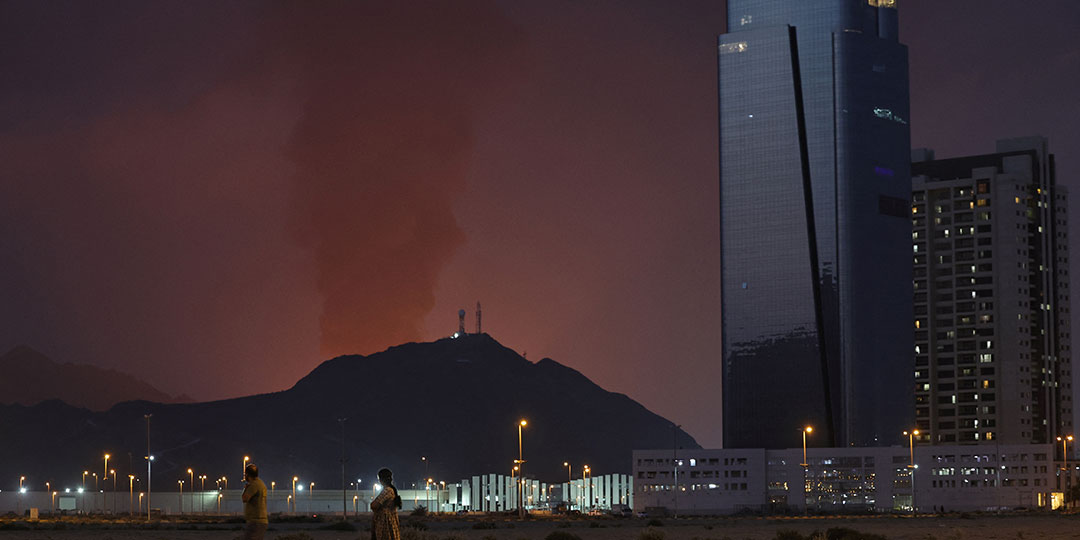
Iran responded to the US-Israeli strikes on its territory on February 28 by launching missiles and drones at the United Arab Emirates. These attacks targeted symbolic and sensitive locations including Dubai International Airport, the artificial Palm Jumeirah island, and the iconic Burj Al Arab hotel.
According to UAE authorities, air defenses successfully intercepted most missiles and drones, though six people were killed, including four civilians and two military personnel. Iranian drones also struck the UAE consulate in the Kurdistan region of Iraq, causing material damage but no casualties reported.
UAE’s Diplomatic and Political Response
The Emirates has responded to the attacks with firm diplomatic measures:
Diplomatic closure: Shut its embassy in Tehran and recalled its ambassador
Defensive posture: Ruled out participation in any retaliatory strikes against Iran at present
Financial considerations: Studying the possibility of freezing billions of dollars in Iranian assets (according to Wall Street Journal reporting)
International condemnation: Condemned the attacks as a “blatant violation” of international law and norms
Economic Ties Remain Central Despite Tensions
Despite current diplomatic tensions, the UAE has maintained robust economic ties with Iran over the years, with Iran serving as the second-largest trading partner for the Emirates. Dubai’s favorable business environment and low tax rates have made it an attractive haven for Iranian investors, particularly those seeking to circumvent international sanctions imposed on the Islamic Republic.
According to research by the American think tank Atlantic Council, Dubai has played a pivotal role in facilitating such investments for years. However, the current crisis threatens to unravel these deep commercial connections built over decades of mutual economic benefit.
Voices from the Community: Between Survival and Belonging
Ali Akbar, owner of a small restaurant that has operated since 1991 in a working-class neighborhood in Dubai, reports a noticeable decline in customer numbers. Yet he maintains his optimism, explaining in Arabic: “Iran has no problem with the Emirates. The problem is with the Americans. Emiratis are our brothers.” He adds with hope: “God willing, all of this will end soon.”
This sentiment reflects the community’s attempt to separate their stance on Iranian politics from their relationship with their host nation, seeking to weather the current crisis through this distinction.
Young Iranians Between Fear and Hope
Sorush Halali, a 34-year-old Iranian-Belgian actor, chose to settle in Dubai a year ago. He admits to feeling fear at times, but places matters in context when he witnesses bombardment of his homeland. He speaks of the “pain” of exile and his parents, who left Iran over two decades ago seeking security and stability, now pleading with him to return to Belgium.
Halali states his position clearly: “I do not believe bombs can bring freedom and democracy… though I fully understand how difficult the situation is for Iranians.” He concludes with conviction: “But I do not believe war is a solution. For anyone.”
The young actor’s stance reflects a struggle experienced by a generation of exiled Iranians: a desire for peace and principled rejection of war as a solution, combined with acute awareness of their homeland’s suffering. This internal conflict defines the consciousness of many in the diaspora.
Complex Dynamics: Multiple Identities and Divided Allegiances
The predicament of Dubai’s Iranian community reflects a broader phenomenon related to migration, investment, and belonging in the region. Iranians who have built lives in the Emirates cannot easily separate their love for their native country from their respect for the host state that provided stability and economic opportunity.
This complexity means the current regional crisis affects more than just economics and business. It touches the personal and family identities of the entire community. For many, the question is no longer simply about managing two countries but about reconciling conflicting loyalties in a moment when that reconciliation seems impossible.
The social fabric that once allowed for this balance has torn, forcing individuals to make difficult choices or remain suspended in uncomfortable limbo. Some consider returning to Iran or moving to Europe. Others cling to the hope that the crisis will pass and normalcy will return. Most simply endure, day by day, uncertain about the future.
Frozen Assets and Economic Consequences
Beyond the direct impact of reduced commerce, the community faces the specter of financial freezes. According to Wall Street Journal reporting, UAE authorities have studied the possibility of freezing Iranian assets in the country, though no decision has been made. Such a move would devastate investors and business owners who have parked capital in Dubai for years, viewing the emirate as economically secure.
The uncertainty itself creates paralysis. Iranian entrepreneurs cannot expand businesses, make new investments, or plan for the future. The temporary nature of this crisis remains unclear, with no timeline for resolution visible on the horizon.
Conclusion:
The Iranian community in Dubai stands at a crossroads, facing unprecedented uncertainty and challenge. Caught between economic commitments to the Emirates and emotional attachment to Iran, this community navigates a sensitive period that may fundamentally alter their futures and prospects in the Gulf. While some harbor hopes that the crisis will resolve quickly, reality suggests that the regional conflict has permanently shifted the economic, security, and emotional calculations for millions across the region. The question remains not whether this crisis will end, but whether the bonds of trust and economic partnership that once held the Iranian diaspora in the Gulf will ever fully recover.