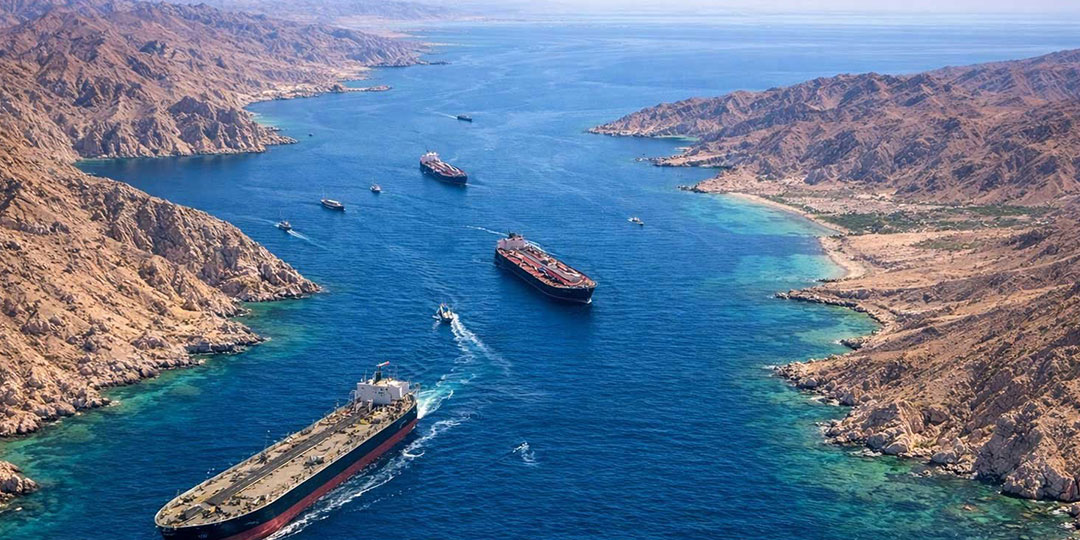

Iran announced on Saturday the closure of the Strait of Hormuz, a vital global energy transit route, citing what it described as a US violation of a memorandum of understanding. The announcement was quickly followed by US statements denying any confirmed disruption to maritime traffic in the strategic waterway.
The Strait of Hormuz is one of the world’s most critical shipping lanes, with a significant share of global oil exports passing through it daily. Any confirmed Strait of Hormuz closure would have immediate implications for energy markets and international trade.
Iran Declares Closure
According to a statement from Iran’s Khatam al-Anbiya Headquarters, the Strait of Hormuz “will be closed due to America’s breach of the first clause of the memorandum of understanding.” The statement was carried by the Iraqi News Agency (INA).
Separately, the Iranian Revolutionary Guard Navy warned vessels against approaching the Strait. In its statement, the Navy said:
“Ships must not approach the Strait of Hormuz, otherwise their security will be at risk.”
The Guard added that the closure was in response to what it described as Israeli actions in Lebanon and US violations of ceasefire commitments.
US Denies Evidence of Closure
In Washington, US Vice President JD Vance said there is “no evidence that Iran has closed the Strait of Hormuz.”
US Central Command (CENTCOM) also issued a statement confirming that maritime traffic continued through the waterway. According to CENTCOM, 55 vessels transited the Strait carrying more than 17 million barrels of oil to global markets.
CENTCOM further stated that “vessel traffic in the Strait of Hormuz increased today as we continue to support freedom of navigation,” adding that US forces remain “in a state of readiness to ensure compliance with all aspects of the agreement with Iran.”
Strategic Importance of the Strait of Hormuz
The Strait of Hormuz connects the Persian Gulf with the Arabian Sea and the Indian Ocean. It is a primary route for oil exports from Gulf producers to international markets.
Key implications of any confirmed closure would include:
– Immediate volatility in global oil prices
– Disruptions in energy supply chains
– Increased regional military tensions
– Direct economic impact on energy-importing nations
Despite Iran’s announcement, US data indicating continued vessel transit suggests that shipping had not been fully halted at the time of the statements.
Political Signal or Operational Action?
The divergence between Tehran’s declaration and Washington’s denial leaves the situation unclear. Two possibilities emerge:
The announcement may serve as a political pressure tactic amid escalating regional tensions.
Limited military positioning may have occurred without a full operational blockade.
As of the latest official statements, maritime traffic appears to be ongoing.
Conclusion
The Strait of Hormuz closure announcement has introduced fresh uncertainty into already heightened regional tensions. While Iran declared the waterway closed and warned vessels to stay away, US officials maintain there is no confirmed disruption and report continued transit of oil shipments.
Global markets and regional actors are closely monitoring developments, given the Strait’s central role in global energy security and maritime trade.