
Europe’s prolonged heatwave continues to trigger severe environmental and infrastructure challenges. French authorities have managed to contain a massive wildfire in the country’s southwest while maintaining high-level heat alerts across several regions. Meanwhile, Hungary has shut down its only nuclear power plant for the first time in 44 years after record-low water levels in the Danube River disrupted reactor cooling systems, highlighting the growing impact of extreme weather on Europe’s energy security.
France Brings Major Wildfire Under Control
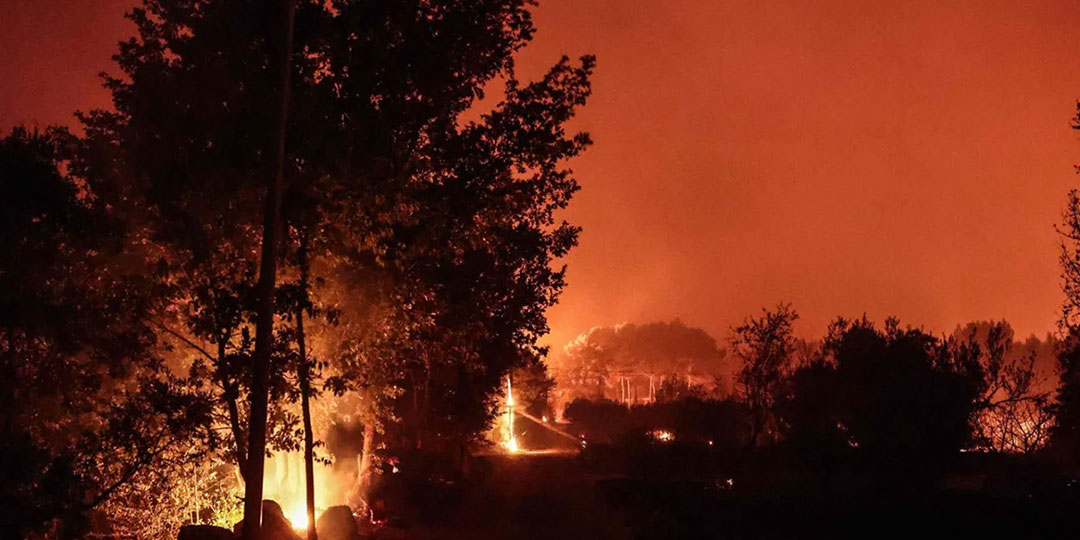
French authorities announced that the massive wildfire in the Gironde region near Bordeaux is now contained after burning for more than two weeks, although firefighters continue working to extinguish remaining hotspots.
The blaze has destroyed approximately 42,000 hectares of forest, while emergency crews remain on site to prevent the fire from spreading again.
Residents Return as Heat Alerts Continue
Around 208,000 residents have returned home out of 224,000 people evacuated during the peak of the crisis. However, some communities remain inaccessible while firefighters continue securing affected areas.
France’s national weather service has also maintained an orange heat alert across 20 departments, with temperatures expected to range between 34°C and 38°C before gradually easing early next week.
Hungary’s Heatwave Hits Energy Infrastructure
In an unprecedented move, Hungary announced the shutdown of the Paks Nuclear Power Plant, the country’s only nuclear facility, marking its first closure since operations began 44 years ago.
The decision followed historically low water levels in the Danube River, leaving insufficient water to cool the plant’s reactors safely.
Drought Raises Energy Concerns
The Paks plant supplies roughly one-third of Hungary’s electricity, making its shutdown a significant challenge for the country’s energy sector.
Plant operators had warned days earlier that continued declines in the Danube’s water level could force a complete suspension of operations, while Hungarian meteorologists forecast temperatures could reach 42°C later this week.
Climate Pressures Spread Across Europe
The developments in France and Hungary illustrate how Europe’s extreme heat is affecting far more than forests. The combination of prolonged drought and soaring temperatures is increasingly threatening critical infrastructure, energy production, and public safety.
Climate experts continue to warn that rising global temperatures are making extreme weather events more frequent and more destructive across the continent.
A Challenging Summer for Europe
Several European countries, including France, Spain, Germany, Italy, Greece, and Turkey, continue battling wildfires and extreme temperatures, raising concerns that climate-related emergencies could intensify in the coming weeks.
Conclusion
The latest developments in France and Hungary demonstrate that Europe’s heatwave has evolved into a multi-dimensional crisis affecting both environmental safety and energy security. While France has largely contained one of its largest wildfires, Hungary faces an unprecedented energy challenge after shutting its only nuclear power plant, underscoring the far-reaching consequences of prolonged heat and drought across the continent.