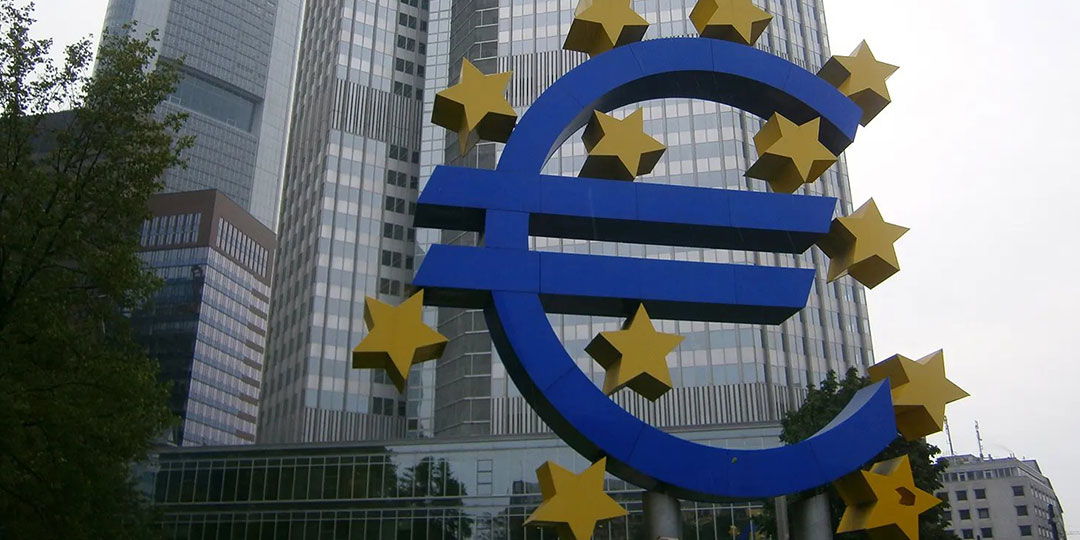

A new economic survey revealed that Eurozone economic contraction has reached its fastest pace in more than two and a half years during May. The downturn is largely driven by rising living costs linked to geopolitical tensions and conflicts, which have weakened demand in the services sector. At the same time, inflation climbed to 3 percent due to higher energy prices, while the European Commission reduced its 2026 growth forecast to 0.9 percent.
The data point to mounting pressure on Europe’s economy and growing recession concerns.
Composite PMI falls to 47.5
According to S&P Global, the Eurozone’s composite Purchasing Managers’ Index (PMI) dropped to 47.5 in May from 48.8 in April.
This marks the lowest level since October 2023 and represents the second consecutive month of contraction.
A reading below 50 indicates economic decline.
What the PMI decline signals
The lower reading reflects:
Weak demand for services
Slower private sector activity
Deteriorating business confidence
Increasing cost pressures
Economy projected to shrink by 0.2% in Q2
Chris Williamson, Chief Economist at S&P Global Market Intelligence, stated that the May data suggest the Eurozone economy is on track to contract by 0.2 percent in the second quarter.
He attributed the slowdown to the Middle East conflict and rising energy costs affecting consumer spending.
Services sector hit hardest
The services PMI fell to 46.4, its fastest contraction since February 2021.
Higher living costs and energy bills have weighed heavily on consumer demand.
Inflation rises to 3% due to energy
Eurostat data showed annual inflation in the Eurozone increased to 3 percent in April, up from 2.6 percent in March.
The rise was primarily driven by higher energy prices.
Core inflation, which excludes food and energy, edged down to 2.2 percent from 2.3 percent.
Inflation outlook and rate expectations
S&P warned that input price pressures could push inflation closer to 4 percent in coming months.
With inflation still above the European Central Bank’s 2 percent target, markets expect potential interest rate hikes in June.
Labor market weakens for fifth month
The survey showed companies cut staff numbers for the fifth consecutive month, marking the fastest job losses since November 2020.
Business confidence dropped to its lowest level in 32 months.
Labor market implications
The trend suggests:
Hiring freezes
Cautious expansion plans
Declining new orders
Elevated recession risk
Germany contracts for second month
Private sector activity in Germany declined for a second straight month in May.
Although Germany’s composite PMI rose slightly to 48.6, it remained below the 50 threshold.
Analysts indicated the economy is likely to shrink in the second quarter due to weak services and stagnant manufacturing.
Strait of Hormuz impact on prices
Economists noted that disruptions linked to tensions around the Strait of Hormuz have contributed to higher input costs, further accelerating inflation pressures.
France records fastest contraction in 5.5 years
France’s composite PMI fell sharply to 43.5 in May, marking its fastest contraction in five and a half years.
Economist Joe Hayes warned that oil price shocks have reduced private sector demand, increasing recession risks for the Eurozone’s second-largest economy.
European Commission cuts 2026 growth forecast
The European Commission revised its 2026 GDP growth forecast for the Eurozone down to 0.9 percent from 1.2 percent previously.
The downgrade reflects higher oil and energy prices and their impact on inflation and consumer purchasing power.
Growing economic headwinds
The Commission highlighted:
Energy market volatility
Rising living costs
Weak internal demand
Monetary policy tightening risks
Energy prices driving inflation surge
Rising oil prices have amplified cost-of-living pressures across Europe.
Energy-intensive industries are facing increased production expenses, which are being passed on to consumers.
Most affected sectors
Sectors under pressure include:
Manufacturing
Transport and logistics
Chemicals and heavy industry
Consumer services
Central bank dilemma
The European Central Bank faces a difficult balancing act between supporting growth and controlling inflation.
Rate hikes may curb inflation but risk deepening the economic slowdown.
Policy trade-offs
Authorities must weigh:
Inflation containment
Economic stability
Employment levels
Financial market reactions
Conclusion:
The Eurozone economic contraction is accelerating as rising energy prices and geopolitical instability weigh on demand and business confidence. With inflation at 3 percent and growth forecasts cut to 0.9 percent for 2026, recession fears are intensifying. Policymakers now face complex decisions to stabilize the economy while preventing further inflationary pressure. The coming months will be critical in determining whether the Eurozone can avoid a prolonged downturn.