
China’s government protested new US trade investigations on Monday, accusing Washington of “erroneous ways” and “political manipulation” as Beijing urged immediate dialogue to resolve trade disputes. The escalation occurs as President Trump indicated a scheduled Beijing summit with Chinese leader Xi Jinping could be delayed pending Chinese assistance in reopening the Strait of Hormuz, directly linking Middle East conflict resolution to bilateral trade negotiations.
The convergence of expanding US trade probes targeting 60 economies, delayed diplomatic summits, and conditions attached to geopolitical cooperation demonstrates the emerging intersection of economic and security conflicts during the broader Middle East war.
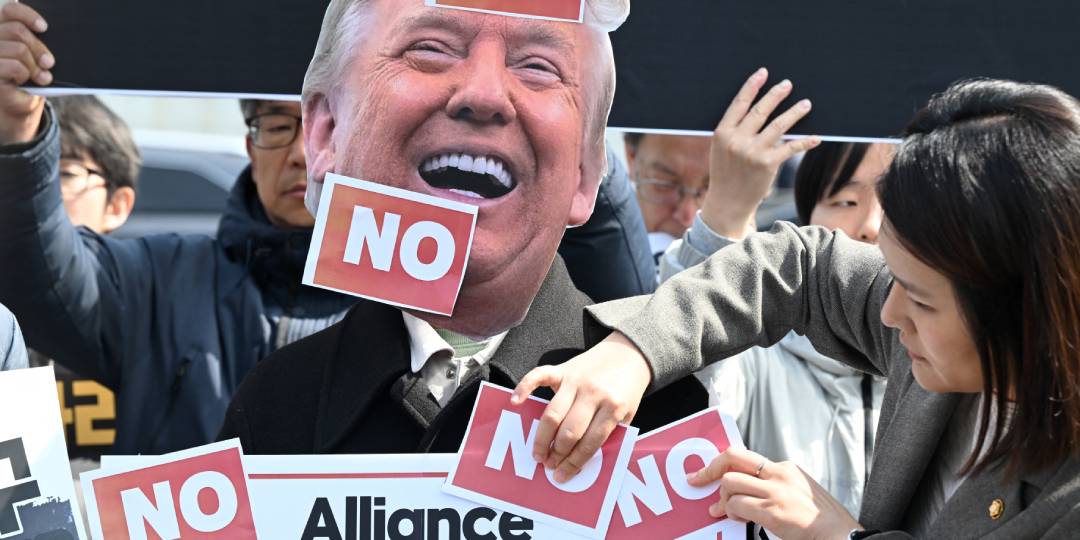
Beijing Protests Latest Round of US Trade Investigations
China’s commerce ministry issued a formal statement Monday lodging representations with the United States over new trade probes launched last week. The investigations target 60 economies including China and examine “failures to take action on forced labor” and whether such failures burden or restrict US commerce.
A separate round of US investigations focused on excess industrial capacity targets 16 trading partners including China. Beijing’s foreign ministry characterized both investigation rounds as “political manipulation” designed to “construct trade barriers” rather than address legitimate commercial concerns.
Forced Labor Allegations and Chinese Denials
US trade investigators are examining allegations that trading partners have failed to address forced labor practices. Human rights groups and UN experts have alleged forced labor affecting minority groups in China’s Xinjiang region, which Beijing has dismissed as “fabricated” political accusations.
The targeting of forced labor practices reflects international concerns about labor exploitation in supply chains, though China characterizes such investigations as politically motivated rather than grounded in legitimate commercial protections.
Trump Administration Trade Strategy
The latest trade investigations come after the US Supreme Court struck down Trump’s sweeping tariffs in February, limiting the administration’s ability to unilaterally impose broad tariff schedules. The new investigations provide a mechanism for justified tariff imposition through formal trade probe procedures that survive legal scrutiny.
The two sets of investigations will likely require months to complete, but could justify substantial new tariffs once concluded, providing the Trump administration with a pathway around constitutional limitations on presidential trade authority.
Legal Constraints on Unilateral Tariff Authority
The Supreme Court decision constraining Trump’s tariff authority reflects judicial limits on executive economic power. The new investigation mechanism allows the administration to justify tariffs through documented findings of unfair trade practices, distinguishing them from blanket tariff authority previously ruled unconstitutional.
Trump Conditions Beijing Summit on Strait of Hormuz Cooperation
President Trump stated Sunday that the scheduled Beijing summit with Xi Jinping could be delayed pending Chinese assistance in reopening the Strait of Hormuz. Trump told the Financial Times: “We’d like to know before (the summit),” regarding China’s willingness to help reopen the strategic waterway, adding that “we may delay” without specifying duration.
The conditional summit reflects Trump’s strategy of leveraging bilateral diplomatic engagement to secure cooperation on Middle East conflict resolution. The Strait of Hormuz closure represents an existential economic threat to global energy markets, making its reopening a top priority for the Trump administration.
Linkage of Security and Trade Issues
Trump’s conditioning of summit attendance on Strait of Hormuz cooperation demonstrates deliberate linkage of geopolitical and economic negotiations. The strategy pressures China through potential diplomatic isolation while simultaneously pursuing trade restrictions, creating multiple leverage points for extracting compliance.
US-China Trade Negotiations in Paris
Trade officials from both countries met in Paris Sunday for talks scheduled to last two days. The negotiations occur against a backdrop of expanding trade investigations, delayed summits, and conflicting messaging regarding negotiation willingness and conditions.
China has urged the US to “correct its erroneous ways, meet China halfway… and resolve issues through dialogue and negotiations,” suggesting Beijing maintains openness to negotiated settlement despite protests over investigation methodology.
Negotiation Dynamics Amid Escalation
The simultaneous expansion of trade investigations and bilateral negotiations creates ambiguous signals about actual commitment to resolution. The negotiations may serve to provide diplomatic cover for investigation continuation, or may represent genuine effort to reach settlement before investigations conclude.
China’s Patent Leadership in Anti-Drone Technology
A parallel development indicates China’s dominance in anti-drone technology patents, with significant implications for modern military capabilities. China filed 82 of 126 worldwide anti-drone patents in the year to March 2025, according to intellectual property firm Mathys and Squire.
The US accounted for only 22 anti-drone patents while South Korea filed six. The disparity reflects China’s “concerted effort” to encourage patent-filing through financial incentives over the past decade.
Evolution of Anti-Drone Technologies
Most filed patents (49 in 2024-25) relate to interference and jamming capabilities. However, the “next generation” includes anti-drone lasers (39 patents) and microwave systems (24 patents). The firm’s partner Andy White noted: “I wouldn’t be surprised if in another one or two years, we see (the overall number) increase massively.”
The technology field expanded 27 percent from the previous period (99 patents), reflecting growing recognition of drone threats in modern conflict. The Middle East war has highlighted drones’ central role in contemporary military operations, likely to accelerate investment in counter-drone technologies.
Drone Warfare and Defense Innovation
Drones have played central roles in both the current Middle East conflict and the four-year Russia-Ukraine war. Iranian-designed Shahed drones have been widely deployed in both conflicts and present significant defensive challenges.
Ukraine’s government announced Wednesday that Ukrainian drone defense experts began work in Qatar, the United Arab Emirates, and Saudi Arabia, sharing experience from years of intercepting Iranian drones. The technology transfer reflects recognition that anti-drone expertise has become a valuable commodity in modern conflict environments.
International Competition in Drone Defense
The movement of Ukrainian experts to the Gulf reflects international competition for anti-drone expertise and technology. Countries facing Iranian drone threats are actively seeking to acquire or develop counter-drone capabilities, creating market opportunities for defense technology providers.
Broader Geopolitical Context
The convergence of China-US trade tensions, conditional diplomatic engagement, and technology competition creates a complex geopolitical environment during the Middle East war. China’s dominance in anti-drone patent development potentially offers leverage in future negotiations, while the US pursues trade restrictions affecting Chinese economic interests.
The Trump administration’s strategy links security cooperation (Strait of Hormuz reopening) to trade negotiations, creating multiple negotiation channels with overlapping interests and potential for both escalation and resolution.
Key Developments:
- China protests US investigations into forced labor practices
- US targets 60 economies including China in trade probes
- Separate investigations focus on excess industrial capacity targeting 16 partners
- Trump conditions Beijing summit on Strait of Hormuz cooperation
- US-China trade talks continue in Paris despite tensions
- China leads anti-drone patents with 82 of 126 worldwide filings
- Iranian-designed drones central to Middle East war
- Ukraine shares drone defense expertise with Gulf states
- Supreme Court limited Trump’s unilateral tariff authority in February
- New investigations provide mechanism for justified tariffs