
Iraq and France reaffirmed their commitment to strengthening strategic cooperation in security, training, and counterterrorism during a high-level meeting held Saturday in Baghdad. The discussions come as Iraq continues to enhance its security capabilities and consolidate stability following years of conflict.
The meeting also coincided with renewed emphasis from Iraqi authorities on enforcing state control over weapons, described as a “non-negotiable existential issue.”
Iraq-France Security Cooperation
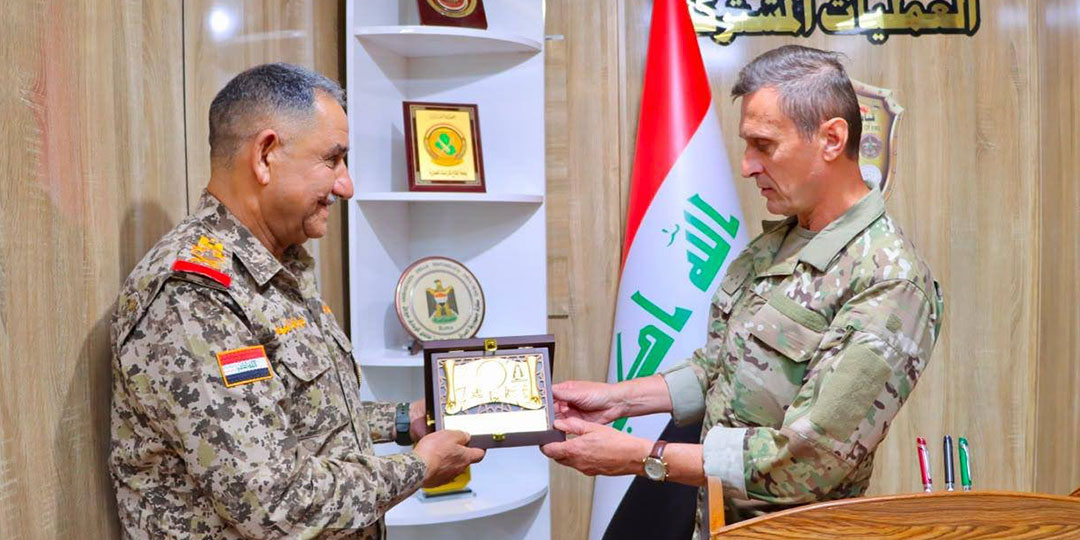
Iraq’s Deputy Commander of Joint Operations, Lieutenant General Qais al-Mohammadawi, met with French Special Forces Commander General Michel Delpit at the Joint Operations Command headquarters.
According to a statement by Iraq’s Joint Operations Command, the two sides discussed enhancing coordination and activating a memorandum of understanding between Iraq and France, particularly in:
– Military training
– Counterterrorism operations against ISIS remnants
– Exchange of expertise and intelligence information
– Development of Iraqi security capabilities
Al-Mohammadawi highlighted the “significant progress” in bilateral security relations and praised France’s support and coordination in strengthening Iraq’s defense sector.
For his part, General Delpit expressed admiration for the “efficiency and readiness” of the Iraqi armed forces and reaffirmed France’s commitment to continuing the strategic partnership between the two countries.
Iraq’s Position on Weapons Control
In a separate statement, Sabah al-Numan, spokesperson for the Commander-in-Chief of the Armed Forces, stressed that limiting weapons to state control is an “existential issue that cannot be compromised.”
He said Iraq has moved beyond a reactive security approach to one based on “strategic deterrence and full sovereignty enforcement,” emphasizing that current security doctrine prioritizes proactive operations to neutralize threats before they materialize.
Al-Numan stated that recent intelligence-led operations successfully disrupted complex plots involving cross-border criminal networks before execution.
Strengthening Security and Border Control
Iraqi authorities confirmed that border security has been reinforced using advanced technologies, including thermal surveillance systems, turning Iraq’s borders into what officials described as a “red line that cannot be crossed.”
The spokesperson stressed that all military units remain on high alert to enforce the law and respond to any attempt to destabilize the country.
He added: “The era of compromises at the expense of state authority is over. The law is the sole and binding authority for all parties without exception.”
Coordination with Kurdistan Region
Al-Numan also addressed coordination with the Kurdistan Region, describing it as a “practical translation” of Iraq’s security achievements into a framework that supports economic development.
He noted that high-level coordination between federal forces and the Peshmerga has been implemented on the ground, particularly in recent agreements in Erbil aimed at protecting:
– Oil companies
– Strategic infrastructure
– National economic assets
This coordination reflects what he described as a unified national security approach.
Expanding Security Scope
Iraqi authorities emphasized that security efforts now extend beyond traditional military operations to include:
– Cybersecurity protection of national infrastructure
– Ongoing operations against international drug trafficking networks
– Protection of economic activity and development projects
Al-Numan stated that safeguarding Iraq’s economic progress is a “sacred duty with no retreat.”
Conclusion
The reaffirmation of Iraq-France security cooperation highlights Baghdad’s ongoing efforts to strengthen its defense capabilities through international partnerships. At the same time, Iraq’s firm stance on exclusive state control of weapons underscores a broader strategy aimed at consolidating sovereignty and stability.
Officials stress that Iraq has entered a new phase defined by decisive action, strong institutions, and a unified security framework, signaling a shift toward long-term stability and state authority.