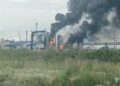

US and Israeli air forces conducted a series of airstrikes on Saturday targeting critical Iranian energy facilities, including the Bushehr nuclear plant in southwestern Iran and major petrochemical complexes. The strikes resulted in at least one death and multiple injuries among workers at targeted facilities. Iranian authorities confirmed that the nuclear reactor sustained no direct damage, but the strikes near the nation’s only nuclear power plant have sparked international warnings about potential radiation hazards.
These strikes represent part of a sustained military campaign against Iranian infrastructure since the outbreak of war on February 28, marking a dangerous escalation as the conflict directly impacts civilian and industrial targets within Iran’s borders. The targeting of nuclear facilities has drawn sharp warnings from international organizations regarding the potential for catastrophic consequences.
Attack on Bushehr Nuclear Plant
An airstrike struck the vicinity of the Bushehr nuclear plant, located on the shores of the Persian Gulf in southwestern Iran. According to Iran’s IRNA news agency, “A projectile fell at 8:30 AM Saturday morning in an area near the Bushehr nuclear plant,” resulting in the death of one security personnel assigned to the facility.
Iranian authorities stated that nuclear installations sustained no direct damage. The International Atomic Energy Agency (IAEA) confirmed that radiation levels showed no increase following the strike. The Bushehr plant, Iran’s only operational nuclear power facility, is considered a critical component of the country’s energy infrastructure.
International Warnings on Radiation Hazards
Iran’s Foreign Minister Abbas Araghchi issued a sharp warning regarding continued strikes near the nuclear plant. Araghchi stated that “sustained attacks in the vicinity of the country’s only nuclear plant could cause a radiation leak that would end life in Gulf Cooperation Council capitals, not in Tehran,” pointing to potential regional consequences of any nuclear accident.
Raphael Grossi, Director-General of the International Atomic Energy Agency, called for “the highest degree of military restraint to avoid the risk of a nuclear accident,” in a statement released by the UN-affiliated agency on social media platform X. The appeal underscores the extreme sensitivity of targeting nuclear facilities during armed conflict.
Petrochemical Complex Strikes
Separate airstrikes targeted petrochemical complexes in the Mahshahr area of southwestern Khuzestan province. Walilah Hayati, Deputy Governor of Khuzestan, reported “explosions occurred in the special petrochemical zone,” indicating that the attack struck three companies operating within the complex.
The strikes resulted in five people being wounded, with damage assessments still ongoing. Iranian media reported that “the extent of damage has not yet been determined,” suggesting that economic and human losses may exceed initial estimates. The petrochemical sector represents a critical revenue source for Iran’s economy.
Strategic Importance of Petrochemical Infrastructure
Iran’s petrochemical complexes in Khuzestan rank among the nation’s most important industrial facilities and contribute significantly to the national economy. Targeting these installations reflects a broader strategy to inflict direct economic damage on Iran beyond purely military objectives, striking at the foundation of the country’s industrial capacity.
Kharg Island Oil Operations and Economic Pressure
Despite the military escalation, Iranian media reported that oil exports from the strategically vital Kharg Island continued and even increased over the past week. Mousa Ahmadi, head of the parliamentary energy committee, stated, “Over recent days, oil exports have not declined but rather increased,” suggesting that Tehran is attempting to maintain petroleum production despite security threats.
Kharg Island, located off Iran’s western coast, holds paramount strategic importance as a primary hub for Iranian crude oil exports. US President Donald Trump has threatened to destroy the island unless a swift agreement is reached to end the war, or if the Strait of Hormuz is not opened “immediately.”
Prior Operations and Future Military Threats
The United States announced on March 13 that it had struck military targets on Kharg Island while claiming to have avoided hitting oil infrastructure. However, Iranian officials have warned that the US is planning potential amphibious operations that could directly target the island.
This escalation coincided with the arrival of the US amphibious assault ship USS Tripoli in the Middle East last week, carrying 3,500 American military personnel. The deployment of such amphibious forces signals Washington’s readiness for potential ground operations in the region and represents a significant expansion of US military commitment.
Regional and Global Consequences of the Conflict
Targeting Iranian nuclear and energy installations represents an escalating threat to regional stability. The Persian Gulf contains over one-third of global oil reserves, and military operations near energy facilities could directly impact global energy prices and push the world economy toward instability.
The strikes on civilian and industrial sites reveal a broader strategy to inflict economic damage on Iran alongside military operations. International governments and organizations have warned sharply about the dangers of armed conflict near nuclear installations, which could have catastrophic regional and global consequences.
International Positions and Calls for De-escalation
The International Atomic Energy Agency has issued repeated calls for caution regarding nuclear accident risks. The UN-affiliated agency has emphasized the necessity of “military restraint” from all warring parties to prevent a nuclear disaster that could affect millions of residents throughout the Gulf region.
However, the continuation of strikes indicates that belligerent parties remain unresponsive to international appeals, reflecting the dangerous level of escalation the regional conflict has reached. The window for diplomatic intervention appears to be narrowing as military operations intensify near critical infrastructure.
Conclusion:
US-Israeli airstrikes on Iran’s nuclear and energy facilities mark a significant turning point in regional military escalation. Targeting civilian and critical infrastructure reflects a strategy designed to inflict widespread economic damage on Iran beyond purely military objectives. The coming days carry potential risks of further dangerous escalation, particularly given continuing warnings from international agencies about nuclear hazard risks. The international community watches with apprehension as developments unfold that could alter the trajectory of the regional conflict toward broader humanitarian catastrophe affecting millions across the Gulf and beyond.