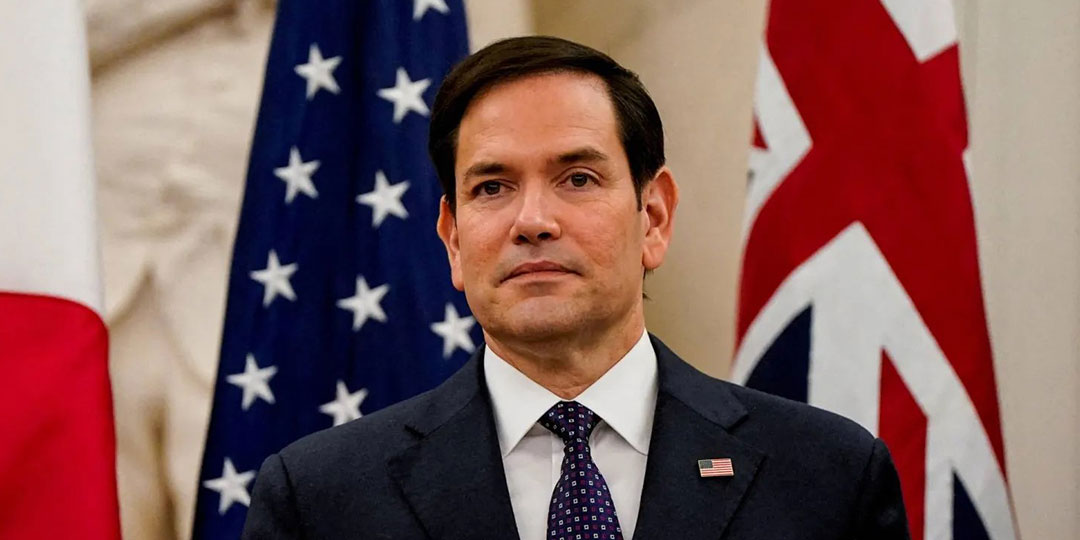

US Secretary of State Marco Rubio confirmed on Tuesday that the United States remains in negotiations with Iran, speaking before the Senate Foreign Relations Committee.
This came as President Trump denied reports of a communication halt, yet Iran’s Farsi News Agency confirmed that message exchanges have stopped.
The conflicting statements reflect uncertainty about the negotiation path and structural challenges in the diplomatic process between the two nations.
Rubio confirms ongoing talks with realistic assessment
Speaking before the Senate Foreign Relations Committee, Secretary of State Marco Rubio said the United States remains in negotiations with Iran.
He highlighted that:
Iran still possesses a large number of drones
Iran was building a missile arsenal to protect its nuclear program
Iran’s conventional defense capability has significantly deteriorated
Rubio added that “Iran’s system is fragmented” and responses from Tehran take several days to obtain.
Assessment of Iranian naval forces
Rubio characterized Iran’s naval situation, stating “there is no Iranian navy as their fleet sits at the bottom of the sea,” referring to military losses sustained by Iranian naval forces.
Rubio warns negotiations differ from traditional diplomacy
Rubio emphasized that “negotiations with Iran are not like negotiations with Switzerland,” signaling the complexities and challenges inherent in dialogue with Iran.
He expressed hope that “Iran will open the Strait of Hormuz,” suggesting maritime issues are part of the negotiation agenda.
Trump denies talks suspension, insists on continuous dialogue
President Donald Trump denied media reports claiming US-Iran talks had halted.
Trump posted on his Truth Social platform that:
Negotiations continue uninterrupted
Talks proceeded “four days ago, three days ago, two days ago, one day ago, and today”
Media reports are “false and misleading”
Trump also stated “no one knows where these negotiations will lead.”
Call for a comprehensive agreement
Trump said “the time has come to make a deal. The situation that has existed for 47 years will not continue as it is,” signaling US desire for a breakthrough in US-Iran relations.
Farsi agency confirms message exchange halted
Conversely, Iran’s Farsi News Agency confirmed that message exchanges between Iran and the United States have currently stopped.
The agency reported from an informed source that:
No message exchanges are occurring at present
Communication regarding a memorandum of understanding has been halted for at least several days
These reports contrast sharply with American assertions of continuous talks.
State of contradictions and uncertainty
The conflicting statements reflect:
Unclear actual trajectory of negotiations
Divergent narratives between Washington and Tehran
Fundamental structural challenges in the negotiation process
Message exchanges versus broad dialogue
The discrepancy between US claims of ongoing negotiations and Iranian confirmation of halted message exchanges raises questions about whether:
The two sides define “negotiations” differently
There are different channels of communication
There has been a deliberate messaging gap between capitals
Conclusion:
The current period reflects uncertainty in US-Iran negotiations, with contradictory statements about communication status and negotiation progress. Between Washington’s insistence on continuous dialogue and Tehran’s confirmation of halted message exchanges, the negotiation path remains suspended amid fundamental disagreements.