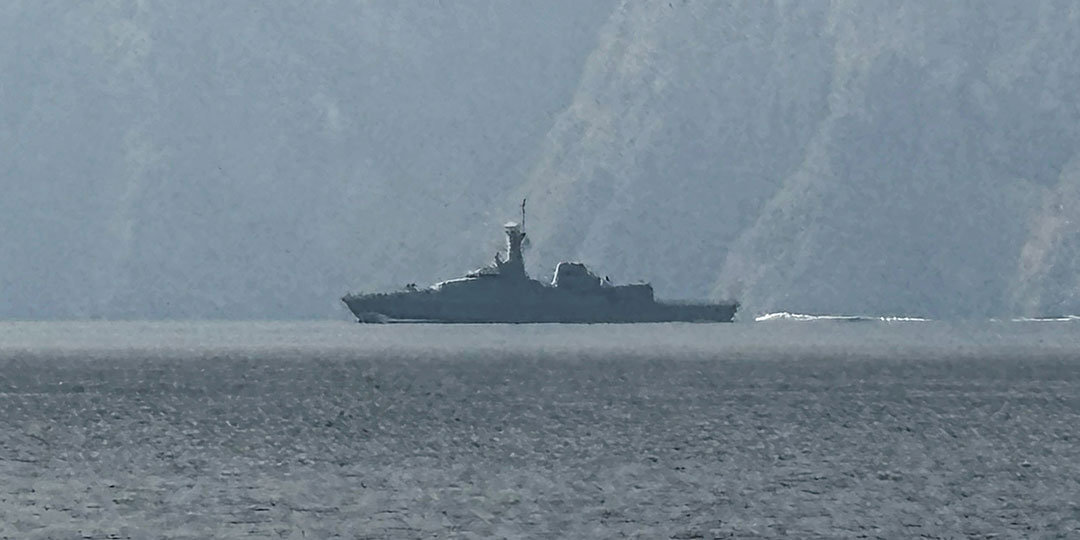

A Turkish-flagged vessel successfully transited the Strait of Hormuz after obtaining explicit permission from Iranian authorities, Turkish Transport Minister Abdulkadir Uraloğlu announced on Friday, March 13, 2026. The development signals limited channels of communication between Ankara and Tehran persisting despite a regional war that has brought commercial shipping through one of the world’s most critical maritime passages to near total standstill.
Uraloğlu told reporters on Friday that “we have 15 ships in the Strait of Hormuz, and we managed to pass one of them after obtaining permission from Iranian authorities.” The minister did not specify the timing of the vessel’s crossing or the nature of its cargo. He added “we are trying to maintain contact with the Iranian side,” indicating Turkey’s effort to preserve practical working relations with Iran despite intensifying regional tensions.
Fourteen Turkish Vessels Await Iranian Clearance
The Turkish transport minister clarified that “fourteen of our ships are waiting, and they are not facing any problems at the moment,” referring to vessels still pending authorization from Iranian authorities to transit the passage. Uraloğlu emphasized that “there are no ships flying the Turkish flag” currently in the high-risk zone, reflecting an effective withdrawal of Turkish maritime traffic from the contested waters.
This development arrives in the context of a regional war that commenced on February 28, 2026, following a joint US-Israeli military operation that resulted in the death of Iran’s Supreme Leader Ayatollah Ali Khamenei. Since then, Gulf nations have faced repeated Iranian strikes, while Tehran has targeted commercial vessels transiting the Strait of Hormuz.
Iranian Warnings and Navigation Restrictions
Iran has repeatedly warned that transit through the Strait of Hormuz will not be safe as long as the war against it continues. These warnings have effectively paralyzed commercial traffic through one of the world’s most vital maritime corridors, through which approximately one-third of global seaborne trade passes. Iranian control over the passage and its capacity to impose navigation restrictions have rendered direct negotiation and obtaining transit permits necessary for any safe transit operation.
In response to this situation, Turkey adopted a pragmatic approach by maintaining direct communication with Iranian authorities rather than relying solely on Western military protection.
US Military Position: Securing Hormuz is “Tactically Complex”
US Chairman of the Joint Chiefs of Staff General Mark CQ Brown acknowledged on Friday that the Strait of Hormuz presents a significant military challenge. During a press conference, Brown stated that the passage “is a tactically complex environment. And I think before we move anything through it at scale, we want to make sure we’re doing that in a way that aligns with our current military objectives.”
Brown added that additional military measures would be necessary before considering widespread escort operations for transiting vessels. This statement reflects the difficult operational reality confronting the US military: fully securing the Strait of Hormuz demands enormous military resources and complex operations that fundamentally alter the regional military balance. The Chairman did not confirm plans for routine vessel escort operations, instead suggesting the need for “additional military actions” before launching large-scale protection missions.
Contradictions in American Messaging
During the same press conference, US Secretary of Defense Pete Hegseth asserted that “American war plans included securing the Strait of Hormuz from the beginning,” while sharply criticizing a CNN article he described as “completely absurd,” claiming the Trump administration had not minimized the risks of Iran closing the waterway.
The defense secretary stated “this is not a strait where we will allow the control to be contested or commercial flow to be halted,” but did not clarify the practical mechanisms for achieving this objective or the anticipated timeline.
When asked about the possibility of Iran mining the Strait of Hormuz, Hegseth cautiously denied it, saying “we don’t have definitive evidence” of such activity, suggesting unclear security assessments within the passage.
Limited US Readiness for Tanker Escort Operations
US Energy Secretary Chris Wright stated on Thursday, March 12, that the American military is “not currently ready” to escort oil tankers through the Strait of Hormuz. However, he expressed measured optimism about imminent improvements, saying it is “highly likely” that escort operations will commence “by the end of the month.”
This statement’s credibility was undermined by a social media incident: Wright deleted a message posted on Tuesday, March 11, claiming that the US Navy had escorted “the first oil tanker” through the Strait of Hormuz. The White House quickly refuted this claim, raising questions about the accuracy of American government information and contradictions between ministerial statements and executive authority.
The Gap Between Political Ambitions and Military Capacity
The contradictions in American messaging reveal a clear gap between political aspirations and actual military capabilities. While US officials assert Washington’s commitment to securing the Strait of Hormuz “by all necessary means,” their actions suggest these operations require more time and resources than initially anticipated.
This delay in readying American protection creates a vacuum filled by direct negotiation and bilateral relations, as demonstrated by Turkey’s success in obtaining a single transit through direct communication with Tehran.
Turkish Minister’s Statements Amid Iranian Attacks
The Turkish transport minister’s statements came on a day when NATO air defense systems intercepted a missile fired by Iran into Turkish airspace. This represents the third such incident since the war erupted on February 28, indicating the persistence of Iranian threats to NATO members and Western allies in the region.
Despite these attacks, Turkey has chosen not to engage in direct military confrontation with Iran, instead maintaining practical dialogue channels that enabled one of its 15 trapped vessels to transit the strait.
Strategic Implications for Global Trade
The situation in the Strait of Hormuz underscores a fundamental shift in how critical global chokepoints are managed during regional conflicts. Rather than centralized Western military protection, individual nations find themselves compelled to negotiate directly with the dominant regional power. This dynamic reflects broader geopolitical realities where traditional security guarantees prove insufficient when facing determined regional actors willing to contest strategic passages.
Commercial shipping through the strait handles approximately one-third of the world’s seaborne petroleum trade and significant quantities of other goods. The current partial paralysis demonstrates the vulnerability of global supply chains to regional military conflicts and the limitations of external military powers to impose unilateral control over contested waterways.
Conclusion:
The situation in the Strait of Hormuz reflects partial paralysis of global maritime navigation amid an escalating regional war. While US military leadership acknowledges the difficulty of securing the passage, with promises of solutions by month’s end, individual nations like Turkey find themselves compelled to negotiate directly with Iran to ensure safe transit for their commercial vessels. This reality suggests that practical solutions may lie closer to diplomacy and direct state-to-state agreements than to centralized Western military protection, constraining the coherence of the global commercial system when facing regional wars.