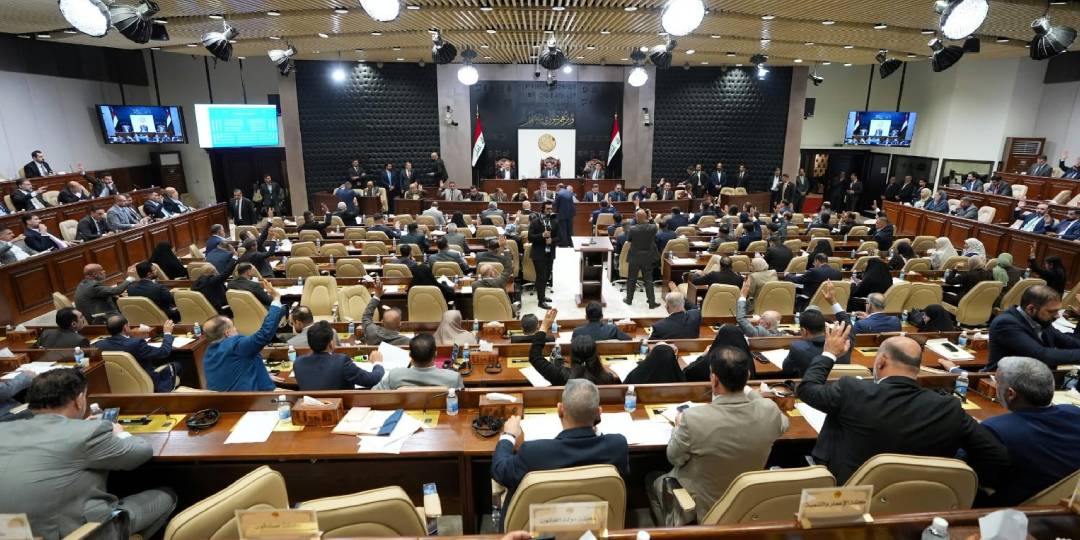

The Iraqi Council of Representatives voted on Sunday to approve the draft bill for the 22nd staffing law amendment in Iraq, modifying Staffing Law No. (25) of 1960. The legislative move resolves long-standing administrative stagnation, career-freeze obstacles, and job-title discrepancies affecting thousands of public sector employees across ministries and government departments.
The vote coincided with an official statement from Parliament Speaker Hebat Al-Halbousi, who congratulated school pupils, university students, and teaching faculties across all governorates on the start of the new academic year. Al-Halbousi reaffirmed Parliament’s commitment to providing legislative and budgetary backing for the Ministries of Education and Higher Education to maintain safe, disciplined, and modern learning environments nationwide.
Legislative Significance of the 22nd Staffing Law Amendment in Iraq
According to an official statement issued by Parliament’s Media Department, lawmakers voted during Sunday’s regular legislative session to pass the bill amending the decades-old civil staffing framework. The legislation updates organizational charts, aligns job descriptions with higher academic qualifications, and removes legacy promotion caps that previously hindered civil servants’ career progression.
Parliamentary committees drafted the amendment following consultations with state labor syndicates, judicial authorities, and civil service representatives. The law establishes structured career pathways for specialized degree holders, technicians, and administrative professionals across the executive branch.
Key Structural and Career Reforms Delivered by the Bill
– Ending administrative career stagnation by lifting grade caps on qualified civil servants.
– Introducing modern job titles corresponding to current technological and ministerial functions.
– Establishing equity across technical, engineering, medical, and administrative specializations.
– Reconciling academic qualifications with official job descriptions and departmental responsibilities.
Speaker Al-Halbousi Welcomes the Academic Year and Calls for Discipline
In a concurrent message marking the start of classes, Speaker Hebat Al-Halbousi extended his congratulations to teachers, academic staff, and students across Iraq. He called for the upcoming academic year to serve as a turning point in institutional discipline, scholastic excellence, and productive educational attainment.
Al-Halbousi stressed the necessity of strict attendance, curricular compliance, and establishing safe school environments. He noted that uninterrupted educational delivery remains central to developing skilled youth cadres capable of contributing to public administration and economic modernization.
Parliamentary Support Priorities for Education Ministries
– Securing capital budget allocations for school construction, modern campus facilities, and laboratory equipment.
– Ensuring the timely procurement and distribution of textbooks and updated educational curricula.
– Enhancing institutional support and professional entitlements for teachers and academic personnel.
– Maintaining legislative oversight to remove operational and logistical bottlenecks across provincial school districts.
Broader Civil Service Modernization and Educational Development
Passing the 22nd staffing law amendment in Iraq reflects a parliamentary drive to modernize the nation’s civil administration alongside educational investments. Modernizing staffing frameworks directly improves civil servant morale, reduces bureaucratic inefficiencies, and encourages professional development within state institutions.
Analysts observe that pairing civil service updates with institutional support for primary, secondary, and higher education forms a core pillar of long-term administrative reform. Updating legacy legal frameworks inherited from the mid-twentieth century enables Iraqi state institutions to respond effectively to public service demands.
Conclusion:
The approval of the 22nd staffing law amendment in Iraq by the Council of Representatives marks a key milestone in civil service reform, ending decades of administrative bottlenecks for public sector personnel. Combined with parliamentary commitments to support the educational sector, these actions underscore the legislative branch’s focus on human capital development and public sector modernization.