
The Iraqi Council of Representatives voted on Monday to formally approve the bill for the first notary public law amendment in Iraq, modifying Law No. (33) of 1998. The legislative milestone aims to modernize the administrative framework governing public notary departments nationwide, streamline legal documentation workflows, and improve essential notary services delivered to citizens, commercial enterprises, and public institutions.
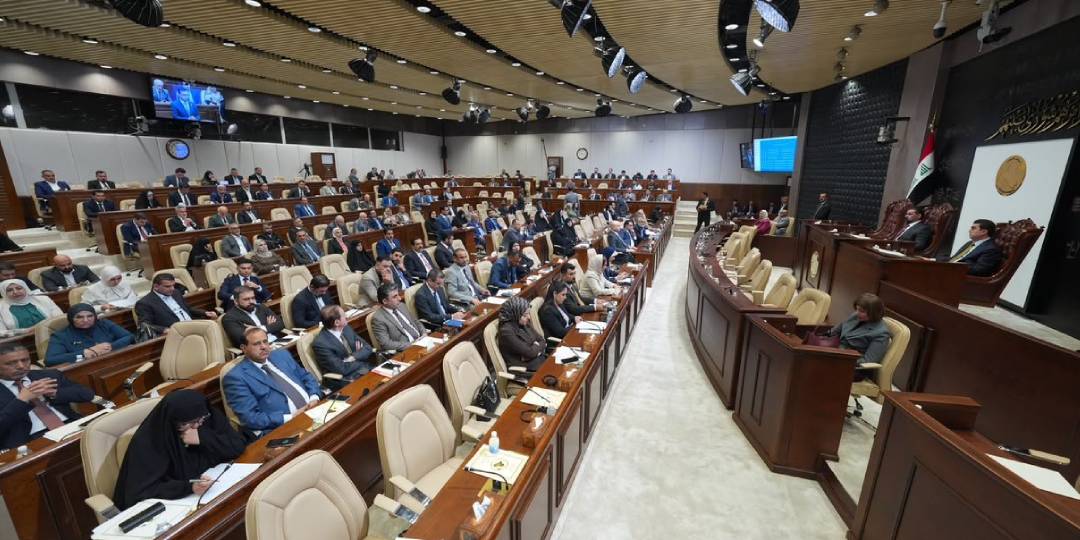
The vote was conducted during regular parliamentary session No. (24) of the sixth electoral cycle, presided over by Speaker of Parliament Hebat Al-Halbousi with the attendance of 246 lawmakers. The legislative session also accomplished initial readings and debates on key draft economic bills and international treaties, including maritime safety and renewable energy agreements, before the assembly adjourned.
Legislative Significance of the Notary Public Law Amendment in Iraq
According to an official statement issued by Parliament’s Media Department, lawmakers approved the bill following structured deliberations led by the Parliamentary Legal Committee in coordination with the Ministry of Justice. The updated provisions align statutory notary functions with modern administrative practices and judicial integrity standards.
The amended law establishes modern guidelines for notarizing contracts, commercial transactions, and power of attorney documents. By integrating digital registry safeguards and automated archiving, the legislation strengthens administrative oversight, reduces clerical bureaucracy, and protects official transactions from fraudulent alteration or procedural delays.
Strategic Objectives of the Updated Notary Framework
– Modernizing administrative procedures for executing commercial contracts and power of attorney records.
– Integrating digital documentation and electronic archives to minimize bureaucratic processing times.
– Reinforcing regulatory safeguards to protect citizen property rights and prevent document tampering.
– Enhancing institutional operational standards across municipal and provincial justice directorates.
Initial Readings for Securities and Maritime Safety Treaties
Alongside the notary legislation, Parliament completed the first reading of the draft Securities and Commodities Law. The proposed financial statute serves as an institutional pillar to regulate domestic financial markets, structure commodities trading, enhance transparency, and foster a stable investment climate capable of attracting local and foreign private capital.
Lawmakers also concluded the first reading of a draft bill authorizing Iraq’s accession to the convention establishing the International Organization for Marine Aids to Navigation. The treaty aims to integrate Iraqi maritime transit channels, riverways, and commercial ports with international maritime safety codes and modern navigational assistance standards.
Key Legislative Milestones Completed in Session No. 24
– Final approval of the First Amendment to Notary Public Law No. (33) of 1998.
– Completion of the first reading of the draft Securities and Commodities Law to modernize capital markets.
– Finalization of the first reading on accession to the International Organization for Marine Aids to Navigation.
– Conclusion of the report and discussion on accession to the Framework Agreement for the International Solar Alliance (ISA).
Advancing Renewable Energy via the International Solar Alliance (ISA)
Parliament completed the formal review and discussion of the report on the draft law ratifying Iraq’s accession to the 2016 Framework Agreement of the International Solar Alliance (ISA). The accession reflects Baghdad’s commitment to diversifying domestic energy supplies and expanding environmentally sustainable electricity generation.
Joining the multinational coalition enables Iraq to access international technical expertise, secure specialized financing mechanisms, and localize solar technology. These initiatives support the development of utility-scale solar generation complexes to feed clean electricity directly into the national power grid and lower carbon emissions.
Conclusion:
The approval of the notary public law amendment in Iraq marks a practical step forward in modernizing the country’s legal and administrative services. Combined with initial parliamentary actions on capital markets, maritime safety, and clean energy treaties, the legislative branch continues to advance key statutory reforms supporting national governance and international integration.