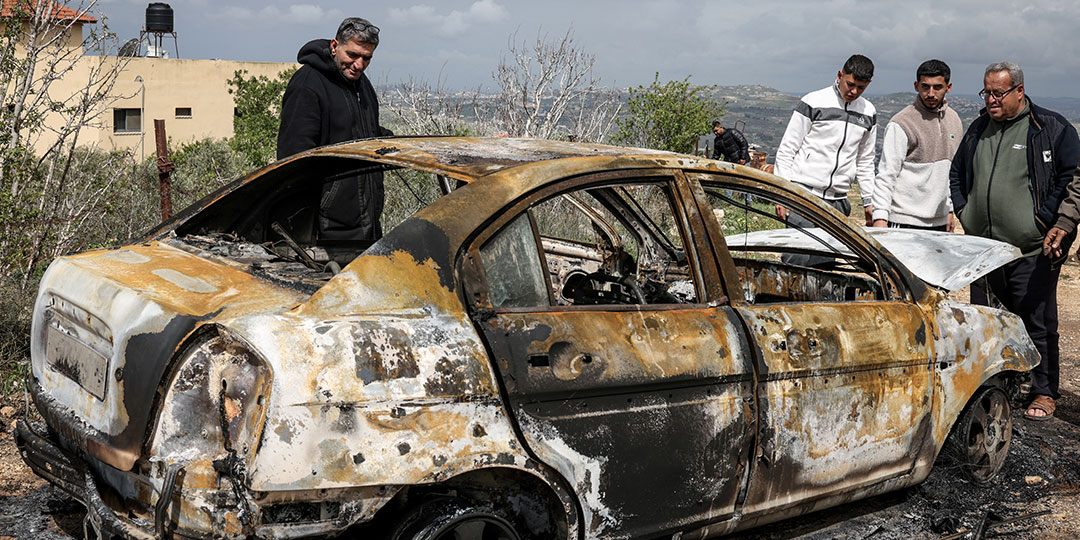

Israeli settlers launched a series of violent coordinated attacks on Palestinian villages in the occupied West Bank overnight Saturday into Sunday, March 22, 2026, resulting in injuries and extensive property damage. The assaults came in retaliation for a vehicle collision between a Palestinian car and an Israeli vehicle that killed an Israeli passenger, triggering immediate retaliatory violence from settlers across multiple communities.
The attacks represent a sharp escalation in settler violence against Palestinians since the outbreak of Middle East conflict on February 28, when US-Israeli forces began bombing Iran. The West Bank has experienced a dramatic surge in settler assaults on Palestinian residents and property as regional tensions have intensified.
Detailed Account of Village Attacks
Multiple Palestinian villages across different areas of the occupied West Bank came under attack. In the villages of Jalud and Qaryut south of Nablus, settlers assaulted Palestinian residents with beatings and set fires to vehicles and buildings.
In Jalud specifically, settlers “attacked residents with beatings, set fire to the village council headquarters, and burned four vehicles,” according to the Palestinian News Agency (WAFA).
In Qaryut, settlers launched an assault on residents, but Palestinian locals resisted and drove the attackers from the area. The village of Al-Fundaqomiyya near Jenin also came under similar attack.
The Palestinian Red Crescent reported that three people were injured during the assaults, while Israeli media outlets documented 20 separate “nationalist violence incidents” resulting in injuries to at least 11 Palestinians with minor wounds.
The Trigger Incident
According to an Israeli military statement released Saturday evening, a collision occurred between a Palestinian vehicle and an Israeli car that resulted in the death of an Israeli passenger in the afternoon hours. The Israeli fatality sparked immediate and coordinated retaliatory actions from settlers.
Investigations were launched to determine whether the incident was accidental or an intentional attack, but this ambiguity did not prevent settlers from launching systematic retaliatory operations against surrounding Palestinian villages. The rapid mobilization and coordination of settler violence across multiple locations suggests planning beyond spontaneous reaction.
Israeli Military Acknowledges Settler Attacks
The Israeli military confirmed the attacks in a statement released Sunday, saying: “Last night (Saturday), Israeli military forces and Border Police were sent to several Palestinian villages in the Judea and Samaria region (West Bank) following reports of Israeli civilians intentionally setting fires to buildings and property, as well as disturbances in the area.”
The Israeli military statement indirectly acknowledges settler responsibility for the fires and damage while using the euphemistic term “Israeli civilians” rather than “settlers.” This linguistic choice reflects the Israeli military’s apparent discomfort with direct attribution of the attacks to organized settler movements.
Social Media Documents Assaults
Images posted on social media and circulated by Israeli media outlets show dozens of settlers attacking Palestinian village streets at night, shouting and setting vehicles on fire while throwing stones.
Israeli newspaper Haaretz documented that settlers set fires to buildings and vehicles at multiple sites across the West Bank during the night. The newspaper recorded “20 nationalist violence incidents,” indicating a significant level of coordination and organization behind the attacks rather than isolated individual actions.
Escalating Violence Since Middle East War Outbreak
Since the outbreak of Middle East conflict following the US-Israeli attack on Iran on February 28, the West Bank has experienced a sharp increase in settler attacks on Palestinians and Palestinian property.
According to Palestinian authorities, six Palestinians have been killed since March 2 by gunfire from settlers in the West Bank. This figure reflects an accelerating pattern of violence targeting Palestinian civilians in the occupied territories.
Systematic Pattern of Assaults
WAFA reported a “series of assaults” carried out by settlers across different areas of the occupied West Bank. This characterization suggests the attacks are not random isolated incidents but represent an organized pattern of violence with apparent coordination among settler groups.
Israeli Officials Express Concerns About Escalation
Israeli officials have expressed fears of escalating settler violence in the West Bank. This concern reflects recognition that the current Middle East war may represent a turning point in settler violence dynamics, potentially emboldening extremist elements within the settler population.
Iranian Missiles Strike Jerusalem
In a simultaneous development, explosions and air raid sirens sounded in Jerusalem on Sunday following Israeli military warnings of incoming missiles from Iran.
The Israeli military issued multiple warning messages stating that “missiles have been launched from Iran toward Israeli territory.” The Israeli Red Magen David ambulance service reported no initial casualty reports following the missile attack.
Damage Assessment and Military Response
The Israeli military confirmed that military personnel deployed to sites affected by the missiles in central Israel. Local media outlets broadcast images showing minor damage to a street in the city of Holon near Tel Aviv.
The Iranian missile strike on Jerusalem coincided with settler attacks on the West Bank, reflecting simultaneous escalation across multiple fronts of the Israeli-Palestinian-Iranian conflict.
Broader Context of Regional Conflict
These events occur within a broader context of intensifying regional tensions. The West Bank, occupied by Israel since 1967, witnesses increasing friction between Palestinians and Israeli settlers. Israeli settlements in the West Bank are considered illegal under international law, yet Israel continues to expand them.
The current Middle East war between Israel and the United States on one side and Iran on the other has deepened divisions and inflamed local tensions, making violence control increasingly difficult.
Impact on Palestinian Population
Palestinians in the West Bank face simultaneous threats from armed settlers and multi-directional aerial strikes. The targeting of civilian areas and property by settlers, combined with Iranian missile attacks on Israeli cities, has created an increasingly dangerous security environment for all residents in the region.
International Concern Over Settler Violence
The escalation of settler violence has drawn concern from international observers and human rights organizations. Coordinated attacks on Palestinian villages, combined with reported lack of adequate Israeli military intervention to prevent such incidents, raise questions about accountability and rule of law in occupied territories.
Conclusion:
The coordinated settler attacks on West Bank villages and the Iranian missile strike on Jerusalem on March 22 demonstrate the unprecedented level of tensions across multiple dimensions of the Israeli-Palestinian-Iranian conflict. As the West Bank descends into cycles of settler violence and counter-violence, with Iranian missiles simultaneously targeting Israeli population centers, the cycle of escalation shows no signs of abating. Palestinians in the occupied territories now face dual threats from armed settlers and broader regional military conflict, deepening the humanitarian crisis in the region and raising concerns about potential further deterioration.