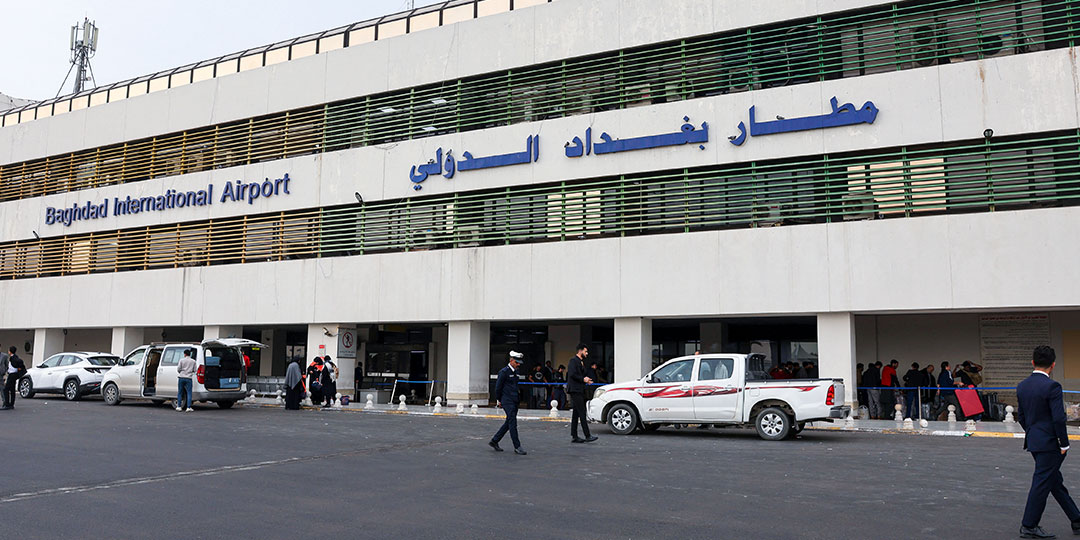

Baghdad International Airport’s compound, which houses a diplomatic support center operated by the US State Department, came under eight coordinated attacks using rockets and drones during the night of March 21-22, 2026, according to Iraqi security officials. The strikes represent an escalation in broader military operations across Iraq since the outbreak of Middle East war on February 28 when the United States and Israel launched attacks against Iran.
The attack on Baghdad Airport occurred as part of a wider campaign by Iraqi factions loyal to Iran, which conduct dozens of operations daily using rockets and drones against what they describe as “enemy bases” throughout Iraq and the region.
Details of the Eight Attacks on the Airport
An official with Iraq’s Joint Operations Command told AFP that “eight attacks using rockets and drones” struck the airport compound, with “some missiles falling in the vicinity and near the diplomatic support center, without causing casualties.”
This indicates that American air defense systems succeeded in intercepting several incoming rockets, though some weapons still reached the vicinity of the US diplomatic facility. The direct attacks on the center produced no reported casualties in initial reports, but the incident triggered significant security concerns among both American and Iraqi authorities.
Civilian Area Damage
The impact of the attacks extended beyond the airport compound itself. According to a security official, one drone “fell on a civilian house in the Saidiya area” near the airport, causing “material damage.” No casualties were reported from the strike on civilian areas, but it underscores the risks that civilians face when living near military and diplomatic installations.
Evacuation of American Personnel Underway
A senior security official told AFP on Saturday that “evacuation operations of the diplomatic support center are ongoing” in order to “evacuate staff from the country.” The evacuation reflects a direct American response to the escalating threat posed by attacks on a sensitive diplomatic facility.
However, the US State Department stated that “the United States mission in Iraq continues operations despite issuing an evacuation order, in order to assist American citizens in Iraq and support the administration’s foreign policy priorities.” The apparent contradiction between evacuation orders and continued operations suggests a complex security situation with competing priorities.
Diverging Attack Accounts
Accounts of the number of attacks diverged slightly. While one Joint Operations Command official reported eight attacks, a third security official referenced “at least six attacks.” Such discrepancies likely reflect natural inconsistencies between initial sources or different methodologies for categorizing attacks.
Discovery of Rocket Launch Platform
Iraqi police discovered a vehicle carrying a rocket launcher that was “used in an attack” on the diplomatic support center early Sunday morning. The vehicle had been “abandoned in an empty parking lot” in the Jihad neighborhood near the airport, according to a police official.
This discovery reflects a known tactic used by Iranian-backed factions: firing rockets from mobile platforms and then abandoning the vehicles before American or Iraqi forces can launch retaliatory strikes. It demonstrates the deliberate nature of the attacks and their tactical coordination.
Broader Context of War in Iraq
Since the American and Israeli attack on Iran on February 28, Iraq has become one of the countries drawn directly into the Middle East conflict. Iraq now experiences three overlapping levels of warfare:
First: American airstrikes targeting positions of Iraqi factions loyal to Iran.
Second: Daily attacks from Iraqi factions using rockets and drones against American interests and bases.
Third: Iranian strikes against opposing Kurdish groups in northern Iraq.
Operations Claimed by “Islamic Resistance in Iraq”
Iraqi factions loyal to Iran, organized under the banner of the “Islamic Resistance in Iraq,” claim daily operations using drones and rockets. In a statement issued Sunday morning, Islamic Resistance announced conducting “twenty-one operations using dozens of drones and rockets” over a 24-hour period.
The factions do not specify their targets with precision in most statements, using generic terminology such as “enemy bases” and “occupying forces,” leaving substantial room for interpretation regarding the actual targets of operations.
American Military Acknowledgment of Operations
The Pentagon acknowledged for the first time on Thursday that “combat helicopters conducted strikes against Iran-backed factions.” This admission represents an escalation in direct American military operations against Iraqi factions, moving beyond traditional airstrikes.
Pattern of Attack and Retaliation
Since the war’s outbreak, Iran-backed factions have repeatedly attacked the American embassy in Baghdad and the diplomatic support center at the airport. Air defense systems have intercepted most of these attacks conducted with rockets or drones. This pattern of attack and interception reflects an evolving dynamic of “action and response” between the factions and American forces.
Situation in Erbil and the Kurdish Base
Air defense systems in Erbil, capital of Iraqi Kurdistan in northern Iraq, also intercept drones over the city. Erbil airport hosts forces from the international anti-terror coalition led by the United States since 2014, as well as a major American consulate.
The attacks on Erbil indicate an Iranian and proxy strategy targeting all American facilities throughout Iraq regardless of location.
Conditions Set by Kataib Hezbollah Iraq for Ceasefire
Iraqi Kataib Hezbollah, loyal to Iran, declared early Thursday that it would “halt targeting the US embassy for five days” under specific conditions:
“The Zionist entity must cease displacing and bombing the suburbs of Beirut” (referring to Israeli operations in Lebanon)
“Commitment to not bombing civilian areas in Baghdad and other provinces” (requesting limits on American airstrikes)
“Withdrawal of CIA elements from their posts and their confinement within the embassy”
The faction warned that “if the enemy fails to comply, the response will be direct and concentrated, with escalation of strikes after the period expires.”
Compliance with Stated Conditions
Notably, AFP has not documented any attacks on the American embassy since that announcement, which may indicate that Kataib Hezbollah is adhering to its stated ceasefire, or alternatively may reflect a tactical shift toward other targets such as the airport and diplomatic support center.
Airstrikes on Popular Mobilization Forces in Mosul
Five people were wounded in airstrikes targeting a position of the Iraqi Popular Mobilization Forces (Hashd al-Shaabi) west of the city of Mosul. A security source in Nineveh province reported that two airstrikes targeted a position of the Special Tasks Brigade of the Hashd al-Shaabi in the Harmaat area.
The strikes occurred “after midnight between Saturday and Sunday,” and “resulted in five brigade members being wounded and transferred to hospitals for treatment.” A “combat aircraft remained flying over Mosul following execution of the airstrike,” possibly indicating follow-up surveillance operations.
Continuation of Conflict Cycle
The attack on Baghdad Airport and airstrikes on Mosul reflect the continuing cycle of conflict in Iraq, where Iraqi factions and American forces exchange strikes without pause.
Risks to Civilians and Critical Infrastructure
The escalating conflict creates mounting risks to civilian populations and critical infrastructure such as airports and utilities. Attacks on Baghdad International Airport impact civilian air traffic and commerce, potentially affecting Iraq’s broader economy.
American Response and Evacuations
The State Department spokesperson stated regarding possible evacuation of embassy and consulate personnel: “The US mission in Iraq continues operations to assist American citizens and support US foreign policy priorities, while reviewing all necessary measures to ensure the safety of American government employees and facilities.”
This statement reflects the complexity of American policy in Iraq, balancing the need to maintain diplomatic presence and operational capability against escalating security threats. Simultaneous evacuation orders and statements of continued operations suggest ongoing tension between security concerns and strategic objectives.
Conclusion:
The eight attacks on Baghdad International Airport and the US diplomatic support center represent a new level of conflict escalation in Iraq. With Iraqi factions continuing to conduct dozens of operations daily using rockets and drones, and American forces engaged in escalating retaliatory airstrikes and helicopter operations, Iraq has become a new battlefield in the broader Middle East war. The evacuation of American personnel from the diplomatic support center reflects the actual level of danger, and the threat posed by factions to American forces and installations throughout the country. The five-day ceasefire announced by Kataib Hezbollah regarding the embassy suggests some willingness to manage escalation, yet simultaneous attacks on the airport and military positions indicate the fragmented nature of decision-making among various armed factions.