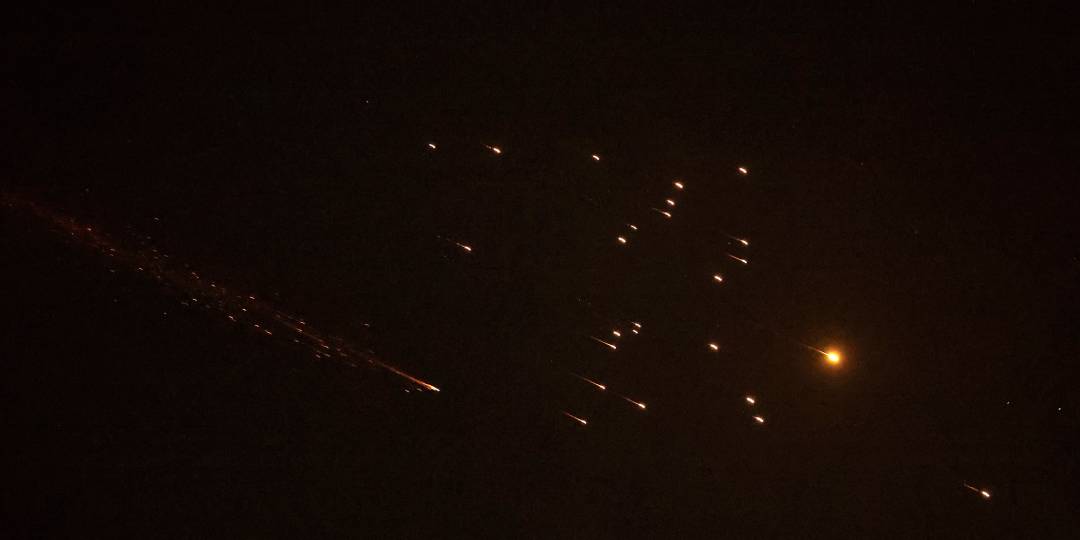

The Israeli military announced Saturday that it has conducted extensive strikes on Iranian military facilities, including a direct assault on the headquarters of Iran’s Naval Industries Organization in Tehran. The strikes are part of a broader wave of coordinated U.S.-Israeli attacks targeting Iran’s military-industrial complex. Israeli military spokesman Brigadier General Effie Defrin declared that within days, Israel will “complete attacks on all critical components of this industry,” aiming to destroy most of Iran’s military production capabilities and force a prolonged reconstruction period. However, military analysts raise urgent concerns about Israel’s long-term defensive capacity. Intelligence assessments indicate that Israeli and U.S. forces have expended massive quantities of defensive and offensive munitions in just the first 16 days of fighting initiated February 28, 2026, consuming 81.33 percent of Israel’s Arrow missile stockpiles and raising serious questions about ammunition sustainability in a protracted conflict.
Targeting Iran’s Naval and Military-Industrial Backbone
The Israeli military confirmed Saturday that it struck the Marine Industries Organization headquarters responsible for “research, development, and production of a wide range of naval weaponry, including surface and subsurface vessels, manned and unmanned equipment, as well as engines and weapons.” The strike was conducted as part of overnight operations extending from Friday into Saturday.
Military spokesman Brigadier General Effie Defrin announced in a televised briefing that Israel is accelerating operations against Iran’s military industries. “I can now say that within a few days, we will complete attacks on all critical components of this industry,” Defrin stated. “This means we will destroy most of its military production capabilities, and it will take the regime a long time to rebuild them.” This strategy reflects Israel’s determination to neutralize Iran’s ability to sustain prolonged military operations through degraded domestic production capacity.
Nuclear and Strategic Facilities Under Fire
Beyond naval production, U.S.-Israeli strikes have targeted Iran’s most sensitive military facilities since the war’s outbreak on February 28, 2026. These operations have directly targeted Iran’s nuclear sites, including uranium processing facilities and heavy water reactors. The comprehensive nature of the campaign suggests an intent to undermine Iran’s military capabilities across conventional, naval, and nuclear domains simultaneously.
Israeli Air Defenses Intercept Most Missiles but Face Critical Ammunition Shortages
Despite impressive interception rates of Iranian missiles and Hezbollah rockets, Israeli military analysts and independent researchers warn of critical ammunition depletion that threatens long-term defensive viability. The Israeli air defense system has achieved a reputation as one of the world’s most advanced and effective integrated defense networks.
The Israeli system operates on a “layered” configuration, enabling response to threats at any altitude. The Arrow 2 and Arrow 3 systems are capable of intercepting ballistic missiles traveling outside Earth’s atmosphere. The American THAAD system supplements Israeli defenses, with reports indicating one or two units deployed in Israeli territory. Colonel Benny Yungman, head of the Israeli security systems firm TSG, stated: “There is no place in Israel that is not protected by multiple layers of air defense.” However, he acknowledged that “in defense, we never reach 100 percent protection,” noting that Israel has achieved an “exceptional” interception rate of 92 percent.
Casualty Figures Reveal Defensive Limitations
According to the Israeli military, Iran has launched over 400 ballistic missiles since February 28. Military spokesperson Naftali Shosani reported that the interception rate has “exceeded expectations,” yet this apparent success masks underlying vulnerabilities. Most damage from Iranian attacks has resulted from interceptor debris falling on populated areas. However, among 19 civilians killed since the war’s outbreak, approximately half were killed by Iranian missiles that penetrated Israeli defense systems.
Ammunition Stockpiles Face Rapid Depletion in Sustained Conflict
Roughly two weeks into the war, U.S. media outlet Semafor reported, citing American sources, that Israel was “suffering from a serious shortage in ballistic missile interception systems.” An Israeli military source subsequently denied the claim, asserting there was no shortage “as of now” and that the military was “prepared for a long battle.” However, a recent analysis from the Royal United Services Institute (RUSI) reveals the true scope of ammunition consumption.
The RUSI report documents that the United States, Israel, and their allies expended massive quantities of both offensive and defensive munitions in the first 16 days of fighting: 11,294 individual munitions, valued at approximately 26 billion dollars. The report states that “long-range interceptor missiles and precision-guided munitions have been depleted almost completely” after the initial two weeks.
Production Constraints and Industrial Reality
Colonel Jahara Matusek, one of the RUSI study’s primary authors, explained the deeper crisis underlying ammunition shortages: “This means that if the war continues, Israeli and American aircraft will need to penetrate deeper into Iranian airspace. On the defensive side, this means destroying more Iranian missiles and drones.” However, production timelines are problematic. Matusek clarified: “This is not only about money, but industrial reality,” pointing to “long lead times for components, limited testing capacity, and production chains that are not dispersed across multiple locations.” Israeli Arrow interceptor missiles require extended manufacturing timelines and extremely high production costs.
According to the RUSI analysis, Israel has depleted 81.33 percent of its pre-war Arrow missile stockpiles and is likely to exhaust them “completely by the end of March” if current consumption rates continue. The implications are sobering: ammunition depletion within a mere four weeks of intensive operations raises fundamental questions about Israel’s capacity to sustain air defense at current levels if the conflict extends into April or beyond.
System Malfunctions Compound Ammunition Concerns
The Israeli defense network is not immune to technical failures. The military acknowledged that a malfunction in the David’s Sling mid-range air defense system allowed two Iranian missiles to penetrate defenses last week, striking two southern Israeli cities, including Dimona, which hosts a nuclear facility in the Negev Desert. According to Israeli media outlet Calcalist, the military prioritized deployment of the shorter-range David’s Sling system to preserve its limited stockpile of Arrow interceptor missiles.
David’s Sling comprises the middle tier of Israel’s layered air defense architecture, complementing the “Hetz” (Arrow) and Iron Dome systems, along with the laser-based “Iron Beam” system responsible for intercepting a broad spectrum of incoming threats. System integration is critical to plugging defensive gaps, but technical failures expose vulnerabilities in this architecture.
Three Strategic Options Facing Israel
Researcher Jan Loub Saman of the Middle East Institute Singapore outlines three strategic options Israel faces in confronting Iranian missile threats:
- Integrated Defense Optimization: Consolidating disparate air defense systems to maximize coverage and minimize gaps
- Accepting Limited Losses: Allowing some missiles and drones to strike unpopulated areas, thereby conserving precious interceptor inventory for populated centers
- Escalatory Military Pressure: Sustaining and intensifying military pressure against Iran to degrade offensive capabilities before Israeli defensive ammunition is completely exhausted
The Sustainability Paradox
General Benny Yungman expressed confidence that Israel can produce interceptor missiles faster than Iran can manufacture ballistic missiles. Yet this assertion must be weighed against RUSI data revealing that Israeli and American production capacity struggled to meet consumption demands even in peacetime. In wartime, production bottlenecks become acute. Supply chains are not diversified. Component procurement faces delays. Testing capacity is limited. Under these constraints, Israel cannot rapidly regenerate 81 percent of its exhausted Arrow missile inventory.
Conclusion:
Israel’s strikes on Iranian military facilities reflect a clear offensive strategy aimed at degrading Tehran’s military production capacity and forcing a lengthy reconstruction period. Yet this tactical-operational success masks a critical strategic vulnerability: Israel’s defense is unsustainable at current consumption rates. While Israeli air defenses have intercepted 92 percent of Iranian projectiles—an exceptional achievement—this rate consumes ammunition at rates that deplete critical stockpiles within weeks, not months. If the conflict extends beyond March, Israel faces a difficult choice: expand the geographic scope of offensive operations to further degrade Iranian offensive capabilities before defensive ammunition is exhausted, accept increasing penetration of defense layers in populated areas, or negotiate a settlement before defensive capacity collapses. The real battle may not be in the skies above Iran, but in the industrial capacity to sustain defense in prolonged conflict.