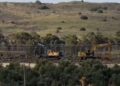

Iranian forces conducted extensive missile and drone attacks against the United Arab Emirates and Jordan on Saturday, causing fires, civilian casualties, and significant economic damage to critical infrastructure. The attacks on the Khalifa Economic Zone in Abu Dhabi struck commercial and industrial facilities, including a direct hit on the UAE operations of Emirates Global Aluminum, one of the world’s largest aluminum producers. The Jordanian military reported that Iran launched 262 ballistic missiles and unmanned aerial vehicles at the kingdom since the war began February 28, with Jordan’s air defense successfully intercepting 242 projectiles but allowing 20 to penetrate defenses. The attacks resulted in 30 Jordanian casualties, destruction of 25 vehicles, 55 residences and shops, and 14 public facilities. The coordinated assault on two key Gulf states reflects Iran’s expanding campaign of economic coercion against states hosting U.S. military presence, as Tehran continues retaliatory operations in response to American-Israeli offensive operations that initiated the February 28 conflict.
Khalifa Economic Zone Targeted in Precision Campaign Against Industrial Facilities
Emirates authorities announced Saturday that Iranian missiles and drones had attacked the Khalifa Economic Zone industrial area in Abu Dhabi, resulting in multiple fires from interceptor debris and six civilian casualties ranging from moderate to minor injuries. The Abu Dhabi Media Office confirmed that “five Indian nationals sustained moderate to minor injuries” after shrapnel fell from the successful interception of a ballistic missile. A Pakistani national was subsequently injured in a third fire, bringing total casualties to six, described as “ranging from minor to moderate.”
The attack strategy targets economic infrastructure specifically. The UAE Defense Ministry confirmed: “UAE air defense and fighter jets engaged incoming missile and drone attacks originating from Iran.” While Iran’s offensive capabilities were partially neutralized by defensive systems, the interception process itself created secondary hazards as falling debris ignited fires across the industrial zone.
Emirates Global Aluminum Reports Damage and Staff Injuries
Emirates Global Aluminum, one of the world’s largest aluminum producers and a strategic economic asset for the UAE, disclosed direct damage to its Al-Taweelah facility within the Khalifa Economic Zone. The company stated in an official announcement: “The Al-Taweelah site operated by Emirates Global Aluminum suffered damage from Iranian rocket and drone attacks on Khalifa Economic Zone, and damage assessment is currently underway.”
The company confirmed that “a number of company employees sustained injuries ranging from minor to moderate with no critical injuries.” The operational status of the facility remains under assessment. Damage to such a critical economic facility carries implications extending beyond the immediate site, potentially affecting global aluminum supply chains and production timelines for industries dependent on UAE-sourced material.
The incident marks the first direct strike on major multinational industrial infrastructure in the Gulf region during the current conflict, signaling Iran’s willingness to target strategic economic assets that benefit Western and allied economies.
Jordan Reports Sustained Iranian Missile Campaign with Mixed Defensive Results
The Jordanian military disclosed comprehensive casualty and damage statistics from Iran’s month-long campaign, revealing the scale of pressure exerted on the kingdom. The armed forces announced that 262 Iranian ballistic missiles and unmanned aerial vehicles have targeted Jordanian territory since February 28, with the Royal Air Force successfully intercepting and destroying 242 of these projectiles.
This means 20 missiles and drones successfully penetrated Jordan’s integrated air defense system. The Jordanian General Security Service reported that “total debris from downed missiles, drones, and interceptors since the war began totaled 478 separate impacts.” The scale of debris falling on populated areas underscores the danger posed by intensive air defense operations, where the interception process itself creates secondary hazards.
Casualty and Infrastructure Destruction
Casualty figures from Iran’s sustained campaign total 30 wounded, nearly all of whom “have been released from hospital care except for one critical case,” according to official Jordanian health data. Material losses are substantial:
- 25 vehicles destroyed or damaged
- 55 residential homes and shops damaged
- 14 public facilities destroyed or damaged
The cumulative damage reflects Iran’s deliberate targeting of populated civilian areas and economic infrastructure. The Jordanian military reaffirmed its commitment to “continue performing its duty with full force to preserve national security and the safety of its citizens,” despite ongoing bombardment.
Escalating Campaign Through the Fourth Week
Jordan reported that “22 missiles launched from Iran targeting the kingdom’s territory in the fourth week of the regional war.” This figure indicates sustained Iranian attack tempo and deliberate strategic choice to maintain pressure on Jordan throughout the conflict’s duration. Iran has not permitted de-escalation but instead maintains offensive operations at consistent intervals, suggesting long-term commitment to the campaign.
Iranian Revolutionary Guard Escalates Targeting Strategy
Following successful strikes on Iranian steel and military industrial facilities by U.S.-Israeli forces, the Iranian Revolutionary Guard Corps escalated its targeting rhetoric and threat posture. The IRGC issued warnings directing employees of U.S.-connected industrial facilities across the region to evacuate their workplaces. The IRGC also called on Middle Eastern civilians to distance themselves from locations housing American military forces, signaling intent to expand targeting parameters to include facilities with indirect U.S. affiliation.
These warnings constitute official notice of expanded targeting intent and suggest Iran intends to pursue economic coercion against Gulf states by deliberately striking facilities with American corporate involvement or military-related supply chain roles. The strategy reflects Iran’s inability to directly counter U.S.-Israeli military superiority, instead targeting economic vulnerabilities and civilian-inhabited areas to impose costs that generate internal political pressure.
Economic Coercion as Warfare Strategy
Iran’s targeting of industrial zones and commercial facilities rather than exclusively military installations indicates a deliberate economic warfare strategy. By striking aluminum production, transportation networks, residential areas, and commercial infrastructure, Iran seeks to impose economic costs on states that host U.S. military presence or align with U.S. coalition objectives. This approach aims to create domestic pressure within targeted nations to restrict U.S. military operations or withdraw from U.S.-led coalitions.
The deliberate selection of targets demonstrates Iranian willingness to harm civilian economic interests as a political tool. The damage to Emirates Global Aluminum, a global industrial leader, extends beyond national borders, potentially affecting aluminum consumers worldwide and demonstrating Iran’s global reach through economic coercion.
War Enters Second Month with Cumulative Regional Damage
The conflict has now entered its second month since February 28 initiation. The sustained Iranian campaign against Gulf states demonstrates that Tehran views regional economic targets as legitimate objects of warfare. Unlike precision military targeting, the pattern of attacks on industrial zones and populated civilian areas suggests deliberate intent to maximize economic and human costs.
Broader Implications for Regional Stability
Attacks on critical infrastructure like Emirates Global Aluminum carry implications extending throughout global supply chains. Aluminum production disruptions affect automotive, aerospace, electronics, and construction industries worldwide. Damage to transport networks and residential infrastructure impairs civilian economic functioning and creates humanitarian pressures that may influence government policy and public opinion.
The scale of Iranian missile expenditure required to maintain assault tempo against two nations simultaneously carries strategic implications. Launching 262 missiles against Jordan alone, concurrent with attacks on UAE, indicates substantial resource commitment and confidence in Iran’s ability to sustain operations despite U.S.-Israeli counter-strikes against Iranian industrial capacity.
Sustainability Questions and Resource Constraints
Observers note that the rapid consumption of ballistic missiles at this scale raises questions about Iran’s ability to sustain the campaign indefinitely. While Iran possesses significant missile inventories, the replacement rate depends on functioning domestic production facilities. Recent U.S.-Israeli strikes targeting Iranian military-industrial capacity create pressure on these production systems, potentially constraining future Iranian capabilities.
However, Iran’s demonstrated willingness to expend substantial resources on the campaign suggests strategic commitment to maintaining pressure on Gulf states for an extended period, potentially through the conflict’s duration.
Conclusion:
Iran’s coordinated attacks on the UAE and Jordan demonstrate that Gulf states are no longer peripheral to the conflict but central targets in Iran’s retaliatory strategy. While these nations maintain official neutrality and avoid direct military participation, their geographic proximity, hosting of U.S. military logistics infrastructure, and economic integration with Western markets make them vulnerable to Iranian assault. The damage inflicted on commercial and industrial facilities, cumulative civilian casualties, and degradation of residential infrastructure represent a strategic Iranian calculation: that imposing economic and human costs on Gulf states will create internal pressure to distance themselves from U.S. objectives. Whether this strategy will induce policy changes remains uncertain, but its effectiveness in generating widespread disruption is undeniable. As the war enters its second month, Gulf states face intensifying pressure on both their military defenses and economic foundations.