
Iraq, which has begun stabilizing after decades of conflict, has rapidly descended into the war launched by the United States and Israel against Iran. Following the launch of coordinated strikes on Tehran on February 28, Iraqi airspace has become a theater for multiple forms of warfare: airstrikes targeting facilities of Iran-backed armed groups, attacks against American interests, and Iranian cross-border strikes targeting Kurdish opposition factions in the north.
Iraq has long served as a battleground for power competition between Washington and Tehran. Successive Iraqi governments since the 2003 American invasion have struggled to maintain a delicate balance between the two competing powers. The current war has forced Baghdad and Erbil to confront contradictory pressures and mutual threats.
Neither the United States nor Israel has acknowledged conducting strikes on Iraq since the war began, despite accusations to that effect. Conversely, Iraqi factions have claimed responsibility for dozens of attacks on “enemy bases” in Iraq and the region, without clearly specifying targets.
Iran-Backed Militias and Ongoing Military Operations
Extensive Iranian Influence and Armed Support Networks
Iran wields considerable influence over Iraqi politics and supports armed groups classified as “terrorist” by the United States. These groups have expanded their financial and political influence in recent years, with some securing parliamentary seats.
Following the start of the war last week, Iran-backed factions announced they would not remain neutral and began attacking American bases on Iraqi territory using unmanned drones. In parallel, military facilities housing these groups came under bombardment, with factions accusing the United States and Israel of responsibility despite lack of official American or Israeli confirmation.
Popular Mobilization Forces and Independent Operations
Some groups maintain brigades within the Popular Mobilization Forces, a coalition established in 2014 to fight ISIS before formally joining Iraq’s military establishment. However, these factions also operate independently, including Hezbollah Brigades, Sayyid al-Shuhada Brigades, and Imam Ali Brigades, functioning within the “Islamic Resistance in Iraq” alliance, which maintains close ties to Tehran.
Daily Attacks on American Targets Without Clear Attribution
The “Islamic Resistance in Iraq” announces daily attacks using drones and missiles against “enemy bases” without specifying targets clearly. Baghdad International Airport, which hosts a military base providing logistical support to the U.S. embassy, has been targeted repeatedly. Air defenses at the U.S. embassy in Baghdad also intercepted a missile attack Saturday evening.
American Economic and Military Assets Under Assault
Oil Fields and Critical Infrastructure Targeted
Oil fields operated by foreign companies, including American firms, have come under bombardment in Basra in the south and Kurdistan in the north. These strikes reflect attempts by factions to exert pressure on American and Western economic interests.
Washington warned Friday that Iraqi factions allied with Iran could target hotels frequented by foreigners in Kurdistan, particularly as at least two hotels have already been attacked. These warnings reflected American concerns about the expansion of operations against foreign interests.
American Forces and International Coalition Presence
The semi-autonomous Kurdistan region hosts forces from the international coalition led by Washington since 2014. The United States maintains a substantial consulate in the region, making it an increasingly prominent focus for operations.
Air defenses in Erbil intercept drones over the city daily, reflecting sustained pressure on American military presence. The region has experienced multiple attacks since the war began.
Iranian Kurdish Opposition and Complex Calculations
Kurdish Camps and Iranian Bombardment Operations
Kurdistan hosts camps and bases for Iranian Kurdish opposition factions, which Tehran has repeatedly attacked. Iran accuses these groups of conducting operations inside Iranian territory and serving Western and Israeli interests.
Saturday strikes targeted headquarters of Iranian Kurdish parties in the region. An official from one opposition party told AFP that three party headquarters suffered drone strikes during daylight hours in Erbil without casualties.
Strikes resumed at night, targeting positions of Komelah party near Sulaimani, killing one person and wounding three others. After midnight, an AFP correspondent heard explosions and saw smoke columns near United Nations offices in the city.
Kurdish Political Alliance and Stated Objectives
Five Kurdish groups, including the Kurdistan Free Life Party (PJAK) and the Democratic Party of Iranian Kurdistan (PDKI), announced formation of a political alliance aimed at overthrowing Tehran’s government and ensuring Kurdish self-determination.
The Iranian Revolutionary Guard announced in a statement that it struck “three separatist group positions in the Kurdistan region,” threatening to “crush” any separatist movements opposing Iranian territorial unity.
American Hopes and Sensitive Balancing Acts
Despite fluctuating Kurdish relations with Americans, Iranian Kurds may seek alliance with Washington to benefit from potential weakening of the Islamic Republic. Kurdish leader Amir Karimi told AFP “Americans are present in the region and we have held dialogues with them.”
Reports suggested possibility of Iranian Kurdish opposition conducting ground operations against Iran from Kurdistan with American support. However, Trump stated Saturday “I don’t want that,” adding “we have a very friendly relationship with the Kurds but we don’t want to complicate this war further.”
Iran threatened Friday to target “all facilities” in Iraqi Kurdistan if fighters from the region enter Iranian territory.
Baghdad and Erbil Governments Between Pressures and Threats
Attempts to Maintain Formal Neutrality Amid Pressure
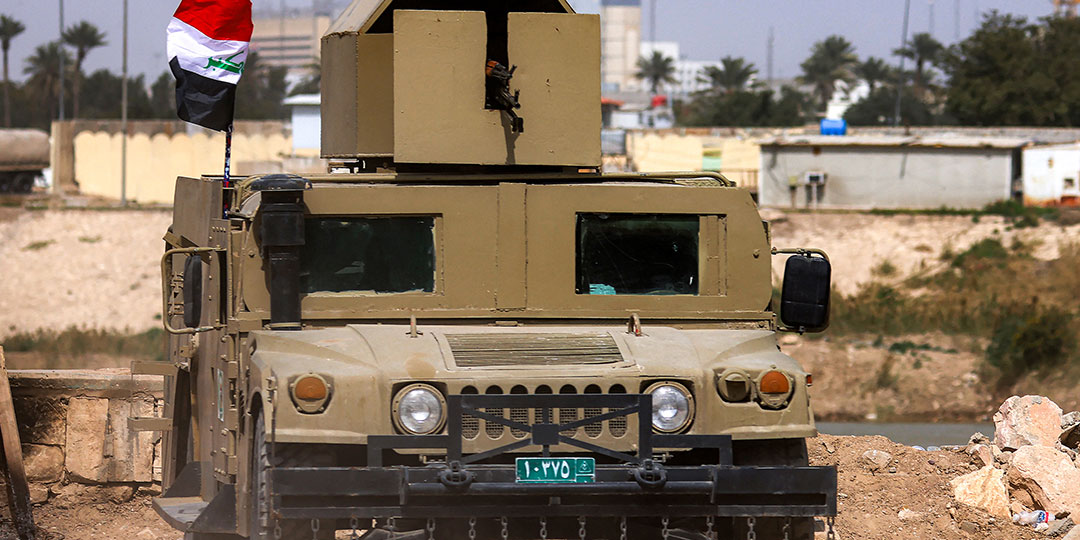
Since the war began, authorities in Baghdad and Erbil have found themselves in a conflict with no direct role or tangible influence over. Both the federal government and regional authorities emphasized that Iraqi territory would not serve as “a launching ground for attacking neighboring countries.”
Prime Minister Muhammad Shia al-Sudani ordered Saturday evening “prosecution of perpetrators of terrorist acts firing projectiles toward the U.S. embassy vicinity and their delivery to justice.” He emphasized that “targeting diplomatic missions and embassies operating in Iraq is an act that cannot be justified or accepted under any circumstance.”
Border Security and Official Denials of Cooperation
Lieutenant General Muhammad Shakir, commander of Iraqi border forces, confirmed Saturday that “all borders with neighboring countries are fully secured,” emphasizing absence of “infiltration or smuggling.”
In Iraqi Kurdistan, drones targeted Kurdish security forces following reports that the region might support incursions into Iran, claims firmly denied by regional authorities.
Iraqi Kurds Reject Participation in War “Not Their War”
Daily Fear and Continuous Drone Operations
In the Kurdish village of Soran, approximately 65 kilometers from the Iranian border, Sttar Barzini, a former Kurdish Peshmerga fighter, points to the sky, complaining about constant drone passages since the war began, viewing this as “not his war.” Barzini told AFP “they come from everywhere, especially at night,” noting drones “cause vibrations when they hit” the ground.
The 58-year-old continues “we just want to live. We’ve already paid a heavy price for Kurdish liberation.”
Historical Memory and Deep Iranian Loyalty
Barzini recalls the repression of Kurds under the late Saddam Hussein’s regime following the 1991 uprising, which drove approximately two million Kurds to Iran and Turkey. He explains “when we fled our cities, we went to Iran. The Iranians helped us, gave us shelter and food. We cannot turn against them now” to support the United States and Israel.
He adds “I don’t trust them (Americans). They are dangerous.”
Kurds inhabit mountainous regions across Turkey, Syria, Iraq, and Iran, forming one of the largest non-Persian ethnic minorities in Iran. They have supported anti-Islamic Republic protests but have suffered decades of military defeats and massacres in their cities.
Direct Impact on Daily Life and Economic Activity
Residents confirm the week-long war directly affects their daily lives. Police officer Nasir al-Din (42), who lived the 1991 exodus on “donkey-back” with his sister, states “people are frightened.”
He adds “this generation differs from the previous one that witnessed fighting. Today you could be sitting in your home and a drone targets it.” Truck driver Issa Diyari (31) says “we may need to go to the city or somewhere safer.”
A drone fell Thursday in a Soran street populated by approximately 3,000 people.
Economic Impact and Fears of Escalation
Baker Yousef Ramadan (42) prepares bread with three apprentices before Ramadan fast-breaking time, yet “people fear coming to buy” from a location so close to the Iranian border.
He sees “Kurdish region involvement in this war” as “not a good idea,” explaining “we’re not even an independent state yet, so we shouldn’t engage in these situations.”
Security Developments and Humanitarian Dimensions
Displacement of Iranian Diplomats via Russian Aircraft
More than 100 Iranians, including diplomats, departed Lebanon on a Russian aircraft in early Sunday morning hours. A Lebanese official told AFP “117 Iranians, including diplomats and embassy staff, departed Beirut on a Russian aircraft during Saturday night-to-Sunday hours.”
The official added the Russian aircraft also carried remains of an Iranian diplomat, his wife, and their three children, killed during the war. The aircraft proceeded to Turkey without specifying final destination of Iranian passengers.
Strikes on Kurdish Opposition and Casualty Tolls
The Iranian Revolutionary Guard announced Saturday morning that it targeted “separatist groups” in Iraqi Kurdistan. In a statement carried by Tasnim agency, the Guard announced “striking three positions of separatist groups in the (Kurdistan) region of Iraq” Saturday morning, threatening “if separatist groups in the region take any action against Iran’s territorial integrity, we will crush them.”
Conclusion:
Iraq’s current situation reflects genuine complexities of regional conflicts and legacies of occupation and foreign influence. While Baghdad and Erbil attempt to maintain official neutrality, multiple actors actively engage in warfare: Iran-backed factions attack American interests, Tehran strikes Kurdish opposition, and Kurds themselves remain divided between historical Iranian sympathy and current American pressure. Iraq remains a test case for a relatively weak government’s ability to maintain sovereignty amid contradictory pressures. The Iraqi people, particularly Kurds, pay the primary price for a war they did not choose and do not consider theirs.