
More than 100 Iranians, including diplomats and embassy officials, departed Lebanon aboard a Russian aircraft in the early hours of Sunday morning, according to a Lebanese official who spoke to Agence France-Presse. The evacuation occurred as the conflict between Israel and Hezbollah entered its second week, with intensifying Israeli airstrikes claiming hundreds of lives across Lebanese territory.
A Lebanese official, speaking on condition of anonymity, told AFP: “One hundred seventeen Iranians, including diplomats and embassy staff, were evacuated aboard a Russian aircraft that departed Beirut during the night between Saturday and Sunday.”
The source added that the Russian aircraft also carried the remains of an Iranian diplomat, his wife, and their three children, who were killed during the war. The evacuation had been coordinated with Lebanese authorities in advance through the Iranian embassy.
The aircraft proceeded toward Turkey, though the final destination of the Iranian passengers was not specified. The plane departed from Beirut Airport, located near the southern suburbs, which have faced intense Israeli bombardment since last Monday.
Evacuation Details and Diplomatic Coordination
Scale of Iranian Withdrawal
The evacuation of 117 Iranians represented a significant withdrawal of Iran’s diplomatic and official personnel from Lebanon amid the escalating conflict. The group included embassy staff members and diplomatic officials whose presence in Beirut had become increasingly precarious given the intensity of Israeli airstrikes.
The Lebanese official noted that the Iranian embassy had informed Lebanese authorities of the evacuation operation in advance, suggesting coordinated planning between the two governments despite the broader regional conflict.
Repatriation of War Casualties
Beyond the living evacuees, the Russian aircraft transported the remains of an Iranian diplomat, his wife, and their three children who had been killed during the ongoing hostilities. The repatriation of these remains underscored the human toll the conflict was exacting on Iranian diplomatic personnel and their families stationed in Beirut.
This aspect of the evacuation highlighted how the expanding conflict was claiming lives not only among combatants but also among civilian diplomatic and administrative personnel.
Airport Operations Amid War
Despite the intense bombardment, Beirut Airport continued operating, though most flights were operated by Lebanese carrier Middle East Airlines. Most international carriers had suspended operations to and from Lebanon, leaving limited transportation options for those seeking to depart the country.
The airport’s location near the southern suburbs, which have been subjected to relentless Israeli airstrikes since Monday of the previous week, underscored the precarious security situation surrounding the facility’s continued operations.
Iranian Military Coordination and Hezbollah Operations
Iranian Liaison Officers Coordinating Hezbollah
A Lebanese security source told AFP that “Iranian liaison officers are coordinating with Hezbollah on its current operations in the war.” The coordination reflects the deep integration of Iranian military planning with Hezbollah’s military activities.
The liaison officers had been present in Lebanon to facilitate coordination between Tehran and Hezbollah, ensuring alignment of military operations and strategic objectives. Their presence underscored Iran’s direct involvement in directing the conflict through its Lebanese proxy force.
Origins of the Current Conflict
The conflict between Israel and Hezbollah began with the latter launching a barrage of rockets toward Israel in what the organization characterized as retaliation for the killing of Supreme Leader Ali Khamenei. The initial Hezbollah salvo marked the opening of a direct military confrontation that has since escalated significantly.
The death of Khamenei in U.S.-Israeli airstrikes on Iran provided the immediate trigger for Hezbollah’s military response, linking the broader regional war to the succession crisis in Tehran.
Israeli Airstrikes and Rising Casualty Toll
Sunday Morning Hotel Strike in Beirut
An Israeli airstrike targeting a hotel on Beirut’s waterfront early Sunday killed four people and wounded ten others, according to Lebanon’s health ministry. The strike on the Ramada Hotel in the Rousheh area demonstrated Israel’s willingness to target locations in the capital itself, escalating the geographic scope of the conflict.
The Israeli military characterized the strike as a “precision-guided operation” targeting “senior leaders of the Lebanon Division of the Quds Force of the Iranian Islamic Revolutionary Guard Corps who were operating in Beirut.”
Casualty Toll Reaches 394 in One Week
Lebanese Health Minister Rakan Nasreddine announced Sunday that Israeli airstrikes had killed 394 people in one week, including 83 children and 42 women, with an additional 1,130 people wounded.
Nasreddine condemned the “unacceptable” bombardment of medical facilities and ambulance crews, emphasizing that Israeli airstrikes were targeting civilians, homes, paramedics, and the health care sector broadly. He confirmed the deaths of nine paramedics since the war began Monday and reported that four hospitals had sustained partial damage.
Escalation in Pace of Casualties
According to Nasreddine, the “pace of massacres” had increased significantly in the preceding 48 hours. A prior toll released by the health ministry on Saturday had reported 294 deaths since the war’s onset. The jump to 394 deaths by Sunday represented a sharp increase in the daily casualty rate.
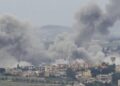
Since Sunday dawn alone, at least 20 people had been killed in scattered Israeli strikes across Beirut and southern towns.
Targeting of Civilian Areas and Villages
Mass Casualties in Southern Towns
An Israeli airstrike on Sire al-Gharbyia in Nabatiyeh district in southern Lebanon killed at least 11 people, according to the health minister, who emphasized that “there are still people under the rubble.” A separate strike on Tuffahta in Sidon district killed six people.
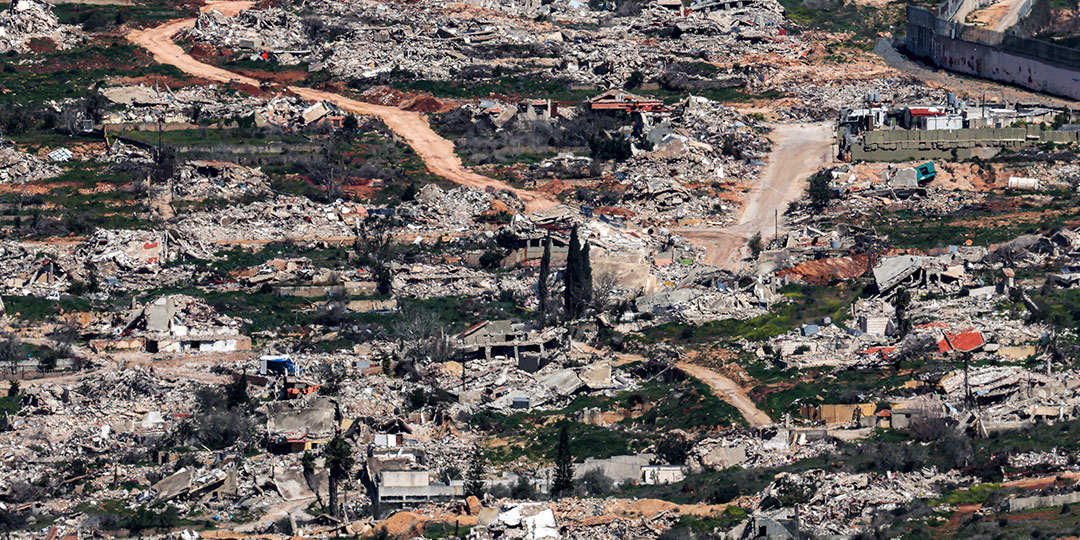
An AFP correspondent witnessed the destruction in Sidon district, observing a building reduced to rubble while rescue workers searched for missing persons among the debris.
Civilian Evacuation Orders and Warnings
The Israeli military renewed warnings Sunday for residents of villages south of the Litani River in southern Lebanon to evacuate the area completely, stating that “airstrikes are continuing as the Israeli Defense Forces are operating with significant force in the region.” The military directed residents to “move immediately north of the Litani River.”
Notably, towns including Sire al-Gharbyia, Tuffahta, and Ghaziyeh are located north of the Litani River, contradicting the evacuation directive and raising questions about the military’s statements and intentions.
Destruction and Civilian Impact
An AFP correspondent in Sire al-Gharbyia witnessed a house completely destroyed by an airstrike, with debris scattered across the area. A resident, Ali Youssef Taha, told AFP that the bombardment occurred around 6 a.m., “resulting in a massacre with civilians living in this building.”
According to Sire al-Gharbyia’s mayor, Saadallah Mohammad Matouq, “We have at least 500 families here,” emphasizing that “this building has three stories and contains children and elderly residents.”
Targeting of Refugee Camps
Ain al-Hilweh Palestinian Refugee Camp Struck
Two Israeli airstrikes targeted the Ain al-Hilweh Palestinian refugee camp in Sidon in southern Lebanon on Sunday, according to Lebanon’s National News Agency. The strikes on the refugee camp, which houses thousands of Palestinian refugees, represented another escalation in the geographic scope of the Israeli bombardment campaign.
The strikes underscored that the conflict was not limited to confrontation with Hezbollah but was increasingly affecting civilian populations, including vulnerable refugee populations with no direct involvement in the hostilities.
Broader Pattern of Civilian Targeting
The escalating pattern of strikes on civilian areas, refugee camps, medical facilities, and residential buildings suggested that civilian infrastructure and populated areas were increasingly becoming targets, raising serious humanitarian concerns and questions about adherence to international law governing armed conflict.
Conflict Timeline and Escalation Pattern
One Week of Intense Bombardment
The Israeli-Hezbollah conflict had now lasted one week, with the intensity of airstrikes increasing daily. What began as Hezbollah’s rocket salvo in response to Khamenei’s death had escalated into a broad Israeli air campaign targeting sites across Lebanon, from the capital to the southern regions.
Israeli Military Operations in the Region
On Tuesday, the Israeli military announced it had killed a key liaison officer responsible for Lebanon within the Quds Force external operations unit of the Iranian Islamic Revolutionary Guard Corps in Tehran. The elimination of this coordination hub underscored Israel’s strategy of targeting the command structure linking Iran to Hezbollah operations.
Lebanese Government Response
The Lebanese government decided Thursday to ban any activity by the Iranian Islamic Revolutionary Guard Corps in the country and impose a visa requirement for Iranians entering Lebanon, marking a formal policy shift in response to the escalating confrontation between Iranian-backed Hezbollah and Israel.
Regional and International Implications
Connection to Broader Regional War
The escalation in Lebanon is intrinsically linked to the broader U.S.-Israeli war against Iran that began February 28 with airstrikes killing Supreme Leader Khamenei. The conflict in Lebanon represents an extension of that broader regional confrontation, with Hezbollah acting as Iran’s primary proxy force in Lebanon.
Humanitarian Crisis Dimensions
The rapidly rising casualty toll, displacement of civilians, targeting of medical facilities, and strikes on refugee camps have created an acute humanitarian crisis. The concentration of strikes on civilian areas, combined with evacuation orders that contradict geographic realities, suggests mounting confusion and potential war crimes.
International Dimensions of Evacuation
The evacuation of Iranian diplomatic personnel aboard a Russian aircraft underscores the international dimensions of the conflict. Russia’s willingness to facilitate Iranian evacuation suggests Moscow’s alignment with Tehran, even as the broader regional conflict unfolds.
Conclusion:
The evacuation of over 100 Iranian diplomatic and official personnel from Beirut aboard a Russian aircraft marks a significant escalation in the conflict’s implications for regional stability. With Israeli airstrikes claiming 394 lives in just one week, including substantial numbers of children and women, and with strikes now targeting civilian areas, refugee camps, and medical facilities, the conflict has entered a critical humanitarian phase. The coordination between Iranian liaison officers and Hezbollah, combined with Iran’s formal withdrawal of diplomatic presence, suggests Tehran views the conflict as entering a sustained confrontation phase. As the conflict enters its second week with no indication of de-escalation, the humanitarian crisis in Lebanon continues to worsen, raising urgent international humanitarian concerns and questions about the conflict’s broader implications for regional peace and stability.