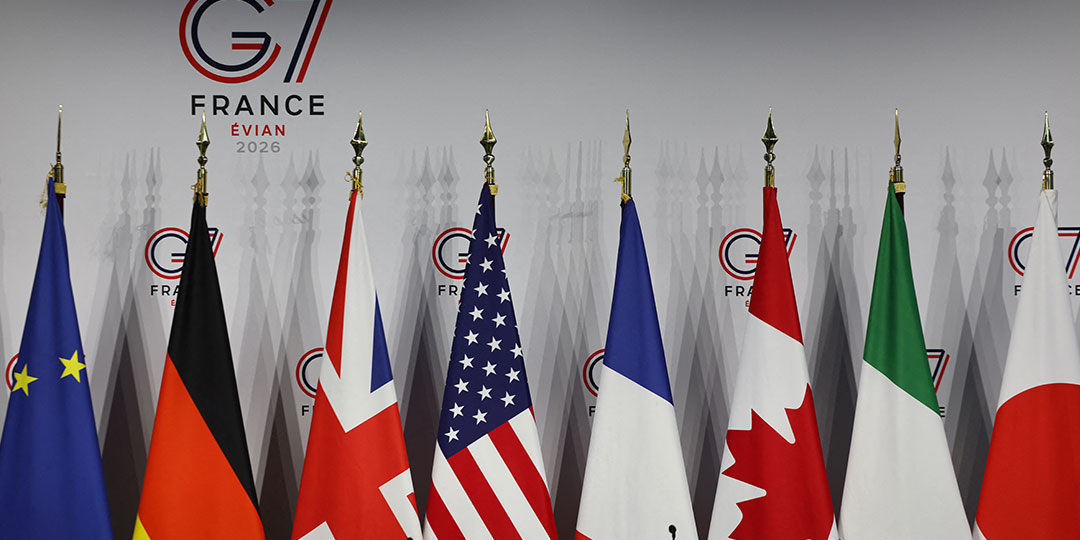

Finance ministers of Group of Seven nations convene Monday via video conference to “assess the situation in the Gulf” from an economic perspective, the French Ministry of Economy and Finance announced Sunday. The emergency meeting responds directly to recent developments in the Middle East, where the ongoing U.S.-Israeli war against Iran continues to impact regional and global economic stability.
French Finance Minister Roland Lesterre will chair the session from Brussels, where he simultaneously attends a Eurogroup meeting. France currently holds the G7 presidency, which includes the United States, Japan, Canada, the United Kingdom, Germany, and Italy alongside France.
Emergency Meeting and Response to Regional Crisis
Economic Coordination in Crisis Response
The French Ministry of Economy and Finance stated in an official statement that the meeting “was organized specifically in response to recent events” and aims to “provide an opportunity to assess the situation in the Gulf from an economic perspective.” This rapid coordination reflects growing concerns about the impact of regional conflict on global economic stability and vital commercial flows.
The meeting comes in the context of ongoing warfare since February 28, when the United States and Israel launched their extensive military campaign against the Islamic Republic of Iran.
Lesterre’s Position and Coordination Imperative
French Finance Minister Roland Lesterre emphasized “the need for coordination” in light of the conflict, describing it as “regional currently but with global repercussions.” This characterization reflects deep understanding by French leadership that the Gulf conflict extends beyond geographic boundaries, affecting global markets and international economic growth.
The emphasis on coordination indicates necessity for Group of Seven to adopt unified positions regarding crisis impact on global economy, particularly concerning oil prices, energy markets, and international trade.
Member Participation and Shared Interests
The Group of Seven comprises the world’s largest advanced economies, each maintaining multiple economic and strategic interests in the Gulf region and broader Middle East. The meeting provides a platform for policy coordination and unified positioning regarding crisis developments.
Macron’s Cyprus Visit and French Military Deployment
Presidential Visit Expressing European Solidarity
French President Emmanuel Macron visits Cyprus Monday, his office announced Sunday. The visit includes meetings with Cypriot President Nikos Christodoulides and Greek Prime Minister Kyriakos Mitsotakis in Paphos. The visit aims to express “solidarity” with European Union member states and provide details on steps to “strengthen security around Cyprus and in the Eastern Mediterranean.”
The visit comes following recent events, with a British military base in Cyprus targeted Monday by Iranian-made drones, prompting France to immediate military response.
Naval Deployment and Military Reinforcements
In response to drone attacks on the island, France dispatched the aircraft carrier “Charles de Gaulle” to the Mediterranean, along with a frigate and advanced air defense units to Cyprus. This rapid military move reflects France’s commitment to securing its interests and allies in the region.
The Elysée confirmed that “this visit aims to express France’s solidarity with Cyprus, an European Union member state with which we share a strategic partnership.” France emphasized that its position in the region is “purely defensive,” lacking offensive or interventionist dimensions.
Strategic Partnership and Broader European Cooperation
Cyprus government spokesperson Konstantinos Letembeotis explained the visit will allow leaders of Cyprus, Greece, and France to assess “the high level of coordination” among the three nations. He specifically noted Italy’s role, which, like the United Kingdom, deployed a warship to the island.
This expanded European cooperation reflects shared understanding of necessity to maintain security and stability in Eastern Mediterranean.
Maritime Security and Freedom of Navigation
Securing Hormuz Strait and Red Sea Passage
The Elysée added that the visit will allow Macron to “emphasize the importance of ensuring freedom of navigation and maritime security in the Red Sea and Strait of Hormuz, particularly through the Aspides maritime operation launched by the European Union.”
Commercial and military vessels transiting the Strait of Hormuz have faced repeated attacks since the U.S.-Israeli war against Iran began February 28. Maintaining freedom of navigation through these vital waterways constitutes a matter of profound strategic importance for global economy.
EU Aspides Maritime Operation
The Aspides maritime operation represents the European Union’s unified effort to ensure freedom of navigation and maritime security in the region. This operation was launched as response to mounting threats to maritime passage in Red Sea and Strait of Hormuz.
Macron’s Regional Diplomatic Engagement
Conversations with Qatar’s Emir on Military Support
Macron posted Sunday on platform “X” that he spoke with Qatar’s Emir Sheikh Tamim bin Hamad Al Thani. While discussing developments with Qatar’s emir, Macron reported confirming France’s “defensive military support,” particularly air assets, noting this support serves “Qatar’s interests.”
He added “Qatar and France share the same conviction: beyond the noise of weapons, lasting stability for everyone must be achieved through de-escalation and negotiation.” This French position reflects attempts to balance military and defensive support for allies while calling for dialogue and de-escalation.
France’s Position on Stability and Negotiation
French positioning emphasizes inevitability of negotiated solution to crisis rather than continued military escalation. France seeks to balance its role as military power defending its interests and allies with its role as mediator seeking tension reduction.
Support for Azerbaijan and Regional Solidarity
Macron stated he expressed “support and solidarity” to Azerbaijani President Ilham Aliyev following a drone attack targeting its territory. This broad regional solidarity reflects French understanding that the current crisis affects multiple nations in region extending from the Gulf to the Caucasus.
European Context and Shared Interests
European Union’s Responsibility in Regional Security
French and broader European positioning reflects deep awareness that European Union maintains vital and genuine interests in Middle East and Gulf stability. The EU cannot rely entirely on United States to ensure its security and that of its regional allies.
French steps form part of broader EU attempts to strengthen its independent role in regional security and military affairs.
Multi-Level Coordination Framework
Current French positioning combines multiple levels of coordination and action: finance ministers’ meeting addressing economic dimension, presidential visit affirming solidarity, military deployment reflecting capacity to defend interests. This integrated approach reflects French understanding of current crisis complexity.
Global Economic Implications and G7 Focus
Oil Markets and Energy Price Stability
One key focus of Monday’s G7 meeting concerns potential impact of Gulf conflict on global oil and energy markets. Disruptions to energy supplies or increased volatility in energy pricing carry significant implications for global economic growth and inflation management.
Members of Group of Seven maintain diverse economic structures with varying energy dependencies, making coordinated response to potential energy market disruptions critical priority.
Trade Disruptions and Supply Chain Security
Beyond energy markets, potential disruptions to maritime commerce through critical chokepoints like Hormuz Strait presents significant risk to global supply chains. Essential manufactured goods, components, and commodities transit these waters daily, making maritime security directly relevant to economic stability.
Group of Seven nations collectively represent largest share of global trade, making them particularly vulnerable to disruptions in vital trading routes.
Financial Market Stability Concerns
Global financial markets have shown sensitivity to regional conflict developments. Coordination among major economies on joint messaging and policy responses helps reduce uncertainty and potential market volatility. Monday’s meeting provides opportunity for such coordination.
Broader Strategic Implications for Europe
EU Strategic Autonomy in Defense Matters
French military deployment to Eastern Mediterranean reflects broader EU push toward greater strategic autonomy in defense matters. Rather than deferring entirely to United States for security provision, European nations increasingly seek capacity for independent security guarantees.
Macron’s emphasis on European coordination and deployment of French military assets underscores this strategic direction.
Economic Interdependencies and Risk Management
European economies maintain significant trade and investment relationships throughout Middle East and Gulf region. Economic impact of regional conflict thus carries direct relevance to European prosperity and employment. Finance ministers’ meeting reflects recognition that economic coordination represents critical component of crisis management strategy.
Conclusion:
Current French and European measures reflect deep awareness that U.S.-Israeli war on Iran extends impacts far beyond geographic region, carrying global economic and strategic consequences. European Union, led by France, seeks precise balance between defending its interests and allies while pursuing continued negotiations and de-escalation. G7 finance ministers’ meeting and Macron’s Cyprus visit reflect this comprehensive effort to address crisis across multiple dimensions simultaneously. The combination of economic coordination, diplomatic engagement, and military positioning represents multifaceted European response to regional crisis with global implications.