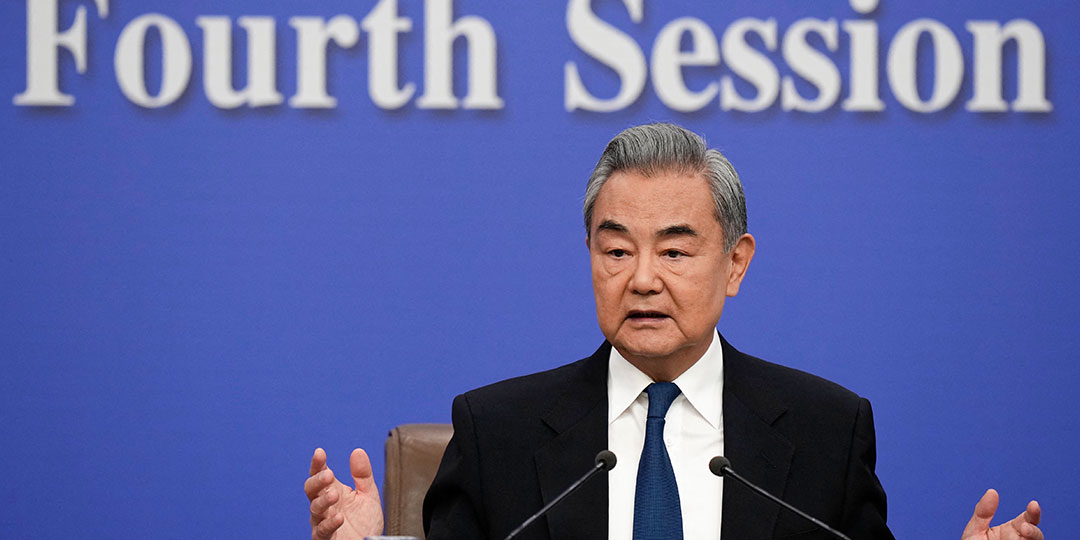

China’s Foreign Minister Wang Yi called on Sunday for Beijing and Washington to work actively on managing their differences amid escalating trade tensions and geopolitical disputes. Speaking at a press conference during China’s annual “Two Sessions” parliamentary meetings in Beijing, Wang emphasized that 2026 represents a critical year for Sino-American relations that requires careful preparation and mutual effort. “China and the United States must make careful preparations, create a suitable environment, manage existing differences, and eliminate unnecessary interference,” Wang stated.
The call comes as ties between the two largest global economies remain strained following US President Donald Trump’s return to the White House and subsequent trade tariffs imposed on Chinese goods. Wang noted that these protectionist measures are counterproductive to both nations’ interests.
Trade War and Economic Tensions
Wang directly addressed US tariff policies, warning that such measures backfire internationally. “We observe a certain country erecting tariff barriers and pursuing decoupling and supply chain disruption,” he said. “These actions are akin to trying to extinguish a fire with fuel. Ultimately, they will backfire.”
The FM emphasized that the US-China trade war has disrupted the global economy, creating uncertainty for businesses and markets worldwide. He reiterated that despite fundamental differences, the two countries can change how they interact with each other and seek common ground on shared interests.
Key Areas of Disagreement
Wang outlined several major points of contention between Beijing and Washington:
Tariffs and decoupling: Trump administration policies targeting Chinese exports
Middle East tensions: US-Israel military strikes on Iran and the regional conflict
Taiwan’s status: Beijing’s red line regarding the self-ruled island
Strategic competition: Broader geopolitical rivalry and military positioning
Middle East Conflict and Iran Position
Wang condemned the ongoing war in the Middle East, stating it “should never have happened.” He criticized the killing of Iran’s Supreme Leader Ayatollah Ali Khamenei, saying “A strong fist does not mean strong reason. The world cannot return to the law of the jungle.”
China maintains diplomatic and trade ties with Tehran and views the US-Israeli military actions as destabilizing to the region. Wang’s remarks reflect Beijing’s alignment with Iran on this critical issue and its opposition to unilateral military intervention.
China’s Diplomatic Outreach
To strengthen its position amid US-China competition, China has extended olive branches to key international partners:
Offered visa-free travel agreements to approximately 50 countries
Reduced tariffs on Canadian and British exports
Welcomed high-level visits from European leaders, including France, Finland, and the United Kingdom
Wang characterized China as “a global partner” rather than a competitor, suggesting Beijing is positioning itself as a reliable alternative to American leadership.
Russia Ties Remain Unwavering
Wang reaffirmed that China-Russia relations remain “steadfast and unshakeable” despite international turbulence and Western scrutiny. He emphasized that amidst the complex global environment, Beijing’s partnership with Moscow stands firm.
The statement comes as Western nations have criticized China for sustaining Russia’s war in Ukraine through imports and helping Moscow circumvent sanctions. Wang’s remarks suggest China will not abandon its strategic partnership with Russia despite diplomatic pressure.
Taiwan Remains a Critical Red Line
Wang reiterated that Taiwan is a non-negotiable issue for Beijing. “We will never allow anyone or any force to separate Taiwan from China once again,” he stated clearly.
This position has created friction with Washington, particularly given Trump’s indication that the US may provide additional military support to Taiwan. The two leaders are scheduled to meet in Beijing in April, where Taiwan’s status is likely to feature prominently in discussions.
European Relations Show Improvement
Wang reported that China-EU ties have experienced “steady improvement” over the past year. He welcomed increased European engagement with Beijing, particularly as European leaders distance themselves from Trump’s aggressive trade policies and threats against NATO members.
China’s strategic charm offensive toward Europe reflects its broader effort to build alternative partnerships and reduce dependency on American markets and technology.
Conclusion:
Wang Yi’s remarks at the Two Sessions press conference underscore Beijing’s measured but firm approach to managing major power competition. While emphasizing the need for dialogue with Washington, China is simultaneously strengthening ties with Russia, courting European partners, and maintaining an uncompromising stance on Taiwan and regional security issues. As 2026 unfolds as a pivotal year for international relations, Beijing’s diplomatic messaging suggests it is prepared for prolonged strategic competition while remaining open to managed coexistence with the United States.