
Iran filed a formal complaint with the United Nations on Tuesday, accusing the United States of egregiously violating its sovereignty through a naval blockade that restricts maritime traffic to and from Iranian ports. Iran’s permanent representative to the UN, Amir Saeed Irvani, submitted the letter to UN Secretary-General António Guterres and the Security Council president, characterizing the American action as an unlawful breach of international maritime law and the UN Charter.
The formal protest comes amid ongoing cease-fire negotiations and escalating tensions over US military deployment in the region. Iran’s government simultaneously announced initial estimates of war damages totaling approximately $270 billion, demanding compensation from multiple nations it accuses of facilitating the conflict.
Iran Accuses US of Charter Violations
In his formal letter to UN leadership, Irvani asserted that the US naval blockade constitutes “a flagrant violation of the sovereignty and territorial integrity of the Islamic Republic of Iran.” The protest invokes multiple violations of international law, specifically citing breaches of Article 2, Paragraph 4 of the UN Charter, which prohibits threats or use of force against UN member states.
Irvani characterized the blockade as “a clear breach of the prohibition on the threat or use of force as stipulated in Paragraph 4 of Article 2 of the UN Charter, and classifies this action under international law as a prominent model of acts of aggression.”
International Maritime Law Violations
Iran’s complaint emphasizes violations of established maritime law governing freedom of navigation and commerce on international seas. The Iranian representative argued that the US blockade illegally restricts Iran’s sovereign right to exercise maritime commerce and interferes with third-party nations’ legitimate shipping and trade activities protected under international maritime law.
“The United States, through its attempts to prevent maritime navigation to and from Iranian ports, unlawfully interferes with the exercise of the sovereign rights of the Islamic Republic of Iran, and infringes upon the rights of third states and legitimate maritime commerce in accordance with international law,” Irvani stated.
Iran Demands UN Action and Immediate Blockade Cessation
Iran’s UN submission demands that Secretary-General Guterres and the Security Council fulfill their responsibilities under the UN Charter by formally condemning the blockade, taking immediate and effective measures to prevent further escalation, and compelling the United States to cease its alleged unlawful actions against Iran immediately.
The complaint explicitly warns that the blockade poses a serious threat to international peace and security, particularly in a region already experiencing severe instability.
Iran Asserts Right to Countermeasures
Irvani emphasized that Iran reserves its inherent right under international law to take all necessary and proportionate measures to preserve its sovereignty, territorial integrity, and national interests. The statement reserves Iran’s capacity for unilateral action should the blockade continue unchallenged.
“The Islamic Republic of Iran, within the framework of international law, maintains its natural right to undertake all necessary and proportionate measures to safeguard its sovereignty, territorial integrity, and national interests,” Irvani declared.
Iran Calculates War Damages at $270 Billion
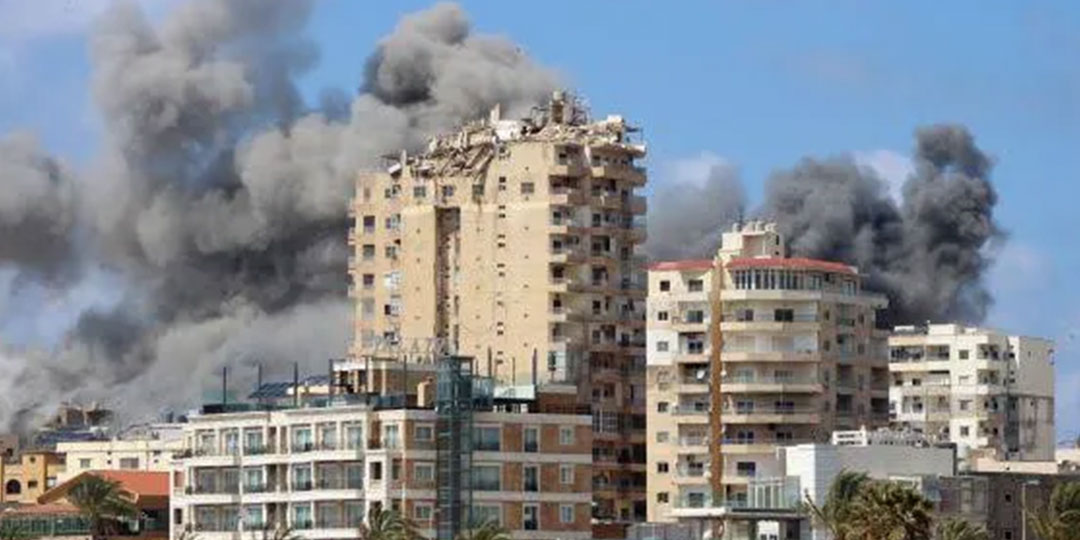
Iran’s government announced preliminary estimates of war damages on Tuesday, with official government spokesperson Fatemeh Mohajerani stating that initial calculations place losses at approximately $270 billion. The figure encompasses destruction of civilian and military infrastructure, economic disruption, and lost productivity across multiple sectors.
Mohajerani emphasized that war reparations and compensation constitute a priority issue for the Iranian negotiating team in ongoing diplomatic talks in Islamabad.
Compensation Demands Against Arab States
Beyond US accountability, Iran has formally demanded financial compensation from five Arab nations, including Jordan, Saudi Arabia, the UAE, Qatar, Kuwait, and Bahrain. Iran accuses these nations of facilitating what Tehran characterizes as the “American-Israeli aggression” by allowing use of their territories for military operations targeting Iran.
Irvani’s letter to UN Secretary-General Guterres directly rejected the positions and actions of Jordan, Bahrain, Saudi Arabia, Qatar, and the UAE, holding them responsible for enabling the conflict.
Diplomatic Escalation Amid Cease-Fire Negotiations
Iran’s formal UN protest and reparations demands escalate diplomatic tensions even as negotiations continue in Islamabad aimed at extending the temporary two-week cease-fire. US Vice President JD Vance indicated Monday that while progress has been made in talks, fundamental disagreements persist over Iran’s nuclear program and support for regional armed groups.
The filing represents a deliberate shift in Iranian strategy, moving from bilateral negotiations to invoking international legal mechanisms and mobilizing UN-based diplomatic pressure.
Blockade’s Economic Impact
The US naval blockade restricts Iran’s petroleum exports and commerce at a moment when the nation faces severe economic pressure and massive reconstruction needs. Economic analysts suggest the blockade’s continuation serves as leverage in ongoing negotiations, raising the costs of non-compliance with American demands regarding uranium enrichment and nuclear weapons programs.
International Response and Legal Framework
China’s Foreign Ministry responded to the blockade by emphasizing that “a complete ceasefire between Iran and the United States is the only solution to de-escalate tensions in the region” and warning that expanded US military deployment would only exacerbate tensions in an already unstable area.
Legal experts note that the blockade exists in a contested space under international law. While the US frames the action as enforcement of sanctions and national security measures, Iran and international law scholars argue such extraterritorial enforcement mechanisms violate freedom of navigation principles established in the UN Convention on the Law of the Sea.
Negotiations Continue Despite Escalation
Despite the formal UN complaint and reparations demands, US and Iranian delegations continue discussions regarding potential extension of the cease-fire beyond its scheduled April 18 expiration. Bloomberg reported Tuesday that both nations are exploring holding additional direct negotiations before the temporary truce concludes.
Vice President Vance stated that the US has achieved battlefield objectives and possesses capacity to gradually end the conflict, but made clear that a “big deal” remains contingent on Iran’s complete abandonment of uranium enrichment capability and cessation of support for regional armed groups.
Core Disagreements Remain
The primary sticking point in negotiations centers on Iran’s nuclear program. The US demands complete removal of enriched uranium from Iranian territory and comprehensive verification mechanisms ensuring Iran cannot develop nuclear weapons. Iran views such demands as excessive intrusions on national sovereignty.
Conclusion:
Iran’s formal UN complaint marks an escalation in diplomatic pressure, moving the conflict from bilateral negotiations toward international legal and institutional channels. The $270 billion damage estimate and demands for compensation from multiple nations underscore Iran’s determination to pursue accountability through multiple avenues simultaneously. As the temporary cease-fire approaches expiration, Iran’s invocation of international law and the UN Charter suggests that Tehran intends to combine diplomatic pressure with legal arguments in future negotiations. The blockade and broader naval enforcement actions remain central points of contention, reflecting fundamental disagreements over maritime rights, economic punishment, and the terms upon which lasting peace can be achieved.