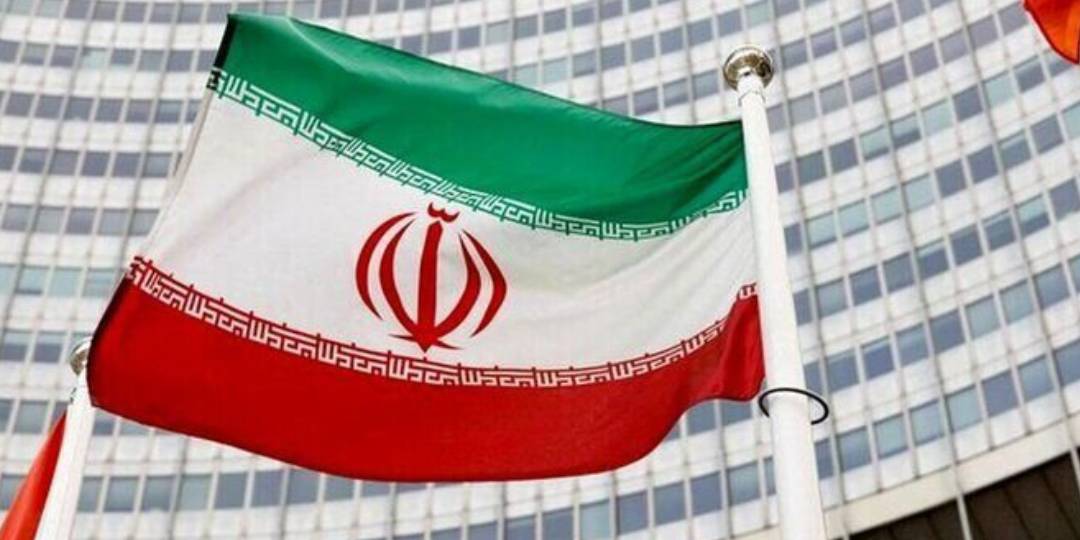

Iran’s UN mission called on Security Council members today to reject the US-Gulf resolution on the Strait of Hormuz, asserting that solutions require ending the war and lifting naval blockades. In parallel developments, media reports indicate Washington and Tehran are approaching agreement on a single-page memo to end the conflict featuring a 30-day negotiation period to resolve outstanding issues.
The dual-track approach reflects different negotiation channels between the parties and pursuit of political solutions.
Iran’s UN mission rejects US resolution in Security Council
Iran’s UN mission called on Security Council members to “reject the American-Gulf resolution in the Security Council,” arguing that “solving the Strait of Hormuz crisis occurs through ending the war, lifting naval blockade, and restoring normal navigation.”
The mission posted on platform “X”: “The only possible solution in the Strait of Hormuz is clear: definitively end the war, lift naval blockade, and restore normal navigation.”
The mission criticized “the United States pushing a flawed resolution with political motives to the Security Council under the guise of freedom of navigation to serve its political agenda.”
Iran’s official position on the resolution
The Iranian mission emphasized:
Complete rejection of the American-Gulf resolution
Member states should not support or abstain from the resolution
Non-participation in sponsoring the resolution
Acting according to logic, fairness, and principles rather than pressure
US-Iran plan for ending war through 30-day negotiation period
CNN reported from an informed source that “there is a shortened internal plan containing basic provisions that have been the focus of ongoing negotiations to end the conflict.”
The source clarified that “the proposed document will announce the end of war, after which a negotiation period extending 30 days will begin to address outstanding issues including the nuclear file, unfreezing Iranian assets, and future security arrangements in the Strait of Hormuz.”
Proposed plan provisions
The plan includes:
Immediate declaration of war’s end
30-day negotiation period to resolve outstanding issues
Addressing the Iranian nuclear file
Unfreezing Iranian frozen assets
Arranging future security in Strait of Hormuz
Details of agreement on nuclear program
The source noted that “the plan includes discussion of freezing uranium enrichment for a period exceeding ten years while a previous American proposal had set the duration at twenty years.”
This retreat from the previous US position indicates new flexibility in Iran-US negotiations.
The development suggests possibility of reaching middle ground compromise on the controversial Iranian nuclear program.
Iranian Revolutionary Guard Navy affirms safe passage possible in Hormuz
The Iranian Revolutionary Guard Navy affirmed that “with elimination of aggressor threats and in light of new measures, safe and stable passage through Hormuz will become possible.”
The Navy noted that “ship owners anchored in the Gulf cooperated in transit through Strait of Hormuz in accordance with Iranian regulations.”
This position reflects Iranian readiness to ensure safe navigation in the strait contingent on international commitment to lifting blockades and threats.
Safe navigation requirements per Iranian position
Safe navigation requires:
Elimination of aggressor threats and military forces
Implementation of new agreed security measures
Respect for international agreements and Iranian maritime laws
Cooperation from ship owners and maritime states
Washington and Tehran approaching agreement on unified memo
Axios reported that “Washington and Tehran are approaching agreement on a one-page memo to end war.”
The outlet quoted officials saying: “Washington expects Tehran’s response on several key points within 48 hours.”
This development indicates acceleration of negotiations and the parties approaching genuine points of understanding.
Proposed US-Iran agreement provisions
The agreement will include:
Both sides lifting restrictions on Strait of Hormuz passage
Iran suspending uranium enrichment
Washington lifting economic sanctions
Release of frozen Iranian funds
Parallel diplomatic and military tracks
Iran’s rejection of the US resolution in the Security Council comes concurrent with advances in bilateral negotiations.
This parallelism reflects Iran’s multi-track strategy combining:
Diplomatic rejection of American initiatives in international forums
Direct bilateral negotiations with Washington
Assertion of Iran’s military capability to defend its interests
Significance of proposed agreement for regional stability
The proposed agreement represents potential turning point in:
US-Iran relations
Gulf region stability
International maritime security in Strait of Hormuz
Regional peace and economic cooperation
Expectations and remaining challenges
Despite notable progress, challenges remain:
Agreement approval by other regional parties
Implementation of agreement on ground
International guarantees against agreement violations
Resolution of complex historical issues
International implications and future outlook
Success of the negotiations could fundamentally reshape:
Energy markets and oil prices
Regional military balance
International commerce and shipping
US-Iranian bilateral relations framework
Critical factors for negotiation success
Negotiation success requires:
Mutual concessions from both sides
International commitment to agreement implementation
Verification mechanisms and compliance monitoring
Long-term strategic commitment from all parties
Conclusion:
Recent developments reflect genuine possibility of comprehensive US-Iran agreement that could achieve greater stability in the Gulf region. Negotiation success requires mutual concessions and international commitment to implementing the agreement and ensuring respect for its terms. The convergence of diplomatic initiatives with military posturing underscores the high stakes involved and the potential for breakthrough or continued tension depending on negotiation outcomes.