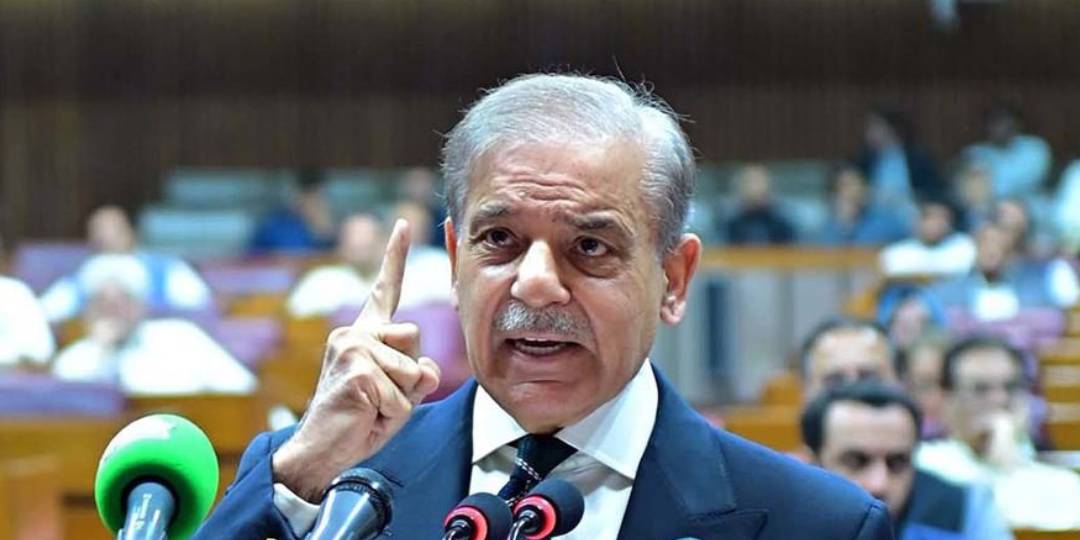

Pakistan’s Prime Minister Shahbaz Sharif announced today his country’s commitment to supporting efforts aimed at reaching a peaceful solution to the US-Iran dispute through diplomatic dialogue. In parallel developments, Iran and Saudi Arabia’s foreign ministers affirmed commitment to continuing diplomacy and cooperation to prevent escalation, while China endorsed the diplomatic path and stressed the importance of halting hostile actions.
These developments reflect a growing international trend toward peaceful resolution and avoiding further escalation in the Gulf region.
Pakistani PM endorses Trump’s peaceful approach
Pakistan’s Prime Minister Shahbaz Sharif affirmed today that “his country is committed to supporting efforts aimed at reaching a peaceful solution to the dispute through dialogue.”
Sharif stated: “I am grateful for President Trump’s courage and timely announcement suspending Operation Inherent Resolve in the Strait of Hormuz.”
He added: “Our country is committed to supporting efforts aimed at reaching a peaceful solution through dialogue,” expressing “hope that the current situation leads to a lasting agreement ensuring peace and stability in the region.”
Pakistan’s peace-supporting position
Pakistan’s stance reflects:
Full commitment to supporting diplomatic efforts
Appreciation for Trump’s decision to suspend military operations
Hope for lasting and comprehensive agreement
Desire for regional stability
Iran and Saudi foreign ministers affirm diplomatic cooperation
Saudi Arabia’s Foreign Minister Prince Faisal bin Farhan bin Abdulaziz held a telephone conversation today with Iran’s Foreign Minister Abbas Araghchi.
The Saudi Foreign Ministry stated that “the foreign minister conducted a telephone call with Iranian counterpart Abbas Araghchi,” noting that “during the call the latest regional developments and efforts to maintain regional security and stability were discussed.”
The statement indicated discussion of “reviewing latest developments on the regional arena, discussing ongoing efforts, and maintaining regional security and stability, contributing to supporting regional peace and achieving balance amid current challenges.”
Axes of Saudi-Iranian diplomatic contact
The conversation included:
Discussion of latest regional developments
Efforts to maintain security and stability
Support for regional peace
Achievement of balance amid current challenges
Iran affirms serious commitment to diplomatic path
Iran’s Foreign Ministry affirmed that its foreign minister Abbas Araghchi “briefed his Chinese counterpart on diplomatic path developments, efforts and initiatives to end the war.”
The Iranian Foreign Ministry stated that “Araghchi informed his Chinese counterpart that Tehran is serious about diplomacy and ready to confront any hostile actions.”
This Iranian position reflects clear duality: desire for diplomatic solution coupled with security readiness for self-defense.
Iran’s dual diplomatic and military strategy
Iran combines:
Serious commitment to diplomatic path
Presentation of initiatives and efforts to end war
Complete readiness to confront hostile actions
Maintaining strong defensive capabilities
China endorses diplomatic path and calls for halting hostile actions
China’s Foreign Ministry affirmed that “complete cessation of hostile actions and continuation of negotiations between Tehran and Washington is of paramount importance.”
The Chinese Foreign Ministry stated: “We hope parties will soon respond to international calls for safe passage through the Strait of Hormuz.”
It added: “Beijing is a trusted strategic partner for Iran.”
China’s diplomatic and strategic role
China plays a pivotal role in:
Supporting Iran-US diplomatic path
Calling for immediate halt to hostile actions
Ensuring safe passage in Strait of Hormuz
Maintaining strategic partnership with Iran
Growing international consensus on importance of diplomatic solution
The unified position from Pakistan, Saudi Arabia, Iran and China reflects:
Growing international consensus on the necessity of diplomatic solution to the US-Iran dispute.
This consensus indicates:
Global recognition of additional escalation dangers
Importance of preventing further Gulf conflict
Urgent need for dialogue and negotiation
Countries supporting peaceful solution
Supporting peaceful solution are:
Pakistan as important regional power
Saudi Arabia as influential Gulf power
China as global superpower
Iran committed to diplomatic path
Importance of Strait of Hormuz in negotiations
International focus centers on:
Ensuring safe passage through the strait
Opening the strait for international navigation
Non-use of the strait as pressure tool
Respecting international navigation rights
Economic effects of ensuring safe passage
Ensuring safe passage produces:
Stability in global oil prices
Improvement in international maritime trade
Reduction in ship insurance costs
Greater global economic growth
International support as negotiation acceleration factor
International support may accelerate:
Speed of reaching agreement
Reduction of gaps between parties
Provision of international agreement guarantees
Enhanced commitment to agreement terms
Expectations and future prospects
International actors expect:
Near achievement of comprehensive agreement
Greater regional stability
Gradual normalization of relations
Increasing economic cooperation
Multilateral engagement and trust-building
The diplomatic engagement reflects:
Recognition that peaceful solutions require multilateral support
Trust-building through continuous dialogue
Confidence-building measures between regional actors
International community’s role in guaranteeing peace
Regional cooperation mechanisms
Emerging cooperation involves:
Regular high-level diplomatic contact
Coordination between key regional actors
International mediation and guarantees
Transparent communication channels
Long-term implications for Gulf security architecture
A peaceful resolution could establish:
New regional security framework
Enhanced maritime security arrangements
Increased economic interdependence
Mechanism for future dispute resolution
Conclusion:
The growing international support from key countries reflects global recognition of the importance of a diplomatic solution to the US-Iran dispute. The unified positions from Pakistan, Saudi Arabia, and China confirm that the international community agrees on the necessity of preventing further escalation and pursuing a peaceful solution ensuring regional and global stability. The convergence of diplomatic initiatives from multiple directions suggests momentum toward substantive breakthrough in resolving the longstanding conflict.