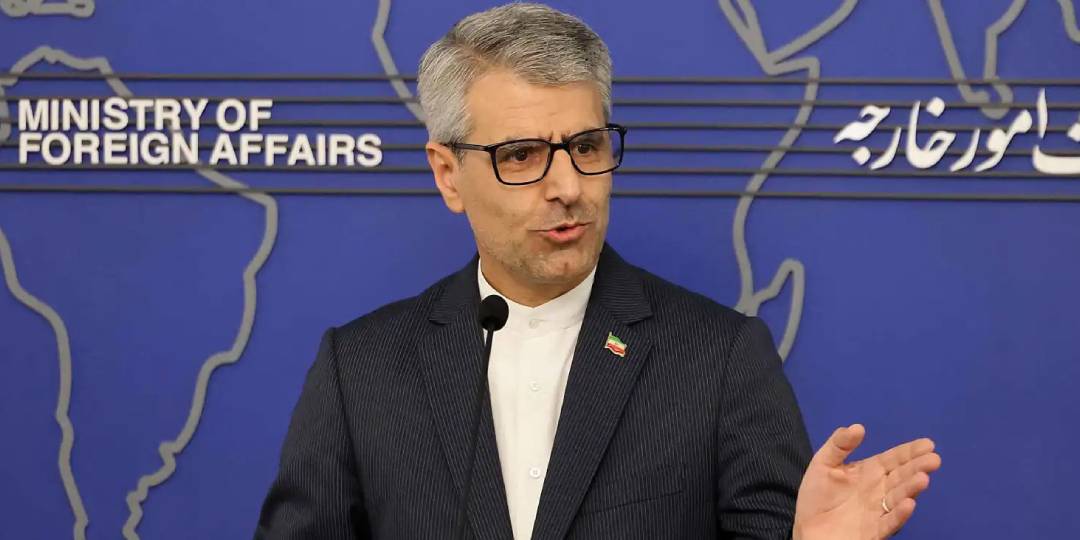

Iran’s Foreign Ministry categorically denied Friday that the country has approved transferring its enriched uranium stockpile to the United States, directly contradicting assertions by President Trump regarding cooperation on nuclear material removal. Iranian Foreign Ministry spokesman Ismail Baghaei declared that enriched uranium represents “sensitive sovereign value” for Iran and will not be transferred abroad under any circumstances. The Iranian rejection addresses Trump’s recent claims that Washington would cooperate with Tehran on gradually transferring uranium stockpiles using heavy equipment, proposals that Iranian officials rejected as incompatible with national sovereignty.
Baghaei emphasized that Iran considers its nuclear file integral component of national sovereignty, making any proposals regarding external transfer of enriched materials categorically unacceptable. The Iranian position reveals fundamental disagreement on nuclear issues between negotiating parties, suggesting that uranium disposition represents central point of contention in US-Iran negotiations despite Trump administration claims of substantive progress toward comprehensive agreement.
Iran’s Sovereignty Claims on Nuclear Materials
Enriched Uranium as Sovereign Asset
Iranian Foreign Ministry spokesman declared that enriched uranium constitutes “sensitive sovereign value” for Iran, establishing fundamental principle that nuclear materials remain under Iranian control and sovereignty. The characterization treats uranium not primarily as negotiable commodity but as expression of national sovereignty and strategic independence.
Nuclear File as National Sovereignty Matter
Baghaei asserted that Iran considers its nuclear file inseparable from national sovereignty, rejecting characterization of nuclear program as international concern subject to external oversight or control. This position reflects Iranian belief that nuclear capability represents legitimate national right and cannot be compromised as part of diplomatic agreement.
Categorical Rejection of Transfer Proposals
The Iranian spokesman stated unambiguously that proposals for transferring enriched uranium materials abroad are “categorically rejected,” using language permitting no negotiation or compromise on this specific issue. The categorical rejection suggests that uranium transfer represents Iranian red line in negotiations, issue on which Tehran will not modify position regardless of other concessions offered by United States.
Trump Administration Position on Uranium Transfer
Trump’s Uranium Recovery Plans
President Trump stated in Reuters interview that Washington would cooperate with Iran to transfer enriched uranium stockpiles to United States. Trump described transfer process as gradual undertaking utilizing heavy equipment, indicating envisioned extended timeline for physical movement of nuclear materials.
Characterization as Negotiated Arrangement
Trump framed uranium transfer as component of broader negotiation process addressing Iranian nuclear capabilities. The characterization suggests Trump views uranium removal as achievable objective if comprehensive agreement can be reached, contrasting sharply with Iranian insistence that uranium transfer remains non-negotiable under any circumstances.
Strategic Disagreement on Uranium Disposition
The fundamental disagreement between Trump’s position and Iranian rejection reveals core dispute in negotiations regarding what constitutes acceptable outcome on uranium materials. Trump administration views uranium removal as essential verification mechanism for nuclear agreement, while Iran views uranium retention as expression of legitimate national rights.
Iranian Defense Ministry Position on Ongoing Conflict
War Not Yet Concluded
Iranian Defense Ministry spokesman Brigadier General Reza Talaei stated Saturday that war has not yet ended, characterizing current arrangements as conditional temporary measures rather than permanent resolution. Talaei’s assertion contradicts implications from various ceasefire announcements that conflict has substantially concluded.
Conditions on Strait Reopening
Talaei specified that opening of Strait of Hormuz for non-military vessel traffic remains conditional on continuation of Lebanon-Israel ceasefire. The condition creates mechanism for Iranian pressure on ceasefire stability by threatening strait closure if Israeli operations resume in Lebanon.
Unrealized Geostrategic Capabilities
Talaei indicated that portions of Iranian geostrategic capabilities extending from Bab el-Mandeb to other regions have not yet been deployed, suggesting Iran retains military options for escalation if negotiations fail or ceasefire collapses. The statement signals that current de-escalation represents tactical choice rather than exhaustion of Iranian capabilities.
Threat of Response to Diplomatic Deception
Talaei warned that if adversaries resort to “diplomatic deception,” Iran will respond militarily, establishing Iranian reservation about ceasefire durability and conditional nature of continued restraint. The warning suggests Iranian leadership views ongoing diplomatic process as fragile and potentially reversible if perceived as deceptive.
US Treasury Sanctions on Iraqi Militia Leaders
Economic Fury Campaign Expansion
US Treasury Department announced Friday imposition of sanctions on seven Iraqi militia leaders loyal to Iran through “Economic Fury” campaign targeting Iran-aligned armed groups. The sanctions represent expansion of economic pressure campaign against Iranian regional networks and proxy forces.
Targeted Leaders and Activities
OFAC statement specified that seven militia leaders were targeted for involvement in “planning, directing, and executing series of attacks targeting US personnel, facilities, and interests in Iraq.” The targeting of specific leadership reflects US effort to disrupt command structures of Iraqi militia groups operating under Iranian influence.
Broader Anti-Civilian Impact Allegations
Treasury Department asserted that targeted militia groups attack not only United States but also innocent Iraqi civilians throughout country, characterizing militia activities as terroristic. The allegation frames sanctions as protective measure for Iraqi civilian population as well as US interests.
Economic Drain Argument
Treasury statement characterized militia activities as draining Iraqi national wealth and exploiting resources to fund terrorist activities, presenting sanctions as defensive measure protecting Iraqi economic interests against internal predatory forces. The framing attempts to distinguish sanctions from external interference by characterizing them as protection of Iraqi sovereignty against Iranian-aligned subversion.
Coordination of Multiple Pressure Points
Timing of Sanctions Announcement
Announcement of militia sanctions Friday coincides with ongoing nuclear negotiations and Iranian rejection of uranium transfer proposals, suggesting US strategy of maintaining simultaneous pressure on multiple fronts. The coordination creates cumulative pressure environment attempting to compel Iranian concessions across nuclear, regional, and sanctions issues.
Targeting of Iranian Proxy Networks
Sanctions targeting Iraqi militia leaders represent effort to pressure Iran indirectly by sanctioning proxies through which Tehran extends regional influence. The strategy reflects US approach of constraining Iranian regional power projection through targeted financial measures against intermediary forces.
Implications for Ongoing Negotiations
Fundamental Disagreements on Core Issues
Iranian categorical rejection of uranium transfer combined with defense ministry warnings about continued capabilities suggest substantial disagreements persist regarding nuclear, military, and regional issues despite reported progress toward comprehensive agreement. The apparent disconnect between Trump claims of progress and Iranian rejection of key proposals indicates fundamental gaps in understanding or fundamental incompatibility between negotiating positions.
Conditional Nature of Iranian De-escalation
Iranian statements characterizing ceasefire and strait reopening as conditional on continued restraint by adversaries indicate that Iranian de-escalation remains reversible. The conditions preserve Iranian capacity to escalate militarily if negotiations fail or if perceived violations of ceasefire occur.
Sanctions Complication of Negotiation Environment
Treasury sanctions on Iraqi militia leaders create additional complexity in negotiation environment by maintaining pressure on Iranian regional networks while nuclear discussions proceed. The dual approach suggests US strategy of combining military threat, negotiation pressure, and economic sanctions to extract maximum concessions.
Timeline and Decision Points
Wednesday Deadline Significance
Trump’s stated Wednesday deadline for agreement gains significance in context of categorical Iranian rejections of uranium transfer. If uranium transfer remains non-negotiable Iranian position and essential US demand, Wednesday deadline may prove unrealistic for achieving comprehensive agreement.
Risk of Negotiations Collapse
Fundamental disagreement on uranium transfer combined with Iranian defense ministry warnings about continued military capabilities suggest material risk that negotiations could collapse if uranium transfer becomes condition for agreement continuation. The risk would result in resumption of conflict unless one side modifies its position substantially.
Conclusion:
Iran’s categorical denial of approving enriched uranium transfers directly contradicts Trump administration claims regarding cooperation on uranium removal, revealing fundamental disagreement at heart of US-Iran negotiations. Iranian Foreign Ministry insistence that nuclear materials remain under sovereign Iranian control stands in opposition to US position that uranium removal constitutes essential verification mechanism for nuclear agreement. Simultaneous statements from Iranian defense ministry regarding unrealized military capabilities and conditional nature of ceasefire indicate that Iranian de-escalation remains temporary and reversible. US Treasury sanctions on Iraqi militia leaders maintain pressure on Iranian regional networks while nuclear negotiations proceed, creating environment of simultaneous diplomatic engagement and economic-military pressure. These developments suggest that despite public claims of progress toward comprehensive agreement, fundamental disagreements persist on core nuclear and regional issues. Resolution will require substantial movement by one or both sides from current positions, and Trump’s Wednesday deadline may prove insufficient for bridging identified gaps in negotiating positions.