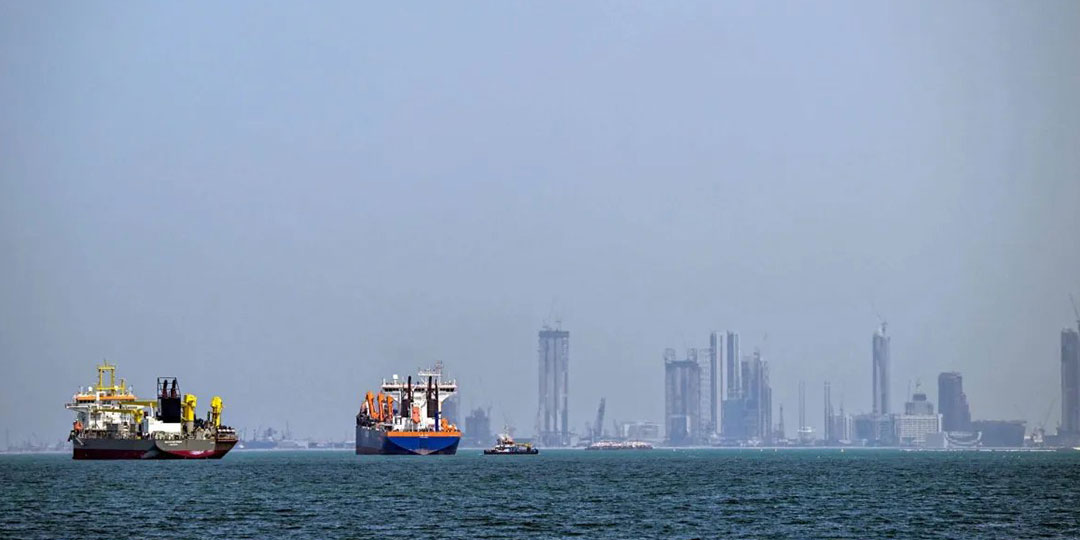

Strait of Hormuz developments took a new turn on Saturday after Iran’s Khatam al‑Anbiya headquarters stated that all ships and oil tankers must follow routes designated by Tehran.
The announcement comes as the UK Maritime Trade Operations authority warned that the security threat level in the strategic waterway remains critically high.
Iranian media also reported that what it described as a US naval blockade is still in effect, despite recent US statements about lifting restrictions.
Iran mandates navigation routes and permits
In a statement carried by Iranian media, Khatam al‑Anbiya said all vessels and oil tankers are required to use routes specified by Iran when transiting the area.
The statement added that ships must also obtain authorization from the Navy of the Islamic Revolutionary Guard Corps before passage.
The Strait of Hormuz links the Gulf to the Gulf of Oman and is a key artery for global energy shipments.
UKMTO warns of critical threat level
The UK Maritime Trade Operations authority said the security threat level in the Strait of Hormuz remains at a critical stage.
It noted that maritime traffic continues to face elevated risks related to safety and security in the vital corridor.
The agency urged commercial vessels to exercise maximum caution and adhere strictly to maritime security guidance.
Strategic global impact
The Strait of Hormuz is crucial for:
A significant share of global oil exports
International shipping routes
Stability of energy markets
Regional trade connectivity
Iranian media says US blockade persists
Tasnim News Agency reported, citing sailors, that US Central Command continues to warn Iranian vessels and prevent their passage.
According to the report, Iranian ships attempted to cross what was described as a blockade line after former US President Donald Trump announced that the naval blockade would be lifted, but received US warnings.
US officials have not immediately issued a response to these specific claims.
Conflicting positions over maritime access
Recent statements highlight contrasting positions regarding navigation rules in the Strait.
Key elements include:
Iranian enforcement of designated routes and permits
British warnings of heightened maritime risks
Iranian claims of ongoing US naval restrictions
Continued uncertainty for commercial shipping operators
Conclusion:
The situation in the Strait of Hormuz remains tense, with Iran imposing navigation requirements and international agencies warning of critical threat levels. Conflicting narratives over maritime restrictions continue to add uncertainty to one of the world’s most strategically important waterways.