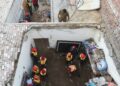
Yemen’s Houthis announced Monday a new attack on Israel using missiles and drones, confirming they executed a “joint operation” with Iran’s Revolutionary Guard and Lebanese Islamic Resistance forces. The Houthi strike came as Israel recovered four bodies from beneath the rubble of a residential building in Haifa destroyed by a direct Iranian ballistic missile strike Sunday. Simultaneously, the Israeli military reported detecting five new Iranian missile barrages, reflecting continued escalation of the expanding regional conflict.
These developments mark a qualitative transformation in the war from a bilateral conflict into a multi-party regional war involving direct participation of the Houthis and Lebanese resistance alongside Iran against Israel and the United States. The coordinated nature of attacks suggests a unified strategy designed to overwhelm Israeli defenses through simultaneous strikes from multiple fronts.
Houthi Announcement of Coordinated Strike
The Houthis’ military spokesman Yahya Saree stated in a video statement that they executed “a joint operation with the Revolutionary Guard and armed forces of the Islamic Republic of Iran and the Islamic Resistance in Lebanon.”
Saree described the operation: “A barrage of cruise missiles and unmanned aircraft targeted multiple vital and military targets belonging to the Israeli enemy in Umm Rashrash in occupied southern Palestine.”
The Houthi spokesman concluded: “The operation achieved its objectives successfully,” a final statement suggesting the Houthis’ capability to execute sophisticated coordinated operations.
Multi-Front Coordination and Military Strategy
The Houthi strike reflects high-level military coordination among three parties: the Houthis, Iran’s Revolutionary Guard, and Lebanese resistance forces. This coordination signals a unified military strategy designed to encircle Israel with strikes from different directions simultaneously.
The Houthis formally joined the war on March 28, one week after the conflict began on February 28, having previously threatened to participate if strikes on Iran continued.
Civilian Toll in Haifa and Rescue Operations
Israeli rescue services announced Monday the recovery of four bodies previously missing beneath the rubble of a residential building in Haifa. The Red Crescent Magen David stated: “All four missing persons have been located… all have been found deceased,” indicating two men and two women from a single family.
Rescue teams had worked since Sunday evening among the destroyed building’s rubble, with dozens of firefighters and rescue personnel working under floodlights attempting to locate the missing.
Nature of Strike and Damage Assessment
Military spokesman Nadav Shoshani told reporters: “Our information indicates this was a direct hit by a ballistic missile that struck the building, but based on what appears on the ground, there was no detonation of explosive material, so the damage resulted from direct impact.”
An Israeli military official confirmed to AFP that the building sustained “a direct hit by an Iranian missile.” Rear Admiral Elad Edri, commander of Israel’s Home Front Defense, stated: “We have a severely destroyed site.”
This indicates that damage resulted from the missile itself rather than its explosive payload, suggesting some Iranian missiles may not detonate upon impact.
Additional Casualties and Injuries
Beyond the four deaths, the strike injured four other people including a 10-month-old infant wounded in the head. Among the injured was an 82-year-old man struck by debris and blast effects. The hospital later reported his condition as stable.
In Petah Tikva in central Israel, a 34-year-old woman sustained serious injuries from shrapnel. Videos circulating on social media showed a missile striking near a parked car, with the woman seen stumbling as she attempted to flee.
In Ramat Gan near Tel Aviv, a 44-year-old man was hospitalized in “moderate” condition from the latest missile barrage.
Official Israeli Response and Civil Protection
Prime Minister Benjamin Netanyahu expressed “deep sorrow” over the victims and urged citizens to seek shelter “whenever instructed by Israel’s Home Front Command,” responsible for civilian protection during emergencies.
This official response acknowledged losses while emphasizing compliance with security procedures.
New Iranian Missile Barrages and Ongoing Defense Operations
The Israeli military announced Monday detection of five new Iranian missile barrages, confirming that “defense systems are working to intercept the threat.”
Multiple barrage launches reflect an Iranian strategy of saturation: launching enough missiles that Israeli defenses cannot intercept all of them. Some missiles will inevitably reach their targets.
Partial Defense Effectiveness
While Israeli air defense systems intercepted most missiles, some succeeded in reaching targets, as occurred in Haifa where a missile directly struck a residential building. This indicates that Israeli defenses are effective but not perfect, with some missiles always able to penetrate.
War Evolution from Bilateral to Regional Conflict
The Houthis joined the war on March 28, nine days after the conflict began. Since that date, Ansar Allah has announced executing multiple attacks on Israel. Houthi participation marks a qualitative transformation: from direct conflict between Iran and Israel/US into a regional war encompassing multiple proxies and allies.
Regional Recruitment and Armed Networks
Behind Houthi and Lebanese attacks lies a complex network of alliances and Iranian financing. The Houthis receive weapons and support from Iran, as does Lebanese resistance.
This means the war transcends mere direct military conflict, instead involving Iranian investment in regional proxies.
Death Toll and Human Impact
Since the war began on February 28, twenty people have been killed in Israel, including four minors, from Iranian missile strikes. This figure reflects the direct humanitarian impact of the war on Israeli civilian populations.
Iran, conversely, has lost hundreds in American-Israeli strikes on military sites and facilities.
Psychological Impact and Ongoing Threat
Continued missile attacks reflect persistent fear in Israel. Air raid sirens sound regularly, and civilians repeatedly seek shelter. This creates ongoing psychological pressure on populations and increases social instability.
Broader War Context and International Participation
Israel and Iran have exchanged attacks since the American-Israeli war against Iran began on February 28, transforming into a large-scale regional war. American and Israeli air strikes have targeted missile production sites and Iranian nuclear facilities alongside other objectives. Iran responds with missiles and drones against Israeli and American targets.
Civilian Targeting and International Law Concerns
Targeting residential buildings and populated areas raises international legal questions regarding adherence to international humanitarian law. Iranian missile targeting of residential zones in Israel may constitute “war crimes” if deliberately directed at civilians.
Conclusion:
Monday’s events reflect continued escalation in the regional war, with expanded participant numbers and increasing civilian casualties. Houthi and Lebanese resistance participation transforms the conflict from bilateral to multi-party, increasing complexity and danger. Continued Iranian missile barrages and Israeli civilian deaths indicate the war will persist for extended duration. Civilian casualties mount, regional security deteriorates, and peaceful resolution appears increasingly distant. The transformation from a direct Iran-Israel conflict into a regional proxy war involving multiple armed groups fundamentally alters the conflict’s dynamics and raises risks of uncontrolled escalation.