
This year’s Eid al-Fitr arrives under a shadow of conflict and fear. Across the Middle East, from Beirut to Dubai, from Bahrain to occupied East Jerusalem, millions of Muslims are marking the end of Ramadan not with traditional celebrations and family gatherings, but with air raid sirens, military airstrikes, and widespread security lockdowns. The ongoing regional conflict, escalating Israeli-Iranian tensions, and American military involvement have stripped the holiday of its customary joy and transformed Eid 2026 into a day of anxiety rather than festivities.
Streets that once filled with decorations, lanterns, and crowds now sit largely empty. Public parks have been shuttered, hotel celebrations cancelled, and families instructed to remain in their homes. For the first time in generations, many across the region will spend Eid confined indoors, worried about their safety rather than preparing feasts and gathering with loved ones. The cost of war is now measured not only in military terms but in the loss of cherished cultural and religious traditions.
Lebanon Under Siege: The Toll on Civilians During Conflict
A Mother’s Story of Hardship and Sacrifice
From a modest apartment in Beirut’s Aisha Bakkar neighbourhood, Azza Ahmed, 49, recounts a story of deprivation that captures the broader suffering across Lebanon. Living with her husband and three children, she has also taken in relatives displaced by heavy Israeli bombardment. Speaking to AFP, she laments: “There is no joy in Eid this year.”
Her family survives on meagre income from selling traditional sweets that she and her brother prepare in a cramped kitchen with exposed electrical wires hanging from the ceiling. “We won’t eat any of it ourselves; every item is for sale,” she explains, as the money helps support her husband, who works in car washing. The image is stark: a family so focused on mere survival that they cannot afford to participate in their own religious holiday.
Children Robbed of Innocence and Hope
While Azza prepares sweets, her niece Yasmine, 11, adorns her hair with a pink ribbon, but her smile is melancholic. Speaking to AFP, the young girl says: “We won’t go out to play. Everyone is scared. Israel is bombing, so we’ll stay home.” This contrasts sharply with previous years when she would anticipate new clothes, time with friends, and outdoor celebrations.
Yasmine’s words echo the reality of millions of children across the region who have lost their childhood innocence and the simple joy of holiday celebrations. The psychological scars of growing up amid war may leave lasting marks on an entire generation, potentially affecting their sense of security and belonging for years to come.
The Escalation: War in Lebanon Since March
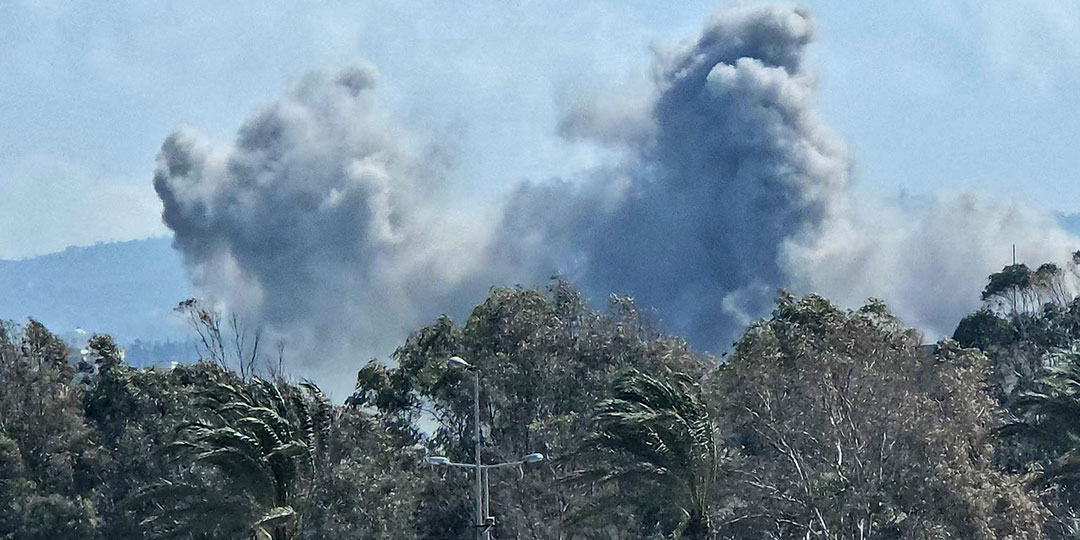
The active phase of war in Lebanon began on March 2 when Hezbollah fired rockets at Israel in retaliation for the assassination of Iran’s Supreme Leader Ayatollah Khamenei in an Israeli-American airstrike operation. Since then, Israel has conducted extensive bombing campaigns against Lebanese territory, with ground forces infiltrating the country’s south and systematically targeting infrastructure and civilian areas.
The conflict shows no signs of abating. Daily bombardments have become routine, with residential areas, bridges, power plants, and hospitals all coming under attack. The Lebanese government and aid organizations have warned of a humanitarian catastrophe if the bombing continues at its current intensity.
The Gulf States: Fear, Alerts, and Cancelled Celebrations
Authorities Impose Lockdowns on Public Gatherings
Anxiety has gripped the Gulf states since February 27, when Iran launched ballistic missile strikes in response to the Israeli-American military operation against Iranian territory. These strikes targeted military bases, American embassies, airports, ports, hotels, and residential buildings across the Gulf region. At least 28 people were killed in these attacks.
In Kuwait, authorities have banned weddings, parties, theatrical performances, and other large gatherings throughout the Eid period as a “precautionary measure” to prevent concentrated crowds in public spaces. Residents have been instructed to shelter in their homes during missile alert warnings. Similar measures have been implemented across the region, fundamentally altering the nature of Eid celebrations.
Psychological and Economic Consequences
Ashraf Amin, 38, a Jordanian engineer working in Kuwait, reflects on the altered holiday: “Eid will feel completely different this year. With public celebration venues, playgrounds, and gathering spaces closed, the burden of providing joy for our children falls entirely on us as parents, and it comes at a much higher cost.”
Ali Ibrahim, 41, an Egyptian accountant also working in Kuwait, adds: “The festive spirit is absent given the tense security situation.” While retailers have launched aggressive discounts on clothing and accessories to attract customers, the pervasive sense of fear dampens any desire to shop and celebrate.
Measures Across Qatar and the UAE
Qatar’s authorities have suspended all public events, gatherings, and entertainment activities in hotels and tourist destinations until further notice. The UAE’s General Authority of Islamic Affairs, Endowments and Zakat has announced that Eid al-Fitr prayers will be held exclusively inside mosques this year, with no outdoor prayer gatherings in open-air prayer grounds, a significant departure from tradition.
These governmental actions underscore the severity of the security situation and the collective decision to prioritize safety over celebrating in public.
Dubai and the Emirates: Private Celebrations Replace Public Festivities
A Shift in How Emiratis Mark the Holiday
Johi Yasmin Khan, 53, an Indian expatriate who has lived in Dubai for three decades, tells AFP: “It doesn’t seem appropriate to hold a large Eid celebration this year.” Previously, her family members, scattered across multiple emirates, would gather in Dubai for joint celebrations.
She explains: “Given the current situation, many of us prefer to celebrate in our homes with our immediate families, prioritizing safety and peace of mind.” She adds: “Our focus this year is on reflection, gratitude, and solidarity rather than lavish festivities.”
Safety Supersedes Tradition
Most families in the UAE have consciously chosen personal security over traditional public celebrations. Fear of Iranian missile attacks, repeated government warnings, and the tangible threat of regional escalation have pushed people to remain close to home. This fundamental shift in celebration patterns may signal a lasting change in the lifestyles of Gulf residents as they adapt to prolonged regional instability.
Bahrain: Defiance Amid Danger
Determination to Celebrate Despite Uncertainty
In Bahrain, where residents live with constant air raid sirens and security alerts, locals have expressed their determination to celebrate Eid despite the circumstances. In a beauty salon in the capital, Manama, five-year-old Sarah waits for her turn to have henna applied to her palm in a traditional pre-Eid ritual. It is a scene familiar to Bahraini society, a small act of normalcy in abnormal times.
Sarah’s mother, Maryam Abdullah, states: “The current circumstances have not prevented us from purchasing Eid essentials and preparing as we have always done.” She expresses confidence that “this situation will pass, and we will enjoy Eid celebrations, even if limited to visiting family at home.”
Women Defiantly Shop for the Holiday
Hissa Ahmed, a woman in her thirties employed in the government sector, has decided to venture out shopping with a friend. She tells AFP: “We bought clothes and accessories, and we will celebrate Eid with family, relatives, and friends.” This quiet defiance reflects the Bahraini determination not to allow conflict to erase their cultural practices, however constrained those celebrations may become.
East Jerusalem: The Al-Aqsa Mosque Sealed, Traditions Abandoned
Closure of Islam’s Third Holiest Site Deepens Anguish
In East Jerusalem, occupied by Israel since 1967 and annexed in an act unrecognized by the international community, Eid al-Fitr carries particularly acute pain. Israeli police have sealed the Al-Aqsa Mosque and other religious sites since the start of the conflict with Iran. Traditional Ramadan decorations and lanterns are conspicuously absent from the streets leading to the mosque.
Ehab, 30, was among hundreds who performed Taraweeh prayers on Laylat al-Qadr (Night of Power) near Bab al-Sahira, the gate leading to the Old City. He expresses his anguish: “There is a lump in my heart from being denied access to the Al-Aqsa Mosque.” His words capture the profound spiritual pain Palestinians experience when barred from worshipping at their most sacred sites.
Ramadan Without Spiritual Resonance
Historically, Ramadan and Eid al-Fitr in Jerusalem have embodied the city’s Islamic identity and Arab character. However, Israeli blockades and repeated closures have robbed residents of this spiritual dimension. Palestinians view this exclusion as part of a systematic policy of the occupation to marginalize the Islamic and Arab identity of the city.
Infrastructure Under Attack: Power Station Destroyed in Southern Lebanon
Critical Power Plant Knocked Offline by Strikes
Lebanon’s state electricity company announced on Thursday, March 19, that a major power transmission station in southern Lebanon has been taken out of service following a direct Israeli airstrike. The strike came as part of a broader pattern of attacks on bridges, roads, and critical infrastructure as the war with Hezbollah enters its third week.
The company stated in an official communique: “Israeli attacks targeted our primary transmission network today” with “the main transmission station at Sultaniyya in Bint Jbeil district coming under direct attack,” rendering it “completely out of service.”
Catastrophic Humanitarian Consequences
The damaged station supplies electricity to multiple towns and villages in the Bint Jbeil and Tyre districts. Without power, residents now face severe humanitarian hardship, especially as summer heat approaches. Electricity cuts will restrict access to clean water, medications, and cooling, potentially triggering public health crises.
According to the company’s statement, rehabilitating the station requires “substantial financial resources” and will take “considerable time, should security conditions permit.” This means the region may remain without power for weeks or months, exacerbating an already dire situation for civilians trapped in conflict zones.
Israel’s Stated Strategy
Since early this week, Israel has conducted repeated strikes on multiple bridges in southern Lebanon. The Israeli military has stated that these operations aim to “prevent the transfer of reinforcements and military equipment” to Hezbollah. However, targeting civilian infrastructure such as power plants, bridges, and roads directly impacts non-combatant civilians who depend on these systems for survival.
Israeli Defence Minister Yisrael Katz warned last week that Lebanon would pay an “escalating price” in infrastructure damage should the war with Hezbollah continue. This statement reflects an explicitly declared Israeli strategy to systematically destroy the essential infrastructure of states targeted in military operations.
Pattern of Infrastructure Destruction
Attacks on critical infrastructure are not isolated incidents. Since the war began, Israeli forces have systematically targeted:
Major highways and bridges
Power plants and water facilities
Hospitals and health centres
Airports and ports
Schools and public institutions
If deliberate, these attacks on civilian infrastructure may constitute war crimes under international law, particularly when they target essential services needed for civilian survival.
Conclusion:
The Middle East is witnessing an Eid al-Fitr unlike any in living memory. From modest Beirut apartments where families prepare sweets for survival, to luxury Dubai hotels shuttered against celebrations, from air raid sirens wailing across Bahrain to the locked gates of the Al-Aqsa Mosque in Jerusalem, the message is consistent: war has stolen the holiday.
The bombardment of Lebanese infrastructure, Iranian missile strikes on Gulf states, and the Israeli occupation’s continued restrictions on Palestinian worship all reveal a harsh reality: war recognizes no religious holidays. Millions of children have been robbed of their childhood innocence and the simple joy of festive occasions. Families have chosen safety over tradition, and survival over celebration. Eid al-Fitr 2026 will be remembered as an Eid of “silence and fear,” where air raid sirens and military aircraft replaced songs and family gatherings.
Yet even amid this darkness, there are small acts of defiance: a child’s henna being applied in Bahrain, a mother insisting on preparing traditional sweets in Beirut, families determined to honor their faith despite lockdowns. These quiet acts of cultural continuity offer a glimmer of hope that no amount of military force can entirely extinguish the human spirit’s capacity for joy and meaning, even in the darkest of times.