
The traditional joy and spiritual celebration of Easter has given way to somber silence and heavy-handed security restrictions in East Jerusalem, as Israeli authorities erected barriers and conducted thorough searches of worshippers attempting to reach the Church of the Holy Sepulchre, Christianity’s holiest site. Thousands of believers worldwide were denied the freedom to access the ancient church where Christians believe Jesus was crucified, buried, and resurrected. The lockdown reflects how comprehensively the ongoing conflict has invaded every aspect of life, including sacred religious observance. Simultaneously, an Iranian missile struck a residential building in the northern Israeli city of Haifa, injuring four people and underscoring how the regional war extends beyond Jerusalem’s walls into Israeli communities.
This Easter marks a stark departure from previous years when pilgrims from across the globe flooded into Jerusalem to celebrate Christendom’s most sacred holiday. Instead, the holiest celebration of the Christian calendar has been transformed into a day of exclusion, disappointment, and fear.
The Old City Under Siege—Barriers Replace Pilgrimage
The streets of Jerusalem’s Old City presented an unprecedented sight this Easter: Israeli police erected multiple security checkpoints along the narrow passages leading to the Church of the Holy Sepulchre, located at the traditional site of Golgotha where Jesus was crucified and entombed. Israeli security forces conducted invasive searches of worshippers attempting to approach the ancient sanctuary, creating an atmosphere of tension and coercion rather than spiritual contemplation.
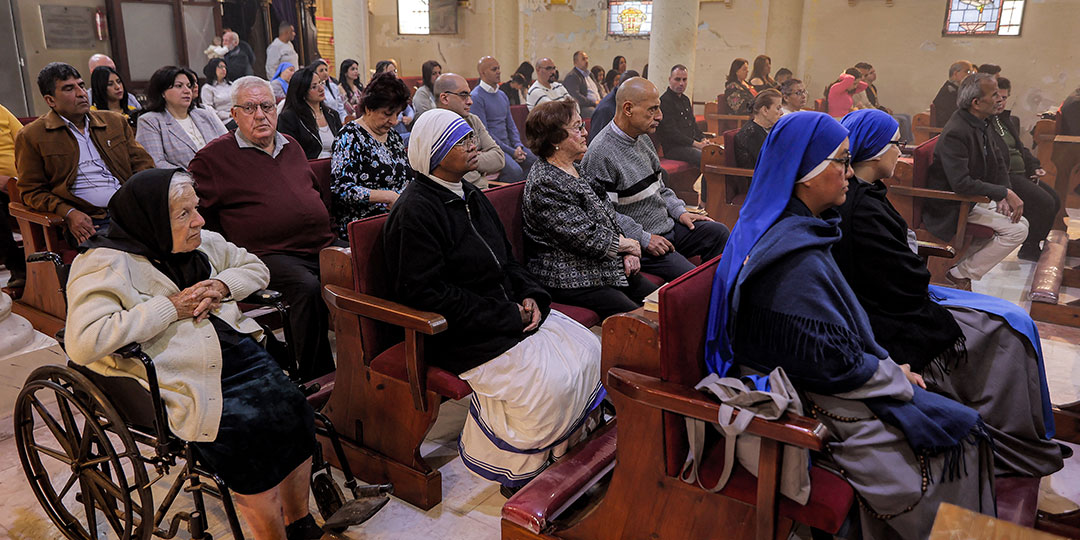
Cardinal Pizzaballa, Latin Patriarch of Jerusalem, conducted Easter Mass behind closed doors and before only a severely restricted gathering of clergy and designated worshippers—a stark contrast to prior years when the church welcomed tens of thousands of pilgrims from across Christendom.
At dawn, the Cardinal arrived accompanied by a small contingent of priests and greeted the handful of believers permitted access, but stringent security protocols prevented the celebration from taking its traditional ceremonial form. The restricted attendance and heavily militarized setting fundamentally altered the nature of one of Christianity’s holiest rituals.
Attempted Entry Denied—Frustration at the Gates
Multiple Christians who had gathered outside the Church of the Holy Sepulchre attempting to enter for Mass were turned away by Israeli security forces with little explanation or flexibility.
Otmar Wasserman, a 65-year-old Catholic who traveled from Tel Aviv believing he would be able to pray at the church as he had done in previous years, expressed bewilderment and deep disappointment: “How can I be told I cannot go to church? This is simply unacceptable.”
The previous week, Israeli authorities had barred Cardinal Pizzaballa himself from entering the church to conduct Palm Sunday services, sparking widespread outrage before Prime Minister Benjamin Netanyahu personally intervened to overturn the prohibition and allow the Cardinal access—a move that underscored the arbitrary nature of the restrictions.
The Cardinal’s Words—Faith Amid Rubble and Hatred
During the Mass conducted within the Church of the Holy Sepulchre, Cardinal Pizzaballa offered words that invoked the spiritual anguish of the current moment, stating: “Here, within this tomb, we are confronted not merely by a symbol; we experience a profound emptiness. We stand at the place where the stone was rolled away, yet we know too well that many graves around us remain sealed. Many tombs have been dug anew by hatred, violence, and revenge.”
His words captured the deep anguish felt by the global Christian community witnessing how the conflict has transformed a place of resurrection and hope into a site marked by death, destruction, and exclusion.
Netanyahu’s Message—Contradiction Between Words and Actions
Prime Minister Benjamin Netanyahu released a statement marking Easter, declaring: “In this land where the story began… we continue steadfastly to protect freedom of worship for all religions, especially in this sacred time.”
Yet Netanyahu’s assertion directly contradicted the severe security measures that barred thousands of Christians from freely practicing their faith. The disconnect between his rhetorical commitment to religious freedom and the ground-level reality of military-style lockdowns exposed a fundamental contradiction between stated policy and actual practice.
Palestinian Christians—Excluded from Their Own Spiritual Heritage
Most Palestinian Christians belong to the Orthodox tradition, which celebrates Easter on April 12. Many Palestinians view the current war and accompanying restrictions as a theft of their deepest spiritual connection—a denial of their right to celebrate their faith in the place where that faith originated.
Christina Tudoras, a 44-year-old Romanian woman who traveled specifically to Jerusalem to celebrate Easter at its birthplace, expressed the heartbreak felt by many: “This is very difficult for everyone because this is our holiday… It is very hard to want to pray, to come here, and find nothing. Everything is closed.”
Like thousands of other believers, Tudoras was forced to watch the Easter Mass via television from a distance, deprived of the direct spiritual experience of pilgrimage that defines Easter for many devout Christians.
Voices of Deprivation—The Spiritual Cost of Conflict
Hoda al-Imam, a Palestinian from East Jerusalem, offered testimony that captured the depth of the loss: “I never imagined we would be prevented from accessing the church. Closing the sacred tomb means the heart of our cultural and spiritual life has stopped beating.”
She added with profound sadness: “Easter is not merely an event we attend; it is part of who we are.”
Wasserman, who struggled to accept the prevention of church access, confessed: “I must acknowledge that I felt some deep frustration.”
He recalled previous celebrations: “The atmosphere was amazing, and the people going there had deep faith and elevated spirits.”
Yet with resignation toward security necessities, he added: “I understand there are security reasons. When authorities speak of danger, it means danger genuinely exists.”
The Tension Between Security and Religious Liberty
Father Bernard Boujie, preparing to attend services at another church near the tomb site, demonstrated understanding of security measures while noting what he perceived as “inconsistency in their application,” suggesting that certain security protocols appeared selective in their enforcement.
These perspectives reflect the underlying tension between legitimate security needs on one hand and fundamental religious rights on the other. While some comprehend security necessities, most Christians feel the restrictions exceed what is genuinely required for safety.
Economic and Spiritual Collapse
The psychological shock worsened for Christians due to the continued closure of shops and restaurants since war erupted on February 28. Julio Mikhalef, 25, who manages a restaurant in the Old City, expressed the economic devastation: “It is truly heartbreaking. I wish the war would stop. We have endured enough. It is time to regain some peace of mind.”
The economic lockdown and security siege compound losses for the local Christian community, which depends on religious tourism and pilgrimage during major religious observances.
Falling Shrapnel and Perpetual Terror
Since the war erupted, fragments from Iranian missiles or Israeli interceptor missiles have repeatedly struck locations throughout the Old City, including areas near the tomb site of Jesus, the Al-Aqsa Mosque, and the Jewish Quarter. This genuine physical danger adds another dimension of terror and anxiety to Christians’ suffering in the Holy City.
Iranian Missile Directly Hits Haifa Residential Building, Injuring Four
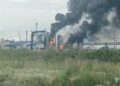
In a parallel yet connected incident reflecting the war’s regional expansion, Israeli military forces and emergency services announced that a seven-story residential building in the northern Israeli city of Haifa was struck by a direct hit from an Iranian-made missile, resulting in four people wounded, including one in critical condition.
The Israeli military confirmed to AFP that the building sustained a “direct hit” from an Iranian-origin missile. Israel’s Magen David Adom emergency service stated that four people were injured from the direct strike.
Rescue Operations Amid Rubble and Wreckage
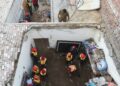
Emergency medical technicians treated an 82-year-old man described in critical condition after sustaining shrapnel wounds. He was transported to hospital after rescue workers extracted him from beneath collapsed concrete.
Paramedic Shivakh Rothstein described the rescue: “Residents at the site informed us there were casualties trapped under debris in the lower floors. We managed to move large pieces of concrete by hand and rescued an 82-year-old man.”
Three other people sustained lighter injuries: two women aged 77 and 38, and a 10-year-old child injured in the head.
Paramedic Lamas Salama confirmed that “a seven-story building sustained a direct hit, causing extensive damage.”
The Broader Context—War Shows No Religious Boundaries
The simultaneous events in Jerusalem and Haifa underscore a harsh reality: the war recognizes no sacred spaces and respects no religious boundaries. Christians denied access to their holiest shrine in Jerusalem, Jewish residents in Haifa targeted by Iranian missiles, and Muslims throughout the region living under constant threat of bombardment—the conflict inflicts suffering across all faith communities.
The contrast between Netanyahu’s statement about protecting religious freedom and the actual militarized reality of Easter in Jerusalem epitomizes the broader contradiction of the conflict: stated values clash with operational realities.
Damage to Tourism and Cultural Heritage
Beyond the immediate spiritual cost, the restrictions on Easter celebrations signal economic devastation for Jerusalem’s Christian community and broader Palestinian economy. The loss of pilgrimage-season tourism—historically one of the most economically significant periods—compounds the material suffering already inflicted by months of conflict.
The closure of shops, restaurants, and guest houses in the Old City reflects not merely security measures but effectively a siege mentality that treats the entire Christian Quarter as a restricted zone requiring military control.
Waiting for Resurrection—A Postponed Hope
The central message of Easter—resurrection, renewal, hope after darkness—carries profound irony in the current Jerusalem context. The stone was said to have been rolled away to reveal life, yet today stones and concrete barriers seal off access to that symbol. The promise of Easter—that death does not have the final word—seems hollow when the living are barred from witnessing to that faith.
Conclusion:
This Easter in Jerusalem represents more than a single suppressed celebration; it symbolizes how comprehensively modern conflict invades and militarizes even the most sacred spaces of human spirituality. The locked gates of the Church of the Holy Sepulchre and the Iranian missile that struck Haifa serve as bookends to a tragedy: a war that recognizes no sanctity, respects no religious observance, and denies communities the basic human right to practice their deepest beliefs. As Christians worldwide commemorate resurrection and hope, those in Jerusalem and nearby regions are instead confronted by barriers, searches, explosions, and exclusion. The Easter message of redemption through suffering rings hollow when suffering itself is weaponized and deployed against the faithful seeking merely to remember and celebrate their most sacred story.