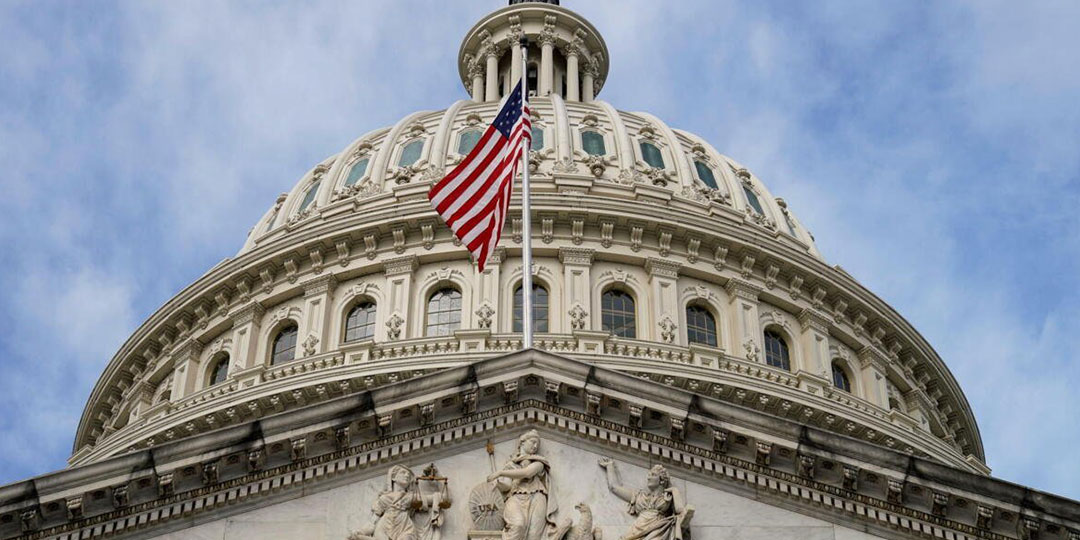

The U.S. House of Representatives narrowly rejected a resolution aimed at halting military operations against Iran and requiring President Trump to return to Congress for authorization before any additional military actions. The vote resulted in 213 opposed and 214 in favor, a razor-thin margin that exposed significant divisions within Congress over the legitimacy and necessity of escalating conflict with Iran.
The resolution, introduced by Democratic Representative Gregory Meeks, Chairman of the House Foreign Affairs Committee, sought to impose constitutional constraints on the President’s unilateral military authority. However, the extremely narrow voting margin reflects deeper disagreement among lawmakers regarding executive power and democratic governance in matters of war and peace.
Single-Vote Margin Reveals Congressional Divide
The U.S. House of Representatives rejected the resolution by the slimmest of margins, with 213 votes against and 214 in favor, according to American media outlets. This near-even split demonstrates a sharp schism within the legislative body over military action against Iran.
The minimal difference underscores the sensitivity of the issue and the complexity of the political situation within Congress. A single vote in the opposite direction could have fundamentally altered the course, potentially halting American military operations against Iran. This narrow margin reveals genuine polarization between Democrats and Republicans on the question of war powers.
Democratic Push to Constrain Presidential Authority
Led by Representative Gregory Meeks, Democrats sought to impose restrictions on President Trump’s military authority in conducting operations against Iran. The resolution aimed to establish a legal requirement for the administration to return to Congress for explicit authorization before proceeding with any new military operations.
This effort reflects a longstanding constitutional tension between the executive and legislative branches over who possesses the power to declare war and authorize military actions. Democrats seek to reassert Congress’s role in matters of military engagement, while the Trump administration insists on maintaining executive flexibility in tactical decisions.
Comprehensive Blockade of Iranian Ports
General Dan Kain, Chairman of the Joint Chiefs of Staff, confirmed that the blockade on Iranian ports encompasses all vessels regardless of their flag. “Our forces remain ready to resume combat operations if necessary,” Kain stated, indicating that the blockade extends across all major Iranian ports and is not limited to the Strait of Hormuz alone.
Chairman Kain noted that over 10,000 military personnel and sailors are directly engaged in the ongoing blockade operations on Iranian ports. He described the operations as “remarkable” and highlighted the density of the maritime zone and complexity of operations under challenging conditions.
Scope of Blockade and U.S. Naval Capabilities
General Kain clarified that the blockade is restricted to Iranian ports and does not encompass the entire Strait of Hormuz. This distinction is legally and politically important, as controlling the international Strait of Hormuz would raise more complex international questions regarding freedom of maritime navigation.
The blockade applies to all vessels without discrimination based on nationality or flag. This represents a comprehensive ban on all Iranian commercial and military maritime traffic through major seaports, imposing both economic and military pressure on Iran.
Statements from U.S. Defense Secretary Pete Hegsdeth
Defense Secretary Pete Hegsdeth affirmed at a press conference that American forces are fully prepared to resume combat operations should Iran choose the “wrong path.” Hegsdeth stated: “We received a briefing from CENTCOM commander regarding details of the Epic Rage operation,” referring to previous Iranian military operations.
Hegsdeth added that “the Revolutionary Guard is attempting to extract its weapons from beneath damaged facilities,” suggesting successful American strikes on Iranian military infrastructure.
Assessment of Military Capabilities and Hormuz Control
The Defense Secretary asserted that the United States is blockading the Strait of Hormuz “using less than 10 percent of our naval capabilities.” This statement reflects American confidence in its overwhelming military superiority, suggesting vast reserve capacity should operations require escalation.
Hegsdeth rejected Iranian claims to control the Strait of Hormuz, stating: “The Revolutionary Guard does not control the Strait of Hormuz, and threats to launch missiles and drones do not constitute control but rather piracy.” This assessment downplays Iranian military threats and reaffirms American military dominance in the region.
Direct American Warnings and Threats
Defense Secretary Hegsdeth directed a direct message to Iran: “Our message to Iran is that we are watching you and we know what military assets you are moving.” This statement reflects intense intelligence monitoring of Iranian military activity.
Hegsdeth added: “Our forces are ready to resume combat operations if Iran chooses the wrong path and fails to reach an agreement.” This explicit warning demonstrates American preparedness to escalate operations if diplomatic resolution proves impossible.
Threats to Target Energy Infrastructure
Hegsdeth confirmed that “our forces will continue blockading the Strait of Hormuz, and if Iran makes the wrong choice, we will strike energy facilities.” This direct threat to target critical infrastructure reflects a determined American commitment to escalating both economic and military pressure on Iran.
Hegsdeth also stated that “our military will transition from military operation to smooth blockade,” indicating U.S. intention to maintain economic pressure even absent full-scale military resumption.
American Intelligence on Iranian Military Activity
Hegsdeth pointed out that Iran is “extracting missile launch platforms that were targeted by airstrikes.” This indicates Iranian attempts to repair and restore military capabilities following previous American operations.
Such precise intelligence monitoring reflects the high degree of American surveillance of Iranian military activity. The United States possesses the capability to track Iranian military assets with exceptional accuracy, providing it with significant strategic advantage.
Broader Context of U.S.-Iran Conflict
This escalation occurs within the context of mounting U.S.-Iran tensions spanning years. The sequence of military operations and economic sanctions reflects an American strategy of imposing “maximum pressure” on Iran.
Nevertheless, Congress’s rejection of the resolution to limit presidential war powers indicates sufficient political support for continued military operations, despite sharp divisions. This suggests the Trump administration retains the political flexibility to continue its military and economic strategy against Iran.
Potential Implications for Regional Stability
Continued American escalation could produce destabilizing results for regional security. The economic and military blockade on Iran may prompt accelerated Iranian military response, particularly if Iran perceives that peaceful options have been exhausted.
Conversely, internal American political division over war legitimacy may affect policy sustainability over time. However, in the near term, Congress’s rejection of the resolution ensures continued sufficient support for ongoing operations, allowing the Trump administration to pursue its stated objectives without immediate legislative obstruction.
Conclusion:
Congress’s narrow rejection of the resolution to limit presidential war powers, decided by a single vote, reflects profound political polarization over American military action against Iran. While maintaining President Trump’s full authority to conduct military operations, the extremely tight margin exposes significant congressional opposition. The Trump administration continues escalating military and economic pressure on Iran through comprehensive port blockades and readied combat operations, with explicit warnings from the Defense Secretary regarding American military preparedness. The coming weeks and months will determine whether diplomatic channels can prevent further escalation or whether military confrontation becomes inevitable.