
Seif al-Islam Kadhafi Shot Dead in Armed Attack in Zintan
TRIPOLI – Seif al-Islam Kadhafi was killed on Tuesday after an armed group stormed his residence in the western Libyan city of Zintan, according to multiple sources familiar with the incident.
His French lawyer, Marcel Ceccaldi, told AFP that Kadhafi, 53, was executed by a “four-man commando” at around 2:00 p.m. local time (1200 GMT). The attackers reportedly disabled surveillance cameras before carrying out the killing. His adviser, Abdullah Othman Abdurrahim, confirmed the account to Libya’s Al-Ahrar television, while members of his family also acknowledged his death.
Background: Who Was Seif al-Islam Kadhafi?
Seif al-Islam Kadhafi was one of the most prominent and polarizing figures to emerge from Libya’s former ruling family after the fall of his father, Muammar Gaddafi. For years, Seif al-Islam Kadhafi was viewed by supporters as a potential bridge between the old regime and a post-revolutionary Libya.
Before the 2011 uprising, he cultivated an image as a reform-minded figure, frequently engaging with Western institutions and advocating gradual political change. However, that image collapsed during the revolt against his father’s rule, when he delivered a televised speech warning that Libya would face “rivers of blood” if protests continued.
Arrest, Trial, and Amnesty
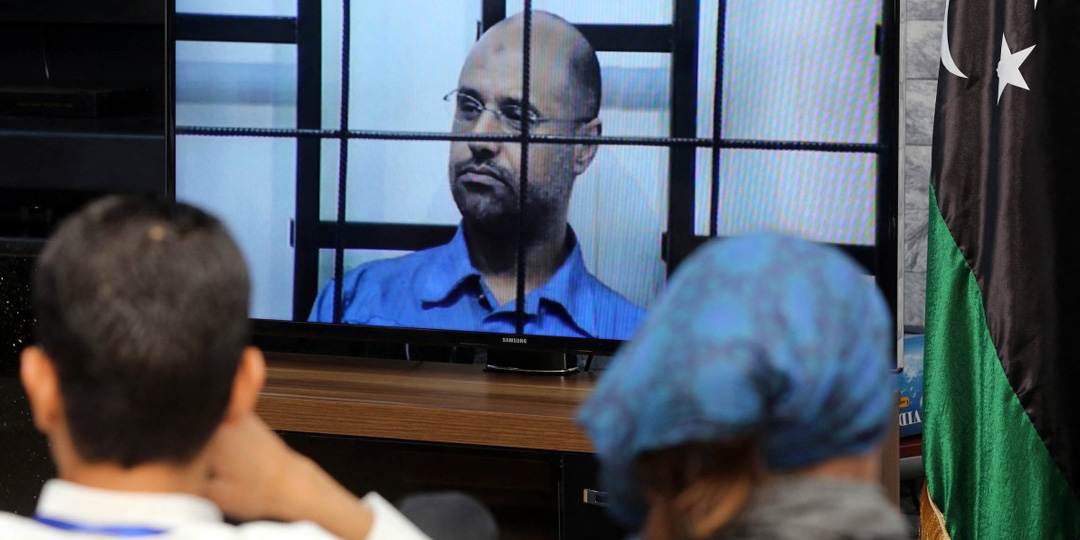
Following the collapse of the former regime, Seif al-Islam Kadhafi was captured in Zintan in late 2011 by local armed groups. In 2015, a Tripoli-based court sentenced him to death in absentia on charges linked to crimes committed during the uprising.
The ruling, however, was never carried out. He was later granted amnesty under a controversial law issued by Libya’s eastern-based authorities, a move that deepened political divisions across the country. For several years, his whereabouts remained unclear, adding to speculation about his influence and potential return to public life.
Political Comeback and Election Controversy
In 2021, Seif al-Islam Kadhafi re-emerged by announcing his intention to run in Libya’s long-delayed presidential elections. His candidacy immediately sparked controversy, with rival political factions disputing his eligibility and questioning his role in Libya’s violent past.
While some supporters viewed him as a symbol of continuity and stability, others saw his return as a threat to Libya’s fragile transition. The elections were ultimately postponed indefinitely amid disagreements over the legal framework, security conditions, and the eligibility of key candidates.
Political Impact and Security Concerns
Libya analyst Emadeddin Badi said the killing of Seif al-Islam Kadhafi could have significant political repercussions. He noted that his death may elevate him to martyr status among segments of the population, while simultaneously reshaping calculations around any future electoral process.
The incident comes at a time when Libya remains deeply divided between rival administrations in the west and east. More than a decade after the NATO-backed uprising of 2011, the country continues to struggle with armed groups, weak state institutions, and ongoing security challenges.
Authorities have yet to identify the attackers or clarify their motives. No arrests have been announced, and details surrounding the investigation remain limited, underscoring the fragile security environment in many parts of Libya.