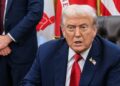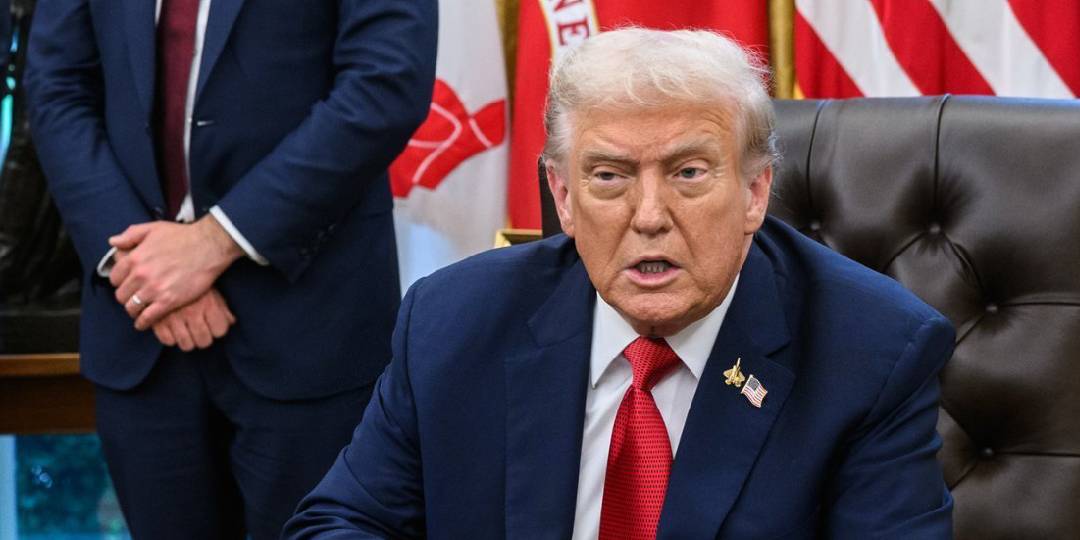

US President Donald Trump on Saturday rejected Iran’s proposal to reopen the Strait of Hormuz, as Tehran denied taking any military action in response to recent air restrictions and said talks were still under way with the relevant parties.
The comments come amid rising tensions over the strategic waterway, one of the world’s most important routes for oil and trade, as Washington and Tehran continue to exchange accusations over the escalation.
Trump Says Iran Wants the Strait Reopened
Trump told reporters, in remarks reported by the Iraqi News Agency, that the United States rejects a deal under which Iran wants trade to reopen immediately, saying Tehran is suffering major losses.
He added that Washington is scoring a “big victory” and has full control over the Strait of Hormuz, noting that large volumes of oil pass through it and that 29 ships crossed it overnight.
Accusations Over the Closure
Trump said Iran wants the strait reopened immediately because it is suffering “huge losses,” adding that Tehran has “put itself in a corner” by closing it.
He claimed the United States has imposed “the biggest blockade in military history” on Iran and said Washington has put up a “steel wall” around the Strait of Hormuz, leaving Iran without money because of the closure.
Iran Denies Any Military Option
In response, Iran’s Supreme National Security Council denied that it is preparing any military move over the recent air restrictions.
The council said in a statement that claims Iran will take military action are false, and that talks are still ongoing with the relevant parties to lift what it described as illegal air restrictions.
Tehran Points to Non-Military Options
The council said there are several non-military ways to respond in kind, and that some of them could be applied to certain airports if needed.
The response suggests Tehran wants to keep diplomatic channels open even as pressure mounts over maritime and air movement in the region.
Strait of Hormuz Remains at the Center of Tensions
The Strait of Hormuz remains central to the standoff between Iran and the United States because of its role in moving oil and strategic goods through the Gulf to global markets.
Any further disruption or restrictions on traffic through the strait could affect energy prices and supply chains, making the latest statements politically significant beyond the immediate dispute.
Conclusion:
The latest remarks show that tensions around the Strait of Hormuz remain high, with Trump rejecting Iran’s proposal and Tehran denying any military response. While talks continue, the future of the vital waterway remains tied to whether de-escalation or further confrontation prevails in the coming days.