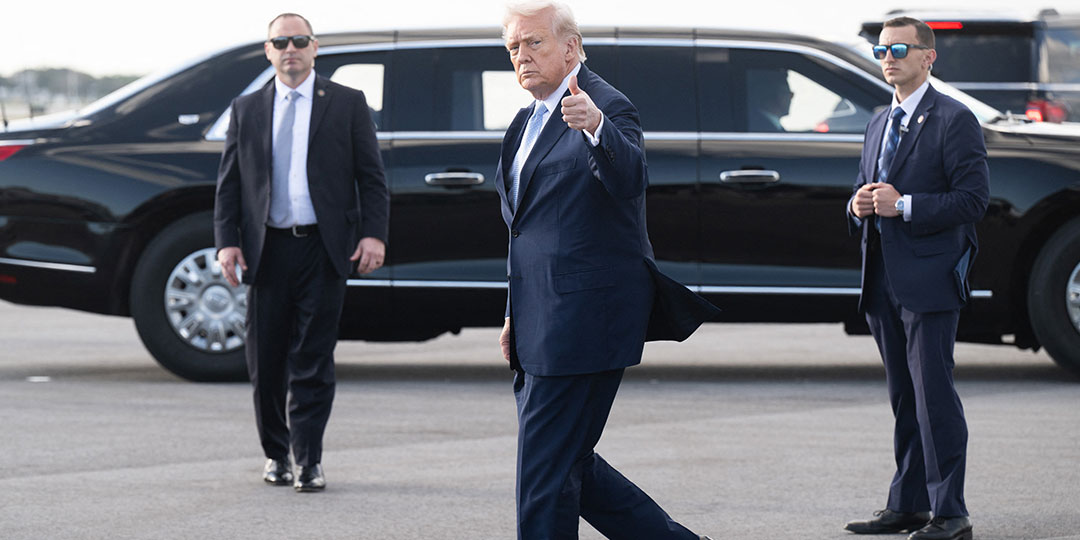

US President Donald Trump announced on Monday, March 23, 2026, that he would postpone military strikes on Iranian energy facilities for five days, reversing his weekend ultimatum that demanded Iran reopen the Strait of Hormuz by midnight or face “destruction” of its power plants. Trump cited “very good” negotiations between Washington and Tehran aimed at achieving “comprehensive and complete” resolution to all hostile actions.
The announcement came amid dramatic escalation as Iran threatened to lay naval mines in the Persian Gulf and strike energy facilities across the region if targeted. Simultaneously, Israel continued intense bombing campaigns against Tehran and announced preparations for weeks of additional fighting against Iran and Lebanon-based Hezbollah.
Trump’s Announcement of Strike Postponement
Trump stated: “Based on the substance and tone of conversations that will continue throughout the week, I have directed the Department of Defense to postpone all military strikes on power stations and energy infrastructure in Iran for five days, contingent on the success of ongoing meetings.”
The US president indicated that negotiations between Washington and Tehran aimed at “comprehensive and complete solution to all hostile acts between us” would continue through the week.
Conditional Nature of Postponement
The postponement appears conditional on “success of ongoing meetings,” meaning Trump retained the option to resume strikes if negotiations fail. This reflects a hardline American position, placing negotiations under direct military threat.
Tehran Denies Existence of Negotiations
Iran’s response came swiftly and contradicted Trump’s account. Iranian state media outlets flatly denied Trump’s claims about “very good” negotiations between Tehran and Washington.
The Iranian news agency Mehr quoted the Iranian Foreign Ministry: “There are no negotiations between Tehran and Washington.” The agency characterized Trump’s statements as an attempt “to reduce energy prices” rather than reflecting genuine diplomatic dialogue.
Other Iranian media outlets issued similar denials.
Diplomatic Contradiction
The disagreement over whether negotiations are occurring highlights the deep gulf between American and Iranian positions. This contradiction may indicate that informal contacts occur through mediators (such as Oman or Switzerland), but the Iranian side refuses to acknowledge them publicly.
Iran Escalates with Counterattack Threats
Iran responded to Trump’s threats with dangerous escalation rhetoric. Tehran threatened to “lay naval mines in the Persian Gulf” and “strike energy facilities throughout the region” if its coastlines are attacked or its power plants are destroyed.
Iranian state media published photographs on Monday of energy facilities in multiple countries, presented as “potential targets” in Israel and several Gulf states.
Iran’s Threat Message
The Iranian news agency Mehr wrote: “The entire region will sink into darkness.” This message reflects a clear Iranian strategy: threatening regional catastrophe that would affect not only Iran but also Gulf nations.
Israeli Airstrikes Intensify on Tehran
Early Monday morning, the Israeli military announced conducting “a large series of strikes” on the Iranian capital. Multiple explosions were heard across different Tehran neighborhoods, with thick smoke plumes visible according to AFP correspondents.
Iran’s Farsi News Agency reported strikes hit northern, eastern, and western Tehran, indicating wide-scale operations.
Casualties from Attacks
In the southern port city of Bandar Abbas, an attack on a radio broadcasting facility killed one person and injured another, according to Iranian state television.
Simultaneous Attacks on Gulf States
The attacks were not limited to Iranian territory. Multiple Gulf states experienced coordinated nighttime attacks.
The UAE Defense Ministry announced it intercepted incoming rockets and drones originating from Iran. Saudi Arabia reported being attacked by two missiles and a drone. Air raid sirens sounded in Bahrain.
Pattern of Distributed Iranian Attacks
These coordinated attacks reflect a clear Iranian strategy: distributing attacks across multiple targets at different geographic points, overwhelming regional air defenses and complicating interception efforts.
Israel Announces Preparations for Extended Campaign
The Israeli military chief of staff stated: “The operation against the terrorist Hezbollah organization is still in its beginning… This is a long-term operation and we are prepared for it.”
He added: “We are now preparing to intensify designated ground operations and airstrikes, according to an organized plan. We will not stop before pushing the threat away from our borders and ensuring long-term security for Israel’s northern residents.”
Ground War Escalation Expected
This Israeli statement suggests military operations may evolve from air warfare to large-scale ground operations, particularly against Hezbollah in Lebanon.
Israeli Destruction of Lebanese Infrastructure
Israeli destruction extended to Lebanese infrastructure. On Sunday, the Israeli military destroyed a strategic bridge in southern Lebanon, claiming Hezbollah used it.
Lebanese President Youssef Karam denounced the bridge destruction as “preparation for ground invasion and serious escalation.”
In Lebanon, death tolls have exceeded 1,000, with over one million displaced.
Growing Fears of Nuclear Facility Targeting
International concern intensified regarding possible Iranian nuclear site targeting. Two Iranian missile attacks Saturday evening caused injuries to over 100 people in southern Israel, with one strike occurring near a nuclear research center in Dimona.
WHO Warning on Nuclear Risk
World Health Organization Director-General Tedros Adhanom Ghebreyesus called on all parties to exercise “maximum restraint” to prevent any accidents involving nuclear facilities.
This warning reflects international fears of nuclear catastrophe if the war continues unchecked.
Iranian Power Plants: Emerging Targets in Expanding War
Iran possesses over 90 power stations, with some located on Persian Gulf shores. Iranian electricity sources break down as follows:
Combined cycle power plants: produce approximately 38 percent of electricity
Gas-fired power plants: produce 26 percent
Renewable energy: represents 13 percent
Nuclear power: comprises only 1 percent
Major Power Plants Under Threat
Damavand Power Plant, located in Tehran suburbs, is Iran’s largest facility. Spanning approximately 193 hectares, it produces about 2,900 megawatts of electricity.
Shahid Salimi Plant in northern Iran’s Neka produces 2,214 megawatts.
Shahid Rajaii Plant in northern Qazvin produces 2,042 megawatts total.
Pressure on Iranian Infrastructure
Iran faces electricity supply challenges despite possessing vast oil and gas resources. The nation suffers from energy shortages due to aging infrastructure and international sanctions.
Iranian authorities occasionally implement electricity rationing due to insufficient gas and fuel for power generation. Iran regularly faces drought waves and hot summers that increase electricity consumption for air conditioning operation.
Power Plant Targeting Could Collapse System
Targeting power stations could result in complete collapse of Iran’s electrical system, potentially paralyzing all civilian life.
Iran’s Nuclear Power Program
Iran operates only one active nuclear power plant: Bushehr, built with Russian assistance, producing 1,000 megawatts.
Tehran and Moscow signed a $25 billion contract in September 2025 to construct four additional nuclear plants in southern Iran, each with approximately 1,255 megawatt production capacity.
Disputed Nuclear Intentions
While the West accuses Iran of seeking nuclear weapons production, the Islamic Republic emphasizes its right to peaceful nuclear energy.
International Warnings on Crisis Severity
China warned of the Middle East situation spiraling out of control.
The International Energy Agency warned the war could cause “the worst fuel crisis in decades,” with oil production losses unprecedented since the 1970s.
IEA Director Fatih Birol stated: “So far, we have lost 11 million barrels daily, more than we lost during the two major oil crises combined” in the 1970s.
Alarming Numbers
According to analytics firm Kpler, traffic through the Strait of Hormuz has declined 95 percent, despite one-fifth of global oil production normally passing through it.
Birol said: “No country will be spared from the effects of this crisis if it continues this way. Therefore, it is important to act on a global scale.”
Attempts to Contain Energy Price Surge
Washington temporarily allowed Iranian oil stored on ships to be sold, attempting to contain energy price increases.
However, Tehran stated it possesses no surplus oil at sea.
Russian Mediation Efforts
Shortly after Trump’s postponement announcement, Russia’s Foreign Ministry reported that Foreign Minister Sergei Lavrov received a phone call from Iranian counterpart Abbas Araghchi.
Lavrov called for “immediate ceasefire of hostile acts and a political settlement that takes into account the legitimate interests of all concerned parties, particularly Iran.”
Omani Mediation Initiative
Oman announced Monday it is working on arrangements to ensure “safe passage” through the Strait of Hormuz.
Regional Mediators’ Role
Russian and Omani mediation efforts reflect international attempts to find compromise solutions and prevent escalation that could trigger regional catastrophe.
Broader Crisis Context
After more than three weeks of Middle East war, combatants are now targeting critical infrastructure: gas facilities, oil installations, and nuclear sites.
The circle of targeting may expand to encompass entire power generation systems.
Risk of Systemic Collapse
If power stations are systematically destroyed, Iran’s entire electrical grid could collapse, potentially paralyzing the nation’s economy and civilian infrastructure.
Regional Economic Consequences
Power plant destruction would not affect only Iran. Ripple effects would extend throughout regional economies dependent on energy supplies and stable oil markets.
Conclusion:
Trump’s announcement postponing strikes reflects a harsh reality: both American and Iranian leadership recognize that targeting basic infrastructure could trigger regional catastrophe and global economic disaster. However, Iran’s denial of negotiations indicates the gap between the parties remains profound. With Israeli airstrikes continuing against Tehran, Iranian attacks on Gulf states, and mutual threats to destroy power plants and close the Strait of Hormuz, the region appears on the brink of catastrophe that may prove unavoidable. The coming five days will prove decisive in determining whether genuine negotiation intentions exist or whether this merely represents a tactical delay before resumed escalation. Energy markets worldwide await these developments with profound anxiety, as any further supply disruption could trigger global economic crisis.