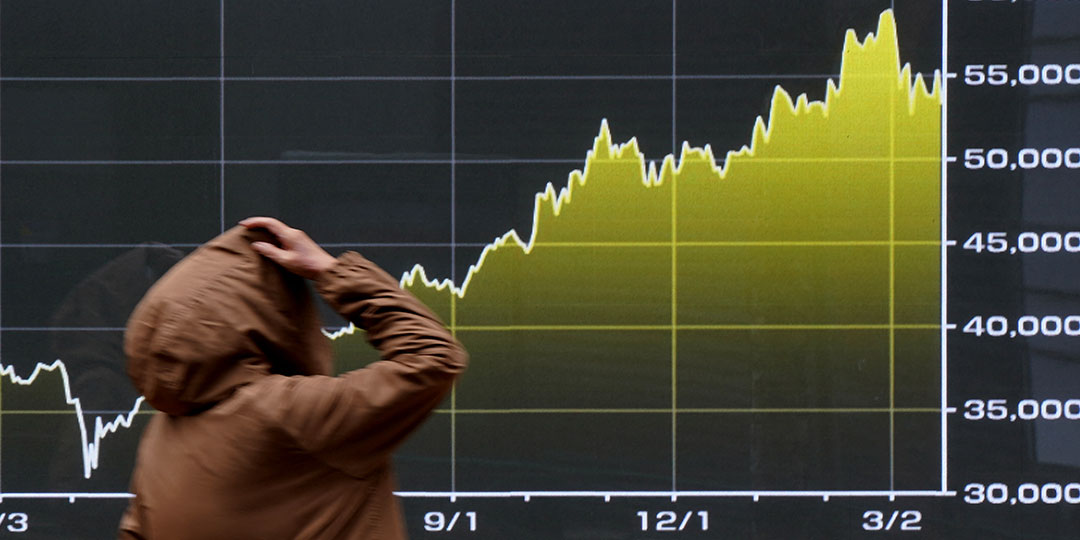

Asian stock markets experienced sharp declines Monday as investors reacted to US President Donald Trump’s ultimatum demanding that Iran reopen the Strait of Hormuz within 48 hours or face destruction of its energy infrastructure. Hong Kong’s Hang Seng Index fell 3.3 percent to 24,435.74, while South Korea’s Kospi dropped 4.69 percent and Japan’s Nikkei declined 3.54 percent. The sharp sell-offs reflect market anxiety over both the immediate threat of expanded military conflict and the economic consequences of continued Strait of Hormuz closure affecting global oil supplies and energy prices.
The simultaneous stock market declines across major Asian economies indicate that market participants assess Trump’s ultimatum as raising conflict escalation risk significantly while failing to resolve underlying energy supply disruptions threatening global economic growth.
Hong Kong Stocks Decline 3.3 Percent on War Concerns
Hong Kong’s Hang Seng Index fell 3.3 percent to 24,435.74 in morning trading Monday, reflecting investor concerns about energy crisis impacts on regional and global economic growth. Shanghai stocks also declined 2.2 percent to 3,871.75, indicating broad-based concern across Chinese markets about Middle East conflict economic consequences.
The declines in both Hong Kong and Shanghai reflect investor assessment that continued Middle East conflict and energy supply disruptions threaten Chinese economic growth dependent on stable energy supplies and global trade.
Energy Dependence and Chinese Market Vulnerability
China’s high dependence on Middle Eastern oil and natural gas imports creates particular vulnerability to Strait of Hormuz disruptions. The decline in Chinese stock markets indicates investor concern that extended conflict will impair Chinese economic growth through elevated energy costs and supply chain disruptions.
South Korea’s Kospi Falls 4.69 Percent
South Korea’s benchmark Kospi index fell 4.69 percent to 5,509.88 points in Monday morning trading, representing one of the sharpest single-day declines in recent months. The steeper decline in South Korea compared to Hong Kong and Japan reflects South Korea’s particular vulnerability to energy supply disruptions and elevated oil prices.
South Korea’s won currency simultaneously weakened to 1,510 won per US dollar, its lowest level in 17 years, indicating both equity market and currency market stress from conflict escalation concerns.
Currency Weakness Amplifies Market Stress
The decline of the South Korean won to 17-year lows amplifies stress on South Korean exporters and companies with foreign currency debt obligations. Currency weakness increases financing costs for South Korean companies accessing international capital markets and raises costs for energy imports denominated in foreign currencies.
Japan’s Nikkei Declines 3.54 Percent
Japan’s Nikkei 225 index fell 3.54 percent to 51,483.91 points in Monday morning trading, reflecting Japanese investor concerns about energy crisis impacts on Asian economic growth. Japan’s particular vulnerability as the world’s fourth-largest economy and fifth-largest oil importer creates acute concern about Strait of Hormuz disruption consequences.
The Nikkei’s smaller decline compared to South Korea’s Kospi may reflect Japan’s larger strategic oil reserve holdings and government announcements of reserve release intended to buffer against supply disruptions.
Strategic Reserve Role in Market Psychology
Japan’s announcement of strategic oil reserve releases may have partially cushioned Japanese market declines by providing psychological reassurance about energy supply alternatives. Markets may be pricing in expectations that strategic reserve releases will partially offset Strait of Hormuz closure effects.
Trump’s 48-Hour Iran Ultimatum Triggers Market Reaction
Trump posted late Saturday on Truth Social that US forces would “hit and obliterate” Iranian power plants “starting with the biggest one first” if Iran did not fully reopen the Strait of Hormuz within 48 hours. The ultimatum set a deadline of 23:44 GMT Monday, creating immediate market anxiety about potential escalation of military conflict.
The ultimatum’s specific threat of power plant destruction targeting Iran’s largest facilities indicates intent to impose maximum economic damage through infrastructure destruction rather than limited military operations.
Ultimatum Credibility and Market Assessment
Market participants appear to assess Trump’s ultimatum as credible threat rather than negotiating posture, given the specific nature of threatened targets and defined timeline. The market reaction suggests investors believe there is meaningful probability that US military action against Iranian power infrastructure could occur within the specified timeframe.
Iran Issues Retaliatory Threats
In response to Trump’s ultimatum, Iran’s army issued threats to target energy and desalination infrastructure “belonging to the US and the regime in the region,” according to the Fars news agency. The Iranian response indicates readiness to escalate reciprocal attacks on infrastructure if US forces target Iranian energy facilities.
Escalation Spiral and Market Implications
The tit-for-tat threats between Trump and Iran create escalation spiral where each side’s threatened responses trigger counter-threats, raising probability of continued military escalation. Market participants assess this escalation dynamic as likely to continue regardless of immediate ultimatum outcome.
Oil Price Volatility and Market Response
WTI crude oil traded at $98.66 per barrel in early Monday trading following Trump’s ultimatum, after briefly touching just over $100 per barrel earlier in the session. The volatile oil price movement reflects market uncertainty about whether Trump’s ultimatum will lead to expanded military conflict increasing Strait of Hormuz closure duration or resolve the blockade through negotiation.
Brent crude, the global benchmark, traded at $112.17 per barrel, down slightly from earlier highs as markets assessed the probability of ultimatum outcomes.
Oil Price Range and Conflict Expectations
The sustained elevation of Brent crude near $112 per barrel compared to pre-conflict levels of $72.48 indicates that markets continue to price in expectations of prolonged Strait of Hormuz closure despite Trump’s ultimatum. The modest declines from earlier highs suggest some market skepticism about ultimatum effectiveness.
Military Operations Continue
Israeli military chief Lieutenant General Eyal Zamir announced Sunday that Israeli forces were expanding their ground campaign against Hezbollah in Lebanon, warning of a “prolonged operation.” Zamir stated: “We are now preparing to advance the targeted ground operations and strikes according to an organised plan.”
The continuation of Israeli ground operation expansion despite Trump’s Iran ultimatum indicates that military operations will likely continue regardless of Strait of Hormuz resolution, maintaining supply disruption pressures.
Pre-Conflict Baseline Oil Prices
On February 27, the day before US-Israeli attacks began, WTI had stood at $67.02 and Brent was at $72.48 per barrel. The increase to $98-112 per barrel range represents 45-55 percent price elevation from pre-conflict levels, reflecting market assessment of sustained supply disruption duration.
Baseline Context and Permanence Assessment
The elevation of current prices to 45-55 percent above pre-conflict baseline indicates that markets assess the conflict’s economic consequences as potentially permanent rather than temporary. The sustained price elevation despite strategic reserve releases and ultimatums suggests markets discount near-term resolution probability.
Global Economic Implications of Asian Market Declines
Sharp declines in major Asian stock markets signal broader global economic concerns about Middle East conflict consequences. The simultaneous declines across Hong Kong, Seoul, Shanghai, and Tokyo indicate that regional differences in market response are minimal, suggesting universally negative market assessment of conflict trajectory.
Key Market Developments:
- Hong Kong Hang Seng falls 3.3% amid Middle East war concerns
- South Korea Kospi drops 4.69%, sharpest decline among major indices
- Japan Nikkei falls 3.54% despite strategic reserve announcements
- South Korea won weakens to 17-year low at 1,510 won per dollar
- Trump issues 48-hour ultimatum on Strait of Hormuz reopening
- WTI crude briefly touches $100 per barrel, trades at $98.66
- Brent crude holds near $112 despite market volatility
- Iran issues retaliatory infrastructure threat
- Israeli military expands Lebanon ground operations
- Pre-conflict oil prices at $67-72 per barrel, current at $98-112