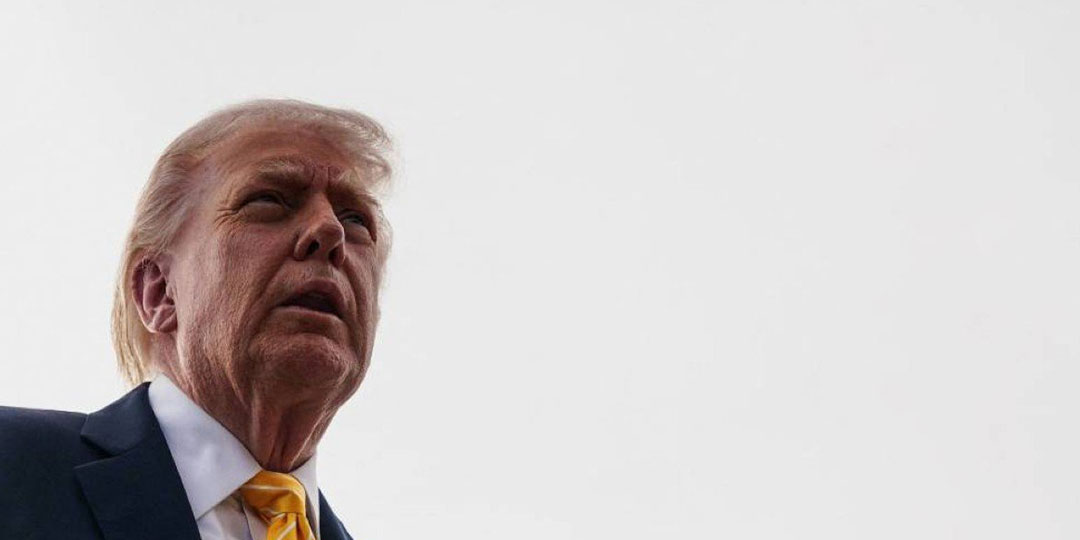

President Donald Trump announced significant reductions in American military forces deployed in Germany far exceeding the Pentagon’s initial plan to withdraw 5,000 troops, drawing opposition even from within Republican ranks. Simultaneously, German economic experts warned of serious risks to the German economy from newly announced American tariffs, projecting potential recession in 2026.
The economic warning reflects broader tensions in American-European relations under the Trump administration.
Military Reduction Exceeds Expectations
Trump stated while speaking to journalists in West Palm Beach, Florida: “We will reduce the number significantly, and we will reduce it far more than 5,000 soldiers.”
This statement represents an expansion beyond the Pentagon’s initial plan. Pentagon spokesman Sean Barnell had indicated the original plan involved withdrawing approximately 15 percent of total American forces in Germany, reducing the 36,000-soldier deployment.
The Pentagon estimated the withdrawal could be completed within “6 to 12 months” according to standard military procedures.
Details of the announced reductions include:
• Pentagon initial plan: Withdrawal of 5,000 troops (15% reduction)
• Trump statement: Reduction will be “far greater” than 5,000
• Current US deployment in Germany: 36,000 soldiers
• Estimated timeline: 6-12 months for Pentagon plan
• Trump’s plan: Larger unspecified number of troops
Strong Republican Congressional Opposition
The troop reduction plan has encountered opposition from prominent Republican leaders in Congress. The Republican chairs of the Armed Services Committees in both the Senate and House of Representatives expressed “deep concern” about the decision.
Mike Rogers and Roger Walker stated in a joint statement: “Even if allies move toward 5 percent defense spending of their GDP, achieving this investment will take time.” They warned that “reducing American presence in Europe prematurely, before these capabilities are fully operational, puts our deterrent at risk.”
Republican leaders characterized the force reduction as sending “the wrong signal” to Russian President Vladimir Putin.
Rationale and European Defense Concerns
Republican criticism reflects broader concerns about timing and implications of force reductions. The debate centers on the fact that European NATO members have committed to increasing defense spending to 5 percent of GDP, but implementation requires substantial time.
According to Republican critics, premature withdrawal of American forces would undermine NATO’s deterrent capability before European defense spending becomes operational.
German Defense Minister Response
German Defense Minister Boris Pistorius responded to the announced withdrawal in measured tones. In a statement to France Press, Pistorius said: “Withdrawal of American troops from Europe, and from Germany as well, was expected. We Europeans must take greater responsibility for our security.”
The German defense minister’s response acknowledges political reality while emphasizing European responsibility for defense autonomy.
American-European Tensions Over Iran War
The military withdrawal decision stems partly from broader American-European friction over Trump administration Iran policy. Trump has previously expressed dissatisfaction with positions taken by German Chancellor Friedrich Merz regarding the ongoing war with Iran.
With diplomatic efforts stalled on reaching settlement of the conflict, Trump has directed sharp criticism at traditional European allies, accusing them of failing to support the war he initiated against the Islamic Republic in late February.
German Economic Warnings
Clemens Fuest, president of Germany’s Ifo Institute for Economic Research, warned of substantial risks to the German economy from newly announced American tariffs.
According to reporting by German newspaper Bild, Fuest stated: “If this develops into a new trade war, Germany faces recession in 2026.”
Fuest emphasized that planned tariff increases will impact the German auto industry, which already faces difficult circumstances.
American Tariffs on European Automobiles
President Trump announced intent to raise tariffs on automobiles and trucks from the European Union from 15 percent to 25 percent.
These new tariff rates are scheduled to take effect beginning next week. This increase represents significant escalation in trade conflict between the Trump administration and the European Union.
Expected impacts of the tariff increases include:
• Increased costs for European automobiles in American market
• Reduced competitiveness of German and European vehicles
• Disruption to European supply chains and production
• Potential job losses in German auto sector
Warnings of Comprehensive Trade War
Fuest fears serious consequences if the European Union imposes retaliatory tariffs on American products. He stated in remarks that if a genuine trade war develops, Germany faces economic recession in 2026.
His warning underscores the potentially mutual and destructive nature of trade wars.
German Cautious Approach
Jens Südekum, an advisor in the German Finance Ministry, recommended restraint and caution. He stated that it is first necessary to verify whether the announced American tariffs will actually be implemented.
Should implementation occur, he called for adoption of “appropriate countermeasures” by the European Union, but without rushing into immediate retaliation.
Connection Between Military and Economic Decisions
These developments reflect a broader American strategy under Trump administration using military and economic pressure simultaneously. Military withdrawal and elevated tariffs work together to exert American influence over traditional allies.
NATO’s Official Position
A NATO spokesperson stated that the alliance is “working” with the United States “to clarify details of its decision regarding military deployment in Germany.”
The statement represents a diplomatic attempt to maintain neutrality while seeking clarification of American intentions.
Broader Strategic Implications
The combination of military troop reductions and tariff threats signals a fundamental shift in American strategic approach toward Europe. Rather than maintaining traditional alliance relationships, the Trump approach uses military presence and trade relationships as leverage tools.
This represents a departure from post-World War II American strategy based on alliance solidarity and mutual defense commitments.
European Union’s Strategic Response
The European Union faces mounting pressure from both military withdrawal and economic tariffs simultaneously. The dual pressure creates urgent need for coordinated European response that addresses both security and economic dimensions.
Conclusion:
Trump’s announcement of major military force reductions in Germany combined with threatened tariff increases on European automobiles represents a fundamental shift in American-European relations. While Germany and the European Union face mounting military and economic pressure, economic warnings reflect potential serious consequences for European economic growth in the coming year. The combination of military withdrawal and trade restrictions creates unprecedented pressure on traditional transatlantic relationships.