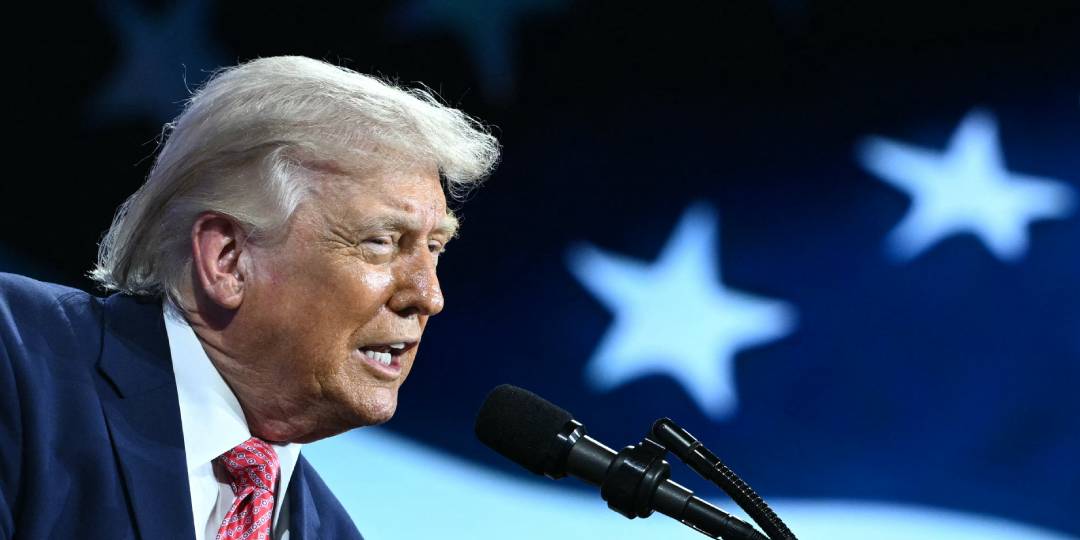

U.S. President Donald Trump declared Friday that “Cuba is next,” defying suggestions that recent American military operations are eroding his political base. The statement escalates geopolitical tensions at a moment when the Middle East remains engulfed in conflict and regional instability spreads. Trump’s casual declaration of potential military intervention against Havana signals a dramatic expansion of American military adventurism under his second administration.
Speaking at the FII Priority investment forum backed by Saudi Arabia in Miami, Trump boasted of the military he has built, stating his supporters demand “strength” and “victory.” He explicitly referenced the January military operation in which U.S. forces captured Venezuelan President Nicolás Maduro.
Trump’s Escalating Rhetoric on Cuba
The “Cuba is Next” Declaration
Trump’s statement at the Miami forum was both explicit and casual. He said: “I built this great military. I said you’ll never have to use it, but sometimes we have no choice. And Cuba is next, by the way. But pretend like I didn’t say anything.”
When media representatives approached him to clarify, Trump initially told them to “ignore that statement,” before repeating “Cuba is next”—drawing laughter from those present. The repetition and tonal quality suggested both testing reactions and reinforcing the message simultaneously.
Controversial Straits Statement
During the same Friday address, Trump made additional controversial remarks, describing the Strait of Hormuz as the “Trump Strait”—a statement that drew scrutiny for its grandiosity and potential implications for international maritime law and Iranian relations.
Context of Escalating Pressure on Cuba
Trump has recently intensified pressure on Cuba through imposition of an oil embargo since January, effectively strangling fuel supplies to an island already devastated by decades of American trade restrictions. Cuba’s economy, already suffering from sustained American embargo since 1962, faces severe shortages of fuel, electricity, medicine, and food. The new oil embargo tightens the economic noose.
Cuba’s Response and Defiant Posture
Díaz-Canel’s Defiance
Cuban President Miguel Díaz-Canel asserted last week that any external aggressor would face “overwhelming resistance.” The statement signals Cuba’s determination to resist despite overwhelming military disparity. Havana’s defensive posture reflects the knowledge that direct military confrontation with the United States would be catastrophic, yet refusing to capitulate would be politically suicidal for the regime.
Dialogue Openness with Red Lines
A Cuban official recently stated that Havana remains prepared to continue dialogue with Washington while simultaneously making clear that political system change is “non-negotiable.” This formulation—simultaneous openness and absolute intransigence—reflects Cuba’s strategic position: willing to negotiate specific grievances but fundamentally unwilling to accept regime change demands that would constitute capitulation.
Historical Context of American Hostility
Cuba has endured American trade embargo since 1962 and American-backed invasion attempts dating to the 1961 Bay of Pigs operation. Havana views Trump’s rhetoric as continuity of longstanding American policy objectives: regime change and geopolitical subordination. The island’s communist leadership sees American military threats as validation of defensive posture rather than cause for policy reversal.
Venezuela Operation: Precedent for Intervention
January Military Campaign and Maduro’s Capture
Trump referenced the January military operation capturing Venezuelan President Nicolás Maduro as precedent for future action. The operation represented a dramatic assertion of American military power in Latin America, with captured government officials and demonstrated willingness to conduct kinetic operations beyond traditional military boundaries.
Regional Implications
The Venezuela operation demonstrated several critical developments: Trump’s willingness to conduct military operations in Latin America; American capacity to capture sitting regional leaders; alliance with regional actors supporting regime change; and apparent indifference to international legal frameworks constraining military intervention.
Normalization of Military Adventurism
By referencing the Venezuela operation positively and using it as justification for potential Cuban action, Trump is normalizing military intervention as a standard policy tool. Previous administrations maintained diplomatic and economic pressure while avoiding explicit military capture of leaders. Trump’s approach removes that restraint.
Broader Context: Middle East War and Military Expansion
Simultaneous Regional Conflicts
Trump’s threats against Cuba occur amid the month-long Middle East war between Israel and Iran that Trump’s administration initiated in late February. Military operations in the Middle East, threats toward Cuba, and reported military planning concerning other regions suggest an expansionist military posture across multiple theaters simultaneously.
Overextension and Resource Allocation
Military strategists express concern about American capacity to simultaneously sustain operations in the Middle East while conducting new operations in Latin America. The U.S. military, while powerful, faces logistical constraints and personnel limitations. Expanding theater operations risks overextension and degraded response capacity should new crises emerge.
Ideological Commitment to Military Power
Trump’s rhetoric emphasizes military dominance as central policy objective. His campaign messaging promised “peace through strength,” yet his actions demonstrate preference for military assertion over diplomatic resolution. This ideological commitment shapes decisions across multiple regions.
Massive U.S. Domestic Protests Planned
Third “No Kings” Movement Mobilization
American citizens are preparing massive nationwide protests Saturday against Trump, marking the third major mobilization of the “No Kings” anti-Trump movement in less than one year. The movement represents the most prominent domestic opposition to Trump since his second term began in early 2025.
Organizers expect participation from over 3,000 gatherings across major cities on the east and west coasts, suburbs, and rural areas, extending to Kotzebue, Alaska, in America’s far north. Minnesota is expected to serve as a primary focus, having become the center of national debate regarding Trump’s aggressive anti-immigration campaign.
Expanded Grievances: War and Domestic Repression
Noyid Shah, from “Collective Defense,” a military veterans organization within “No Kings,” stated: “Since the last march we organized, this administration has deepened our involvement in war.”
Shah continued: “At home, we’ve watched citizens killed in streets by militarized police (immigration enforcement agents). We’ve seen families torn apart and immigrant communities targeted. All in the name of one man trying to govern like a king.”
The protests now encompass multiple grievances: the Middle East war, aggressive immigration enforcement, alleged authoritarian governance, environmental policy denial, attacks on diversity programs, and threats of additional military interventions.
Evolving Protest Participation
Organizers report that two-thirds of those intending to participate Saturday do not reside in major cities traditionally serving as Democratic strongholds. This represents a significant expansion of geographic participation from previous protests, indicating growing concern across rural and suburban America.
Political Context: Midterm Elections and Polling Decline
Trump’s Declining Approval Rating
Trump’s approval rating has declined to 40 percent, down from previous levels. The president faces midterm elections in November where his Republican Party risks losing control of both chambers of Congress. The timing of massive protests reflects strategic organization targeting maximum political impact before crucial elections.
Divisions in American Society
Trump generates sharp divisions within American society. His broad base of supporters rallies behind “Make America Great Again” messaging and his nationalist/populist platform. Opponents denounce his reliance on executive orders, use of the Justice Department to prosecute critics, climate change denial, battles against diversity and gender programs, and military adventurism despite campaigning on peace.
“Fires of Hatred and Fear”
Teachers Union President Randi Weingarten stated the nation sits “at a turning point,” adding: “People are scared and can’t afford basic necessities. It’s time this administration listens to them and helps them build better lives instead of stoking fires of hatred and fear.”
The framing captures opposition concerns: Trump prioritizes military assertion and cultural conflict while ordinary Americans struggle with economic pressures and material insecurity.
Scheduled Protest Events and Cultural Messaging
Bruce Springsteen Performance
Rock musician Bruce Springsteen will perform in Saint Paul, Minnesota’s capital, singing his song “Minneapolis Streets,” written to commemorate Americans Renee Guinn and Alexa Brett, killed by federal agents during January anti-immigration protests.
The song symbolically connects Trump’s immigration enforcement violence to broader authoritarian governance concerns. Springsteen’s participation lends cultural weight and celebrity endorsement to protest messaging.
“No Kings” Movement Messaging
The “No Kings” movement released statement declaring: “Secret police in disguise terrorize our communities. An illegal and catastrophic war endangers us and increases our costs. Attacks on free speech, civil rights, freedom to vote… Trump wants to rule us as a tyrant.”
The messaging explicitly equates Trump’s governance style with authoritarianism, comparing his rule to monarchy or dictatorship. This rhetorical framing shapes how opposition constituencies understand Trump beyond conventional political disagreement.
H2: Timeline of Trump’s Second Term Escalation
| Date | Event |
| February 28, 2026 | U.S.-Israeli coordinated strikes launch Middle East war |
| January 2026 | Military operation captures Venezuelan President Maduro |
| January 2026 | Trump imposes oil embargo on Cuba |
| June 2025 | First “No Kings” mass protest (millions participated) |
| October 2025 | Second “No Kings” mass protest (~7 million) |
| March 28, 2026 | Trump declares “Cuba is next”; third major protests planned |
| November 2026 | U.S. midterm elections |
Strategic Implications and Global Stability Concerns
Multipolar Instability
Trump’s aggressive posture across multiple regions—Middle East military operations, Venezuelan regime change, Cuban threats, rhetorical tension with Iran and other powers—creates multipolar instability. When a dominant military power conducts operations simultaneously across multiple theaters while threatening additional interventions, global stability deteriorates.
Alliance and Coalition Fragmentation
America’s traditional allies express concern about Trump’s unpredictability and willingness to act unilaterally. Coalition-building for sustained operations becomes difficult when allies cannot predict American behavior or commitment levels. This fragmentation weakens Western coordination precisely when geopolitical challenges multiply.
Escalation Risks
Each military operation creates precedent for future operations. Successful Venezuela intervention encourages Cuban military action. Middle East operations demonstrate technical capacity and political willingness. Combination of demonstrated capability and declared intention increases escalation risks across multiple regions.
Domestic Political Calculations
Trump’s military rhetoric and actions serve domestic political functions beyond foreign policy objectives. Military assertiveness appeals to nationalist base supporters. Demonstrating strength through military action counters criticism of weakness or diplomatic failure. Creating international crisis focuses media attention away from domestic controversies.
Saturday’s massive protests, however, suggest this calculation faces challenge. Over one-third of Americans mobilizing against Trump’s foreign and domestic policies indicates substantial segment views military adventurism as liability rather than asset.
Conclusion:
Trump’s declaration that “Cuba is next” represents dangerous escalation in American military rhetoric and potentially military planning. Coming amid ongoing Middle East war, Venezuela military operation, oil embargo on Cuba, and deteriorating approval ratings, the statement signals troubling expansion of American military adventurism across multiple regions simultaneously. Domestic opposition manifesting through massive Saturday protests reflects substantial American concern about foreign policy direction, authoritarian governance patterns, economic hardship, and military overextension. The convergence of expanding foreign military threats, deteriorating regional stability, and deep domestic divisions creates precarious moment for United States and global stability. Whether Trump’s threats constitute serious military planning or rhetorical posturing to energize supporters remains unclear—precisely the ambiguity that generates international anxiety and increases escalation risks. Regional actors from Cuba to Iran to Venezuela cannot safely dismiss Trump’s threats as mere rhetoric, forcing them toward defensive military postures that further destabilize regional balances. The months ahead will determine whether Trump’s military adventurism catalyzes broader regional conflicts or whether domestic and international opposition constrains his ambitions.