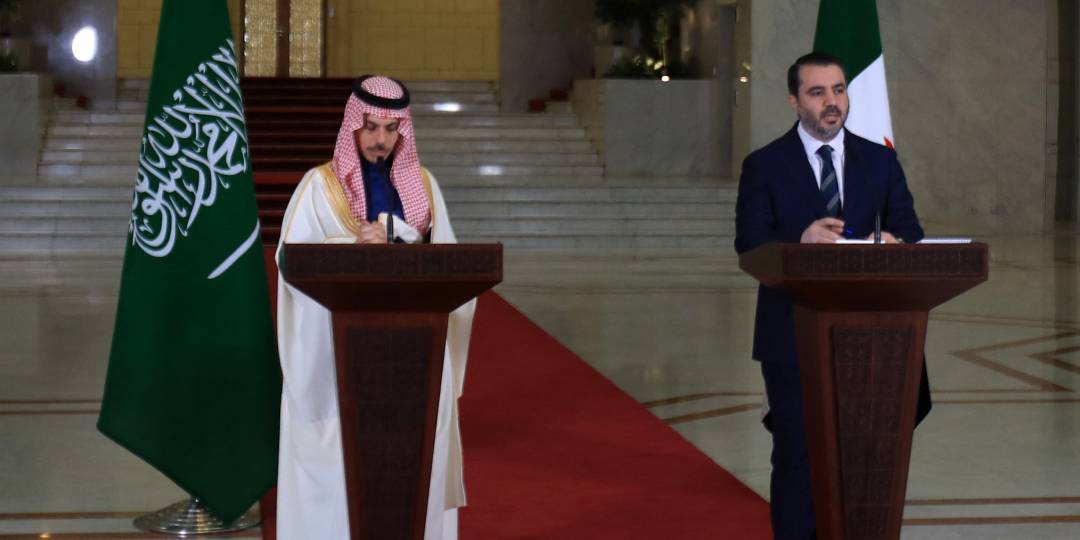

Saudi Arabia and Syria have signed a series of economic and investment agreements marking a new phase in bilateral relations, with Saudi Syria agreements covering the establishment of a joint airline, airport development, and projects in telecommunications, water, and development sectors.
The agreements were signed in Damascus in the presence of Syrian President Ahmad al-Sharaa and senior officials from both countries, reflecting official efforts to support Syria’s economic recovery after years of war and isolation.
The move comes as Syrian authorities seek to revive the economy following the lifting of US sanctions, alongside growing Gulf engagement in reconstruction-related investments.
Joint Airline and Airport Projects
Launch of “Flynas Syria”
Head of the Syrian Investment Authority Talal al-Hilali announced the signing of five agreements, including one to establish a low-cost joint Saudi-Syrian airline named “Flynas Syria,” aimed at strengthening regional and international air connectivity and facilitating travel and trade.
Aleppo Airport Development and New Airport
The agreement also includes the development of Aleppo’s existing airport and the construction of a new airport in Aleppo province with a capacity of up to 12 million passengers annually, according to a statement by Aleppo Governor Azzam al-Gharib.
Telecommunications, Water, and Development Agreements
“Silk Link” Digital Connectivity Project
The two sides also signed an agreement to establish the “Silk Link” project to develop telecommunications infrastructure and digital connectivity. Syrian Telecommunications Minister Abdul Salam Haykal said the project would be implemented with an investment of nearly $1 billion in two phases over 18 to 48 months, with operations beginning gradually.
Water Desalination and Investment Fund
Additional agreements cover water desalination and transport projects, development cooperation, and the operation and modernization of the Syrian Modern Cables Company.
Saudi Investment Minister Khalid al-Falih also announced the launch of the Saudi “Eilaf Investment Fund,” dedicated to investing in major projects in Syria with participation from the Saudi private sector.
Official Positions and International Reaction
Al-Falih said the agreements extend a clear strategic path based on guidance and support agreed upon during meetings between the leaderships of both countries to build a long-term partnership.
US envoy to Syria Tom Barrack welcomed the Saudi-Syrian agreements, saying they would make a tangible contribution to Syria’s reconstruction efforts.
Economic Context and Outlook
Benjamin Feve, a researcher at Karam Shaar Advisory, said the short-term importance of the agreements lies more in their political signal than in immediate economic transformation, noting ongoing challenges related to capital transfers and international banking concerns over risk in Syria.
The agreements are part of a broader trend that has seen Damascus sign major deals in energy, transport, and real estate with Gulf and international companies over the past two years.
Conclusion:
The Saudi Syria agreements reflect a regional push to support Syria’s economic stabilization and gradual reintegration, while the key challenge remains translating announced deals into concrete projects on the ground.