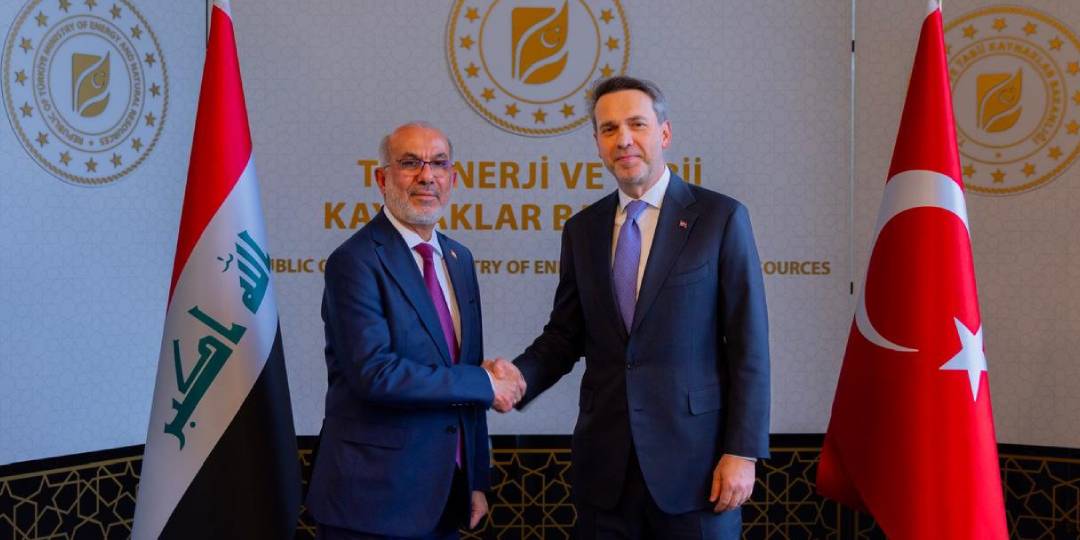

Iraqi Oil Minister Basim Mohammed Khudair Al-Abadi affirmed that the Ministry of Oil is coordinating with the federal government to secure the necessary financial allocations to purchase new crude oil tankers for the state-owned Iraqi Oil Tankers Company (IOTC). The strategic acquisition program aims to modernize the sovereign maritime fleet, expand direct crude shipping logistics, and maximize direct revenues for the state treasury.
The announcement coincided with Al-Abadi’s disclosure of the outcomes of his high-level official visit to Turkey. The ministerial discussions in Ankara centered on advancing bilateral draft agreements to increase northern crude oil export capacities through the strategic Iraq-Turkey pipeline network to the Mediterranean port of Ceyhan, while expanding the participation of Turkish firms in upstream energy projects across Iraq.
Fleet Modernization and Expansion Plans for the Iraqi Oil Tankers Company
Speaking to the Iraqi News Agency, the oil minister explained that equipping the national fleet with modern crude carriers represents a core operational objective to strengthen sovereign control over maritime supply routes. Securing government funding will allow the IOTC to execute long-haul crude deliveries independently without relying on third-party chartered vessels.
Al-Abadi emphasized that building an active state-owned tanker fleet delivers clear economic feasibility. It substantially lowers chartered freight overheads, reduces transit insurance premiums, and captures greater value across international maritime supply chains for Iraqi crude exports.
Strategic Objectives of the Fleet Expansion Initiative
– Expanding sovereign maritime logistics capabilities under the direct management of the Iraqi Oil Tankers Company.
– Lowering chartered vessel expenses, demurrage penalties, and external maritime freight fees.
– Safeguarding operational continuity and flexibility for crude deliveries to international buyers during regional maritime disruptions.
– Creating specialized employment, technical maritime expertise, and logistics opportunities at southern port facilities.
Bilateral Talks in Ankara to Expand Crude Exports via Ceyhan
During his diplomatic mission to Turkey, the Iraqi Oil Minister held extensive talks with his Turkish counterpart to advance the comprehensive Iraq-Turkey energy agreement. The negotiations focused on finalizing administrative and technical protocols to sustain and increase crude export throughput along the northern pipeline corridor to the Ceyhan marine terminal.
Al-Abadi described the bilateral sessions as constructive, noting that both governments place high strategic importance on cross-border energy infrastructure. Expanding northern export options provides Iraq with essential geographic diversification, ensuring resilient access to Mediterranean and European refining markets.
Formation of Joint Technical Committees for Energy Cooperation
To translate bilateral understandings into operational frameworks, both ministers agreed to establish dedicated joint technical working groups:
– Upstream Development Committee: Tasked with evaluating opportunities for Turkish energy enterprises to invest in Iraqi oil and gas fields.
– Infrastructure and Pipeline Committee: Focused on modernizing pumping stations, storage depots, and crude transit pipelines.
– Bilateral Corporate Partnerships: Facilitating joint ventures between Iraqi state entities and Turkish engineering contractors.
– Regulatory Harmonization: Establishing streamlined legal and commercial terms to support steady pipeline flows to Ceyhan.
Long-Term Outlook for Iraqi Energy Logistics
The ministry’s synchronized moves, expanding national maritime transport assets while reinforcing northern pipeline transit, illustrate a proactive strategy to eliminate export bottlenecks. Diversifying transit corridors shields Iraq’s public revenues from localized shipping disruptions in the Arabian Gulf while supporting long-term production growth.
Energy analysts assess that combining sovereign shipping fleets with cross-border pipeline networks enhances Baghdad’s commercial agility in the global oil market. These infrastructure investments directly complement ongoing upstream licensing rounds, associated gas capture projects, and domestic refining expansion programs.
Conclusion:
The comprehensive initiatives led by the Iraqi Oil Minister highlight a clear vision to upgrade the nation’s energy logistics from extraction to final delivery. By funding new vessels for the national tanker fleet and securing expanded export throughput via Ceyhan, Iraq is strengthening its energy sovereignty, protecting export revenues, and cementing its position as a reliable supplier to global markets.