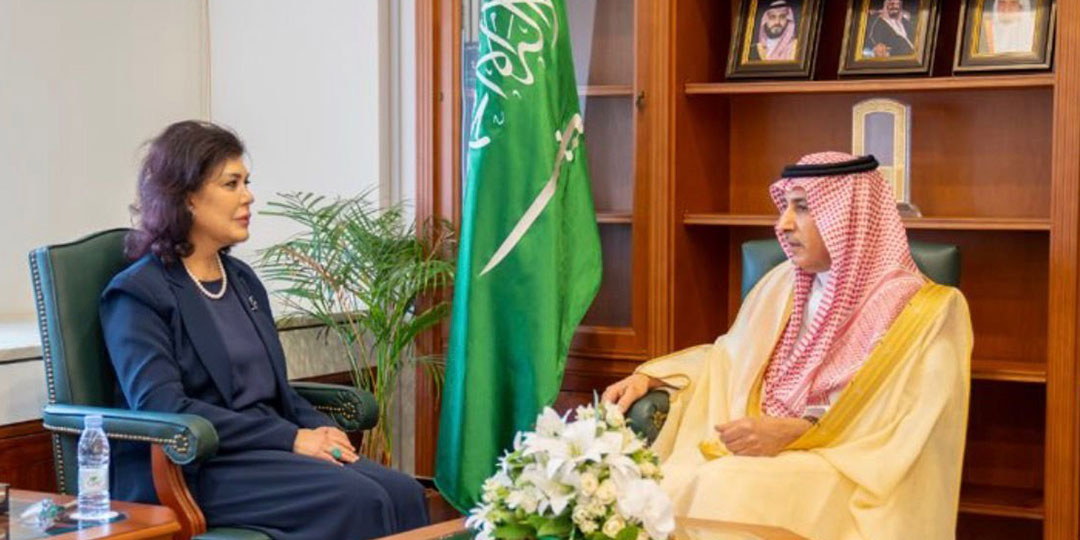

The Saudi Ministry of Foreign Affairs formally summoned Iraqi Ambassador Safiah Taleb Al-Souhail on Sunday and delivered an official protest note. The summons specifically protested “continued attacks and open threats targeting the Kingdom and Gulf states through missile strikes launched from Iraqi territory,” according to official statement. Dr. Saud Al-Satti, Saudi Deputy Foreign Minister for Political Affairs, emphasized during the protest note delivery “the Kingdom’s condemnation and denunciation of attacks originating from Iraqi territory targeting the Kingdom and Gulf states,” while stressing “the importance of Iraq handling these threats and attacks responsibly.”
Simultaneously, the Saudi Ministry of Energy announced successful restoration of full operational capacity to energy facilities and the East-West pipeline following Iranian attacks. The ministry confirmed pump capacity restoration across the 7 million barrel-per-day East-West pipeline and recovery of 300,000 barrels-per-day production at Manifa field within a brief timeframe, demonstrating Saudi technical capacity to manage energy infrastructure resilience amid regional conflict.
Formal Diplomatic Summons Protesting Sovereignty Violations
Saudi Arabia took formal diplomatic action against repeated attacks. The Foreign Ministry summoned the Iraqi ambassador officially, constituting significant escalation in diplomatic protest. The ministry stated it “summoned Safiah Taleb Al-Souhail, the Iraqi Ambassador to the Kingdom, in protest of continued attacks and open threats targeting the Kingdom and Gulf states through missile strikes launched from Iraqi territory.”
The formal summons represents more serious diplomatic action than routine protest statements, signaling Saudi determination to address the issue through official channels.
Escalation in Diplomatic Response Measures
The formal summons, combined with written protest note delivery, represents heightened diplomatic action beyond standard verbal protests, indicating serious Saudi concerns about Iraqi territory usage for attacks.
Saudi Deputy Foreign Minister Emphasizes Responsibility and Accountability
Dr. Saud Al-Satti delivered a forceful message during the protest note handover. The Deputy Foreign Minister “emphasized the Kingdom’s condemnation and denunciation of attacks originating from Iraqi territory targeting the Kingdom and Gulf states,” while stressing “the importance of Iraq handling these threats and attacks responsibly.”
The emphasis on Iraqi “responsibility” contains implicit accusation that Iraq is failing to prevent attacks from its territory, contrary to international legal obligations regarding state sovereignty.
International Legal Obligations and State Responsibility
Saudi protest references fundamental international law principle that states bear responsibility for preventing their territory’s use against other nations—a foundational concept of international legal order.
Saudi Reaffirmation of Sovereignty Protection and Possible Military Response
Al-Satti reaffirmed Saudi determination regarding security threats. The Deputy Foreign Minister “reiterated the Kingdom’s categorical rejection of violations of state sovereignty and attempts to threaten regional security and stability,” while “emphasizing that it will take all necessary measures to defend its security and protect its territory.”
The phrase “all necessary measures” contains implicit threat of potential military response if attacks continue.
Implicit Military Response Warning
The statement leaves open possibility of Saudi military retaliation should attacks from Iraqi territory persist, representing veiled escalation threat within diplomatic framework.
Regional War Context and Iraqi Territory Involvement
The formal protest occurs within broader regional war context. Iranian attacks have targeted Saudi energy infrastructure, while attack platforms within Iraqi territory have also targeted Saudi facilities, making Iraq an involuntary theater in the larger regional conflict.
Iraq’s Unintended Role in Regional Conflict
Iraqi territory’s use for launching attacks against Saudi Arabia reflects Iraq’s vulnerable position within broader Middle Eastern conflict dynamics, despite Iraqi government efforts at neutrality.
Saudi Energy Ministry Announces Complete Restoration of Operational Capacity
Saudi energy officials reported successful infrastructure recovery. The Ministry of Energy announced “energy facilities and the East-West pipeline have been repaired following the attacks and returned to operational capacity.”
The ministry emphasized swift recovery: “Successful operational and technical efforts restored full pump capacity across the East-West pipeline, reaching approximately 7 million barrels per day, and restored affected production quantities from Manifa field amounting to approximately 300,000 barrels per day within a brief timeframe.”
Rapid Recovery Capability and Technical Excellence
The swift restoration demonstrates Saudi technical capacity and sophisticated energy infrastructure management despite wartime conditions.
East-West Pipeline: Strategic Importance and Restoration
The Energy Ministry clarified the critical pipeline’s significance. The ministry stated “full pump capacity has been completely restored across the East-West pipeline, reaching approximately 7 million barrels per day.”
The East-West pipeline represents one of Saudi Arabia’s most critical energy infrastructure assets, connecting Persian Gulf oil fields with Red Sea export terminals, bypassing the Strait of Hormuz.
Strategic Infrastructure and Energy Security
The targeting and restoration of the East-West pipeline underscores its strategic importance to Saudi economy and global energy supplies.
Manifa Field: 300,000 Barrels Per Day Production Restored
Saudi Arabia restored production at Manifa field. The Energy Ministry stated “affected production quantities from Manifa field amounting to approximately 300,000 barrels per day have been restored.”
The restoration of Manifa field production reflects its economic importance and the scale of productive capacity affected by attacks.
Scale of Production Impact and Recovery
The figure of 300,000 barrels per day represents substantial production capacity affected by attacks and now restored, demonstrating significant economic impact.
Khurais Field: Ongoing Restoration Efforts
Repair work continues on another critical field. The Energy Ministry noted “work remains ongoing to restore full productive capacity at Khurais field.”
The need for continued work on Khurais field indicates damage severity varies across facilities depending on location and protection measures.
Variable Damage Across Facilities
Different fields experienced varying damage levels, with Khurais requiring extended restoration compared to rapid recovery at Manifa and East-West pipeline.
Global Energy Markets and Economic Stability Implications
Restoration of Saudi production aims to limit attack impacts on global energy markets and economic stability.
Energy Price Pressures and Economic Impact
Production interruptions in Saudi Arabia significantly affect global oil prices and international economic stability due to kingdom’s role as world’s largest oil producer.
Dual Saudi Message: Diplomatic Protest and Demonstrated Resilience
Saudi Arabia projects dual messaging: formal diplomatic protest against attacks from Iraqi territory, combined with demonstration of infrastructure resilience and rapid recovery capability.
Saudi Strategic Communication
The combined approach demonstrates Saudi strategy of diplomatic protest backed by demonstrated capacity to continue operations despite attacks, projecting strength and deterrence.
Iraqi Government Pressure and International Pressure
The Saudi protest note signals escalating international pressure on Iraq regarding attacks launched from its territory. Multiple international actors pressure Baghdad about territorial control and attack prevention.
International Legal Responsibilities and State Accountability
The protest reflects international law principles regarding state responsibility for preventing attacks originating from national territory against other nations.
Broader Context of Regional Instability
The formal Saudi protest and energy infrastructure attacks occur within broader Middle Eastern instability. Multiple actors launch strikes, creating complex security dynamics affecting multiple states simultaneously.
Escalating Regional Tensions and Conflict Expansion
The pattern of attacks and diplomatic protests indicates escalating regional tensions that resist easy de-escalation through current diplomatic mechanisms.
Conclusion:
Saudi Arabia’s formal summons of the Iraqi ambassador and delivery of protest note signal significant escalation in diplomatic pressure regarding attacks from Iraqi territory. The simultaneous announcement of restored energy infrastructure capacity demonstrates Saudi determination to maintain operational continuity despite ongoing security threats. The combined diplomatic protest and infrastructure resilience announcement project Saudi strength while warning of potential consequences for continued attacks. The fundamental question remains whether diplomatic protests will halt attacks from Iraqi territory or whether regional conflict will continue unabated, with Iraq bearing unintended consequences of broader Middle Eastern instability beyond its direct control or responsibility.