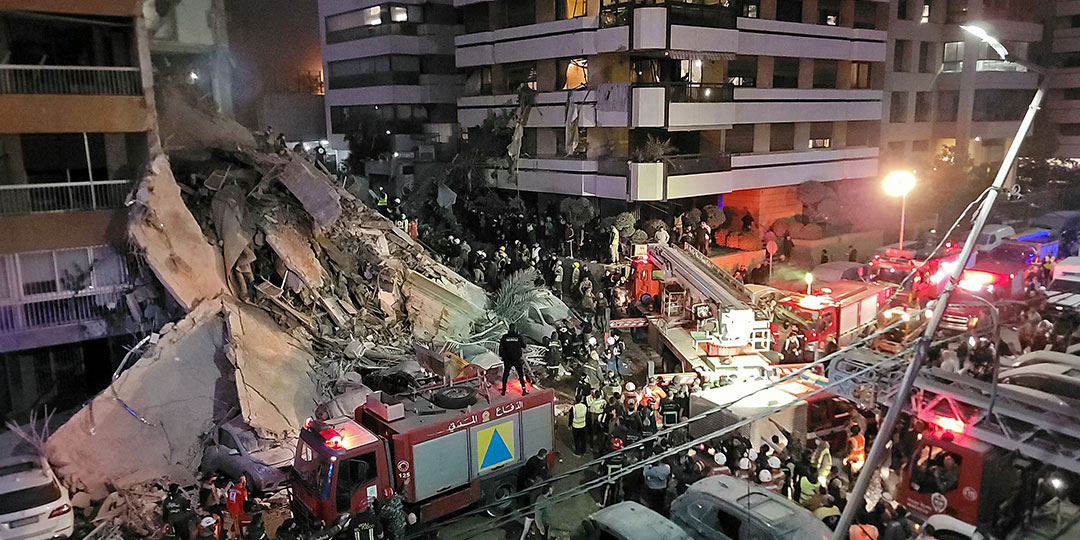

The International Committee of the Red Cross expressed outrage Wednesday at what it characterized as “devastating death and destruction” across Lebanon following Israeli military strikes that killed at least 182 people and wounded 890 in the deadliest single day of bombardment since the conflict began. The ICRC statement documented scenes of panic and chaos as “heavy explosive weapons with wide-area effects struck bustling neighbourhoods, including the capital Beirut, without effective advance warnings,” leaving civilians searching for missing loved ones among hospital corridors and beneath collapsed buildings. Doctors Without Borders reported a mass influx of injured patients arriving at Beirut’s Rafik Hariri hospital with “shrapnel injuries and heavy bleeding,” with one patient arriving after losing both legs, characterizing the strikes as “completely unacceptable” indiscriminate attacks on densely populated civilian areas. The Lebanese government declared Thursday a national day of mourning, with Prime Minister Nawaf Salam stating the country was “mobilising all of Lebanon’s political and diplomatic resources to stop the Israeli killing machine” while public administrations closed and flags were lowered. The international humanitarian response revealed a healthcare system overwhelmed by simultaneous mass casualties, with the Lebanese Red Cross deploying 100 ambulances to evacuate dead and transport wounded while medical facilities struggled to accommodate the influx. Meanwhile, Al Jazeera condemned the killing of one of its correspondents, Mohammed Wishah, in an Israeli strike on Gaza, joining a growing toll of journalists killed in regional conflicts and prompting renewed calls for accountability for attacks on media personnel.
The convergence of condemnation from multiple international humanitarian organizations, national mourning declarations, and continued journalist killings demonstrates the humanitarian catastrophe unfolding across the Middle East and the systematic targeting of civilian infrastructure and personnel.
ICRC Expresses Outrage at “Devastating Death and Destruction”
The International Committee of the Red Cross issued a statement expressing profound outrage at the scale of destruction and civilian casualties resulting from Wednesday’s Israeli strikes across Lebanon. The ICRC declared it was “outraged by the devastating death and destruction” in densely populated areas, characterizing the attacks as utilizing “heavy explosive weapons with wide-area effects” that “struck bustling neighbourhoods, including the capital Beirut, without effective advance warnings.”
Agnes Dhur, the ICRC’s head of delegation in Lebanon, stated:
“People across Lebanon were holding their breath for a ceasefire agreement, but a wave of deadly strikes plunged the country into panic and chaos.”
Civilian Desperation and Humanitarian Impact
Dhur added: “Many who had begun thinking of the moment when they might return to their homes have been rushing to streets and hospitals, searching for missing loved ones or seeking a safety that feels increasingly out of reach.”
The statement captured the psychological impact of sudden escalation following ceasefire hopes, documenting the transition from tentative optimism to panic and desperation as civilians searched for missing family members among the devastation.
Red Cross Humanitarian Response
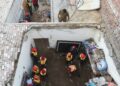
The Lebanese Red Cross deployed 100 ambulances to evacuate dead and transport wounded to hospitals, the ICRC reported. The massive deployment reflected the scale of casualties overwhelming normal medical and emergency response capacity.
The ICRC emphasized that “already overwhelmed medical facilities were having to deal with the influx of casualties, while some people remained trapped under the rubble,” documenting the healthcare system’s inability to accommodate simultaneous mass casualties.
Doctors Without Borders Documents Mass Casualty Crisis
Doctors Without Borders (MSF) reported responding to a mass influx of injured patients at Beirut’s Rafik Hariri public hospital, including children and patients with catastrophic injuries. Christopher Stokes, MSF’s emergency coordinator in Lebanon, described the scene:
“Patients are arriving with shrapnel injuries and heavy bleeding. One patient arrived to the hospital having lost both legs. The situation is chaotic as more people are brought in.”
Severity of Injuries and Medical System Strain
The documentation of patients arriving with bilateral leg amputation and massive shrapnel injuries reflects the violence of the strikes and the scale of physical trauma affecting survivors. The characterization of the situation as “chaotic” suggests medical facilities unable to maintain organized patient flow or adequate treatment protocols under surge conditions.
Condemnation of Indiscriminate Strikes
Stokes declared: “These indiscriminate strikes on highly densely populated areas are completely unacceptable. Continuous attacks on civilians must stop. The repeated forcible displacement of people—a war crime—needs to stop.”
The MSF statement employed language characteristic of war crimes allegations, with explicit reference to “forcible displacement” as a war crime requiring cessation.
Lebanon Declares National Day of Mourning
Lebanese Prime Minister Nawaf Salam declared Thursday a national day of mourning following the devastating Israeli strikes. The prime minister’s office stated Thursday would be “a national day of mourning for the martyrs and wounded of the Israeli attacks that targeted hundreds of innocent, defenceless civilians.”
The declaration ordered closure of public administrations and lowering of flags, representing formal governmental recognition of national tragedy and mobilization of state institutional resources.
Government Diplomatic Mobilization
Salam’s office announced that the prime minister was engaged in diplomatic outreach “to mobilise all of Lebanon’s political and diplomatic resources to stop the Israeli killing machine.”
The language employed—”killing machine”—reflected Lebanese government frustration with continued military operations despite ceasefire announcements and international diplomatic efforts.
Symbolic Dimensions of National Mourning
The national day of mourning represented Lebanese governmental assertion that the strikes constituted a national catastrophe requiring formal state response, distinct from ordinary military operations. The closure of public administrations signaled that national life had been disrupted to the point requiring suspension of normal governmental functions.
Healthcare System Overwhelmed by Mass Casualties
The mass casualty situation created immediate healthcare system strain, with hospitals receiving simultaneous waves of critically injured patients requiring emergency surgical intervention. The documented case of a bilateral amputee arriving at hospital exemplified the severity of injuries requiring immediate surgical and critical care capacity.
Medical Supply and Staffing Constraints
Beyond immediate triage and treatment capacity, mass casualty situations typically overwhelm medical supply chains, blood bank resources, surgical suite availability, and experienced trauma surgeon capacity. The ICRC documentation of overwhelmed facilities suggested fundamental constraints in medical response capacity.
Psychological Impact on Healthcare Workers
Medical personnel working in crisis conditions while surrounded by catastrophic civilian casualties experience psychological trauma requiring institutional recognition and support systems. The MSF description of “chaotic” conditions reflects both logistical strain and psychological stress on healthcare workers.
ICRC Calls for Comprehensive Regional Agreement Including Lebanese Civilian Protection
The ICRC statement emphasized that “any comprehensive agreement for the region must consider the safety, protection and dignity of civilians in Lebanon,” asserting that Lebanese civilians must be explicitly addressed in any regional ceasefire or peace arrangement.
The organization declared: “After more than five weeks of hostilities, people urgently need respite from the violence.”
Ceasefire Scope and Civilian Protection
The ICRC statement implicitly criticized the ceasefire agreement’s failure to explicitly include Lebanon or provide protection for Lebanese civilian populations. The emphasis on “comprehensive agreement” reflected concern that bilateral US-Iran arrangements leave civilians in proxy conflict zones unprotected.
Al Jazeera Condemns Killing of Correspondent Mohammed Wishah
Al Jazeera condemned the killing of correspondent Mohammed Wishah in an Israeli strike on Gaza Wednesday, characterizing his death as “a deliberate and targeted crime” intended to intimidate journalists.
The network stated: “Al Jazeera Media Network strongly condemns the heinous crime of targeting and killing Al Jazeera Mubasher correspondent Mohammed Wishah, following a strike on the vehicle in which he was travelling west of the Gaza Strip.”
Alleged Targeted Killing of Journalist
Al Jazeera alleged that Wishah’s killing “was not a random act but a deliberate and targeted crime intended to intimidate journalists,” holding “Israeli occupation forces fully responsible.”
The allegation of deliberate targeting carries significant implications regarding potential targeting of media personnel as part of military strategy, rather than incidental civilian casualties.
Pattern of Journalist Killings
Reporters Without Borders documented that Wishah’s killing joined “those of the more than 220 journalists killed in two and a half years by the Israeli forces in Gaza, at least 70 of whom were killed in the context of performing their duties.”
The documentation of over 220 journalist deaths in Gaza conflicts over 2.5 years suggests systematic pattern rather than isolated incidents, potentially indicating deliberate targeting of media infrastructure and personnel.
Wishah’s Death and Broader Journalist Casualty Pattern
Gaza’s civil defence agency spokesman Mahmud Bassal reported: “Two martyrs, one of them Al Jazeera correspondent Mohammed Wishah, were killed when occupation forces bombed a vehicle in the Sheikh Ajlin area, west of Gaza City.”
Al Jazeera identified Wishah alongside 10 other network journalists killed in Gaza since the October 7, 2023 Hamas attack triggering the Gaza war.
Media Institution Losses in Regional Conflicts
The loss of 11 Al Jazeera journalists in Gaza conflicts represents substantial institutional loss of experienced reporting personnel and signifies the dangers facing international media attempting to document Middle East conflicts. The pattern of media personnel losses across multiple conflicts suggests systematic vulnerability of journalists to targeting.
Previous Journalist Killings and Accountability Gaps
Al Jazeera documented that journalist Mohammad Salama was killed in August 2025 during the fragile US-backed ceasefire in Gaza, while in the same month four Al Jazeera staff and two freelancers were killed in an Israeli airstrike outside Al-Shifa hospital.
The continued journalist killings despite ceasefire arrangements suggested that media personnel remain vulnerable targets throughout conflict zones, even when conflict intensity supposedly diminishes.
Al Jazeera’s Legal and Accountability Response
Al Jazeera stated it would pursue “all necessary legal action to prosecute those responsible for the killing of its correspondents and staff in Gaza, and to seek justice for them and for all fallen journalists.”
The commitment to legal action reflects media organization determination to establish accountability mechanisms for targeting of journalists and to utilize legal proceedings to establish patterns of deliberate targeting.
International Legal Framework for Journalist Protection
The commitment to legal action invokes international humanitarian law protections for journalists and media infrastructure, establishing legal basis for prosecuting deliberate targeting of media personnel as potential war crimes.
Pattern of Humanitarian Organization Criticism
The coordinated critical statements from ICRC, Doctors Without Borders, and media organizations reflected convergent assessment that civilian protection standards had been violated through indiscriminate attacks on populated areas and deliberate targeting of humanitarian and media infrastructure.
Institutional Credibility and Humanitarian Standards
The humanitarian organization criticism carries particular weight given institutional credibility and direct operational presence in conflict zones. Organizations such as ICRC and MSF maintain medical facilities, ambulance services, and operational presence enabling direct observation of military operations and civilian impact.
H2: Ceasefire Implementation Crisis
The humanitarian crisis and international condemnation occurring within days of ceasefire announcement underscored failures in ceasefire implementation and verification. If humanitarian organizations document humanitarian law violations despite ceasefire supposedly restricting military operations, fundamental gaps exist in ceasefire enforcement.
International Community Credibility Gap
The disconnect between international community celebration of ceasefire achievement and simultaneous documented humanitarian catastrophes reveals credibility gaps in diplomatic processes and international conflict management systems. If ceasefires fail to prevent mass casualty events within hours of announcement, fundamental questions arise regarding enforcement capacity and international community commitment.
Humanitarian Access and Medical Supply Chain Disruption
Beyond immediate casualties, Israeli strikes on bridges and infrastructure disrupted humanitarian access to southern Lebanon and created medical supply chain constraints. The targeting of transportation infrastructure compounded humanitarian crisis by preventing delivery of medical supplies, food, and fuel to affected populations.
Secondary Humanitarian Effects of Infrastructure Destruction
The destruction of Litani River bridges and main roads represents secondary humanitarian crisis distinct from direct strike casualties. The isolation of southern Lebanon threatens water supply, food distribution, and fuel delivery, creating cascade effects extending humanitarian crisis beyond immediate strike effects.
International Legal and Accountability Questions
The ICRC, MSF, and media organization statements all implied potential violations of international humanitarian law warranting investigation and accountability. The explicit characterization of forced displacement as “war crime” and journalist targeting as “deliberate and targeted crime” reflects application of international legal frameworks to documented events.
Investigation and Prosecution Requirements
If international organizations document potential war crimes, international legal mechanisms including International Criminal Court referrals may be invoked. The documentation by credible humanitarian organizations establishes factual records potentially supporting international legal proceedings.
Conclusion:
The International Committee of the Red Cross expressed outrage at “devastating death and destruction” in Lebanon following Israeli strikes killing at least 182 people, while Doctors Without Borders documented mass casualty crisis with patients arriving at hospitals with catastrophic injuries including bilateral amputations. Lebanon declared a national day of mourning with Prime Minister Salam mobilizing diplomatic resources to “stop the Israeli killing machine” while humanitarian organizations documented healthcare system overwhelmed by simultaneous mass casualties. The Lebanese Red Cross deployed 100 ambulances while the ICRC emphasized that comprehensive regional agreements must explicitly protect Lebanese civilian populations. Simultaneously, Al Jazeera condemned the deliberate killing of correspondent Mohammed Wishah in Gaza, documenting a pattern of over 220 journalist deaths in Gaza conflicts over 2.5 years. The coordinated humanitarian organization criticism, national mourning declaration, and documented journalist killings reflect a humanitarian catastrophe unfolding across the Middle East with systematic targeting of civilian populations, medical infrastructure, and media personnel. The ceasefire announcement occurring within hours of documented mass casualty events and continued journalist targeting underscores fundamental gaps between diplomatic processes and operational realities on the ground. International legal frameworks addressing war crimes, protection of journalists, and humanitarian law violations provide potential mechanisms for accountability, though enforcement remains uncertain absent international commitment to pursue prosecutions and establish accountability for documented violations. The humanitarian crisis deepens with each day of continued operations, while international community ability to translate diplomatic statements into effective ceasefire enforcement and civilian protection remains severely limited.