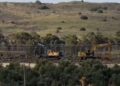
The Rafah crossing between Gaza and Egypt has partially reopened, allowing a limited number of sick and wounded Palestinians to leave for medical treatment for the first time in over 20 months. The development comes as Israeli authorities announced a ban on the humanitarian operations of Doctors Without Borders (MSF), a move the organization’s chief described as potentially “catastrophic” for the people of Gaza.
On Monday, Egyptian health officials confirmed the arrival of ambulances carrying patients from Gaza, who were screened for transfer to various hospitals. According to reports, approximately 150 people were scheduled to exit the territory, while 50 were expected to enter. The reopening provides a “window of hope” for thousands of patients in urgent need of care unavailable within the besieged territory, according to Palestinian officials.
The crossing, Gaza’s only gateway to the outside world not controlled by Israel, had been largely shut since Israeli forces seized it in May 2024. Its limited resumption follows a recent wave of deadly Israeli strikes in the Rafah area.
The move was welcomed by Qatar as a “step in the right direction,” with its foreign ministry urging the full implementation of the ceasefire and the “sustainable and unimpeded flow of humanitarian aid” into Gaza. However, COGAT, the Israeli defence ministry body coordinating Palestinian civilian affairs, has not announced any provisions for increased aid entry alongside the movement of people.
Compounding the humanitarian crisis, Israel announced it will terminate all activities of Doctors Without Borders (MSF) in Gaza and the West Bank, effective March 1. The Israeli government cited the organization’s failure to provide a list of its Palestinian staff as the reason for the ban.
Christopher Lockyear, MSF’s secretary-general, condemned the decision as a “pretext” to obstruct aid at a critical time. He stated that ceasing MSF’s work, which includes providing at least 20 percent of hospital beds in Gaza, would be “catastrophic for the people of the Gaza Strip and the West Bank.” MSF said it could not comply with the demand for staff lists without concrete assurances for their safety.
The war in Gaza began after the Hamas attack on October 7, 2023, which resulted in the deaths of 1,221 people, according to official Israeli figures. The subsequent Israeli military campaign in Gaza has killed at least 71,800 people, according to the health ministry in the territory.
The reopening of the Rafah crossing offers a critical lifeline for Palestinians requiring urgent medical care outside of Gaza. For months, aid groups and international bodies have called for the passage to be opened to alleviate the severe health crisis within the territory, where the medical system has been devastated by the ongoing conflict. This limited reopening allows some patients to access specialized treatment in Egypt, though thousands more remain in need.
While the movement of patients through the Rafah crossing is a positive development, the overall humanitarian situation remains dire. The simultaneous ban on major aid provider Doctors Without Borders (MSF) threatens to severely curtail essential medical services available to Gazans. The international community continues to monitor the situation, with calls for unimpeded humanitarian access to prevent further catastrophe.
According to multiple media sources.