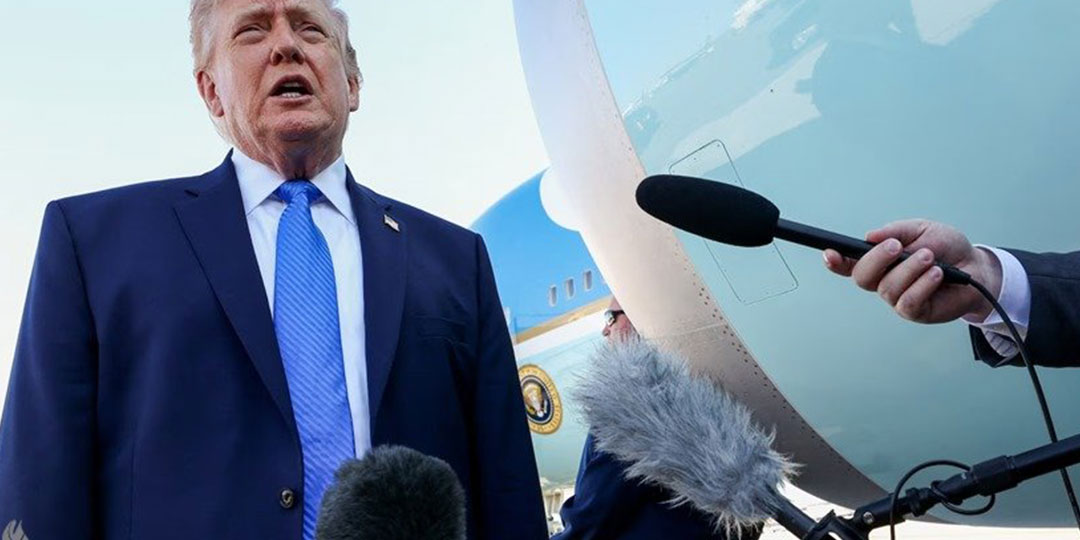

Opening the Strait of Hormuz without restrictions or transit fees was demanded Friday by US President Donald Trump, who said the vital waterway must be reopened immediately to maritime traffic.
Trump’s remarks came amid reports of a potential extension of the ceasefire between Washington and Tehran, while Iranian officials denied that any agreement had been reached on the terms announced by the US president.
The developments highlight continuing differences between the two sides over navigation, sanctions and nuclear commitments.
Trump calls for unrestricted navigation
In a post on the Truth Social platform, Trump said there would be no exchange of funds until further notice and indicated that other, less significant terms had been agreed upon.
He stated that he would make a final decision later Friday regarding an agreement with Iran to extend the ceasefire.
Trump also stressed that Iran must accept that it will never possess a nuclear weapon.
Naval blockade to be lifted
The US president added that the naval blockade on Iran would now be lifted, allowing ships stranded in the Strait of Hormuz to begin returning home.
He further said the United States would extract uranium from Iran and ensure that all naval mines were removed or destroyed, noting that US forces had already eliminated several and that Iran would complete the remaining clearance.
Reports of possible ceasefire extension
Sources previously indicated that a deal was near to extend the truce in place since early April for another 60 days.
Such an extension would allow oil and gas shipments to resume more fully through the Strait of Hormuz, a key artery for global energy markets.
Iran denies agreement on announced terms
Iranian state television said Friday that no agreement had been reached on any of the provisions cited by Trump.
Officials described the text mentioned by the US president as unilateral and said Tehran had not sent a 14‑point proposal to Washington, contrary to some media reports.
Dispute over nuclear materials and funds
Iranian officials also rejected Trump’s statements regarding enriched nuclear materials, calling them speculative and unrelated to Iran’s official commitments.
They added that no agreement would be possible without addressing the issue of Iranian funds, signaling that financial considerations remain central to any potential deal.
Strategic significance of the Strait
The Strait of Hormuz is one of the world’s most important maritime corridors, carrying a significant share of global oil and gas exports.
Any decision regarding Opening the Strait of Hormuz affects:
Global energy supplies
Oil prices
Maritime trade flows
Regional security dynamics
Conclusion:
The debate over Opening the Strait of Hormuz underscores the fragile nature of US‑Iran negotiations. While Washington signals a shift toward easing maritime restrictions, Tehran denies that any formal agreement has been concluded, leaving the future of the ceasefire and shipping arrangements uncertain.