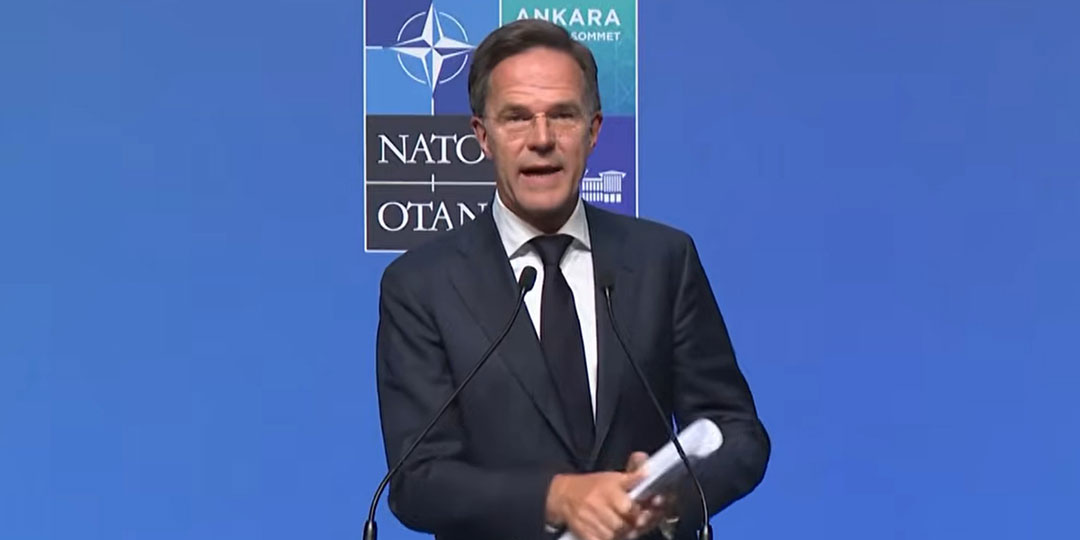

NATO leaders reaffirmed during their summit in Ankara, Türkiye, the importance of preventing Iran from obtaining nuclear weapons, while calling for freedom of navigation in the Strait of Hormuz. NATO Secretary General Mark Rutte also emphasized that the alliance is defensive and does not seek to attack any country.
NATO Reaffirms Position on Iran’s Nuclear Program
In its final summit statement, NATO said its leaders renewed their commitment to ensuring that Iran does not acquire nuclear weapons.
The statement also called for respecting freedom of navigation in the Strait of Hormuz in accordance with international law and established norms, highlighting the strategic importance of the waterway for global trade and energy security.
Alliance Strengthens Defense Capabilities
NATO leaders announced plans to increase defense spending and expand military industrial capabilities among member states to improve readiness in response to growing security challenges.
The alliance also reaffirmed its commitment to developing advanced air and missile defense systems as part of strengthening deterrence and collective defense capabilities.
Rutte: NATO Will Not Attack Any Country
NATO Secretary General Mark Rutte stressed that the alliance is defensive and has no intention of attacking any country.
Rutte said NATO would defend itself if any member state came under attack, in line with the principle of collective defense established under the alliance’s treaty.
Calls to Ensure Freedom of Navigation in Strait of Hormuz
Rutte emphasized the need for efforts to reopen and secure the Strait of Hormuz, describing it as a vital route for international trade and global energy supplies.
The remarks come amid continued international concerns over maritime security in the region.
NATO Balances Military Deterrence with International Stability
The alliance’s position on Iran comes within a broader strategy aimed at strengthening international security, as NATO continues developing its military capabilities while emphasizing its defensive nature and avoiding direct escalation.
The alliance also reaffirmed continued support for Ukraine through additional military assistance as part of efforts to address ongoing security challenges.
Conclusion
The outcomes of the NATO summit highlight the alliance’s continued focus on security issues linked to the Middle East, particularly Iran’s nuclear program and the safety of navigation in the Strait of Hormuz. NATO leaders stressed that the alliance’s strategy is based on deterrence and collective defense rather than offensive military action.