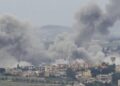

Firefighters battled another blaze at Kuwait’s giant Mina Al-Ahmadi refinery on March 20 following a fresh drone attack from Iran, marking the second strike on the facility this week as millions in Iran attempted to celebrate the country’s New Year festival Nowruz under intense bombardment from Israeli airstrikes. The escalating attacks on Gulf energy infrastructure intensified with a direct hit on Qatar’s vital Ras Laffan liquefied natural gas facility the previous day, causing extensive damage estimated to cost $20 billion annually in lost revenue and requiring five years to repair. As the conflict entered its fourth week, the United Arab Emirates police arrested over 100 residents for filming and posting information about the war on social media platforms, illustrating efforts by Gulf governments to control information flow during the ongoing crisis. Israeli Prime Minister Benjamin Netanyahu claimed victory and rapid war conclusion despite Iran’s defiant vows to continue fighting and maintain control of the strategic Strait of Hormuz through which one-fifth of global oil and LNG supplies normally flow. The convergence of energy infrastructure destruction, wartime information suppression, and muted New Year celebrations throughout the region demonstrates the expanding humanitarian, economic, and political consequences of the Middle East war now affecting civilian populations across multiple nations.
Kuwait Refinery Under Attack for Second Time This Week
Firefighters responded to a second major incident at Kuwait’s critical Mina Al-Ahmadi refinery on March 20 following Iranian drone attacks targeting the facility. The refinery fire represented a significant escalation in Iranian targeting of Gulf energy infrastructure despite international calls from European leaders to cease such attacks. The repeated strikes on the same facility within days demonstrated Iranian determination to sustain economic pressure on Gulf states supporting US-Israeli operations.
The Mina Al-Ahmadi refinery attack came one day after a direct hit on Qatar’s Ras Laffan natural gas complex, indicating a coordinated campaign targeting major regional energy production facilities. The pattern of attacks suggests Iranian strategy to maximize economic damage to regional economies through deliberate targeting of critical energy infrastructure.
Qatar’s Ras Laffan LNG Facility Sustains Catastrophic Damage
Qatar’s state energy company reported that an Iranian strike on the Ras Laffan liquefied natural gas facility caused “extensive damage” with potentially devastating economic consequences. The facility, which normally generates approximately $20 billion in annual revenue for Qatar, sustained injuries projected to require five years of repair and reconstruction work.
Energy analysts characterized the damage to Ras Laffan as potentially catastrophic to global energy supplies. The facility processes and exports liquefied natural gas to international markets, and the extended repair period threatens to create sustained energy supply shortages and elevated prices that could outlast the actual conflict.
Robert Pape, political science and military expert at the University of Chicago, warned that sustained damage to major energy facilities transforms the regional conflict into a global economic crisis. Pape noted that while short disruptions create temporary price volatility, sustained infrastructure damage creates lasting economic shock affecting energy prices and economic growth worldwide.
Iran Celebrates Nowruz Under Bombardment Shadow
Iran’s traditionally festive New Year celebration Nowruz proceeded on March 20 under the shadow of continued Israeli bombardment campaigns. Celebrations marking the beginning of spring were significantly muted compared to previous years, with fewer people participating in traditional marketplace shopping and public gatherings.
Tehran residents reported fears about continued bombardment during the holiday. One resident in Saveh south of Tehran told AFP on Thursday: “We assume and hope that there will be no attacks on the first day of the new year.” The hope proved unfounded as Israeli forces launched fresh waves of bombardment on Friday morning, with explosions heard throughout Tehran and northern regions including areas around the Caspian Sea previously spared from attacks.
The contrast between traditional Nowruz festivities and the wartime reality demonstrated the profound disruption the conflict has caused to Iranian civilian life. Shoppers in Tehran markets attempted to continue New Year preparations, though sidewalks remained less crowded than historically typical, with many residents having fled north seeking safety from bombardment.
Huge banners displaying Nowruz imagery replaced portraits of Supreme Leader Ali Khamenei, assassinated by Israeli strikes on February 28 as the war’s opening act, symbolizing both the physical transition between leadership and the eclipse of traditional celebrations by wartime conditions.
Netanyahu Claims Victory Despite Iranian Defiance
Israeli Prime Minister Benjamin Netanyahu claimed at a Thursday press conference that Israel was achieving rapid victory against Iran. Netanyahu stated: “We are winning and Iran is being decimated,” claiming that Tehran no longer possessed capacity to manufacture ballistic missiles and suggesting the war would conclude “a lot faster than people think.”
Netanyahu’s statements suggested that regime change objectives might require “a ground component,” hinting at possible ground invasion operations to overthrow the Iranian government, though he declined to provide specific details about such plans.
However, Iran’s Revolutionary Guards spokesman Ali Mohammad Naini directly contradicted Netanyahu’s claims before being killed in an Israeli airstrike moments after his statement was released. Naini stated: “Our missile industry deserves a perfect score… and there is no concern in this regard, because even under wartime conditions we continue missile production.” The timing of Naini’s death immediately after his defiant statement illustrated the intensity of Israeli targeting of Iranian leadership figures.
Ground Invasion Possibilities Discussed
Netanyahu’s references to potential “ground component” operations sparked international concern about possible ground invasion plans targeting Iranian territory or objectives. The Israeli premier suggested that securing the Strait of Hormuz or achieving regime change might require ground military operations beyond air campaign strategies.
President Trump denied on Thursday that he was considering ground invasion operations, stating: “If I were, I certainly wouldn’t tell you. But I’m not putting troops.” However, military experts including Robert Pape warned that further escalation could lead to limited ground invasion attempts to secure the Strait of Hormuz or overthrow the government.
Strait of Hormuz Control and Global Energy Crisis
Iran maintained effective control of the strategic Strait of Hormuz, through which approximately one-fifth of global crude oil and liquefied natural gas supplies normally transit. The Iranian chokehold on the waterway, combined with infrastructure damage to Qatar’s Ras Laffan and repeated attacks on Gulf refineries, threatened sustained disruption of global energy supplies.
Energy analysts warned that the convergence of energy infrastructure damage and Strait of Hormuz closure could transform the regional conflict into a global economic crisis with long-term effects on energy prices and economic growth.
UAE Information Control Arrests
The United Arab Emirates police arrested over 100 residents on March 20 for filming and posting information deemed “misleading” about the war on social media platforms. The mass arrests represented significant expansion of information control efforts by Gulf governments seeking to manage public discourse during the ongoing conflict.
The arrests illustrated government efforts to suppress independent reporting and documentation of war impacts, with authorities characterizing social media posts about the conflict as “misleading information.” The mass detention of over 100 individuals for social media activity raised serious concerns about freedom of expression and information access during wartime.
Lebanese Death Toll Exceeds 1,000
Lebanon’s health ministry reported that the death toll from Israeli airstrikes on southern and eastern Lebanon, the capital Beirut, and southern suburbs exceeded 1,000 people. The escalating casualty figures reflected the intensity of Israeli military operations in response to Hezbollah rocket attacks on Israeli territory.
Lebanese President Joseph Aoun renewed calls for ceasefire between Israel and Hezbollah during Thursday meetings with French Foreign Minister Jean-Noel Barrot. French President Emmanuel Macron later indicated that ceasefire negotiations would depend on Israel agreeing to join talks mediated by France and other international parties.
Gulf States Observe Eid al-Fitr Amid Conflict
As Gulf nations began observing Eid al-Fitr, the religious holiday marking the end of the Islamic fasting month of Ramadan, continued military operations disrupted traditional celebrations. Saudi Arabia intercepted more than a dozen drones early Friday, while the United Arab Emirates reported missile attacks targeting the country.
The convergence of religious holiday observance and active military operations throughout the Gulf created an unusual juxtaposition of peace and conflict as civilians attempted to observe important cultural and religious celebrations amid ongoing warfare.
International Diplomatic Efforts for Strait Navigation
French President Emmanuel Macron announced plans to discuss establishing a framework for securing navigation in the Strait of Hormuz with permanent members of the UN Security Council. However, Macron indicated that such negotiations would proceed only after fighting had ceased, suggesting international recognition that the current conflict environment precludes meaningful negotiations about maritime security.
Conclusion:
The convergence of events on March 20, 2026, illustrates the escalating economic, humanitarian, and political consequences of the Middle East war as it enters its fourth week. Iranian drone attacks on Kuwait’s Mina Al-Ahmadi refinery and the catastrophic damage to Qatar’s Ras Laffan LNG facility demonstrate deliberate targeting of regional energy infrastructure designed to maximize economic pressure. The celebration of Nowruz under bombardment shadow, Netanyahu’s victory claims contradicted by Iranian defiance, and UAE’s mass arrests of 100+ residents for social media posts reveal the profound disruption of civilian life and information control during wartime. The effective Iranian closure of the Strait of Hormuz, combined with sustained infrastructure damage, threatens to transform the regional conflict into a lasting global economic crisis affecting energy prices and economic growth worldwide. International diplomatic efforts to address maritime security and ceasefire negotiations remain subordinate to continued military operations as both sides pursue victory through accelerating escalation.