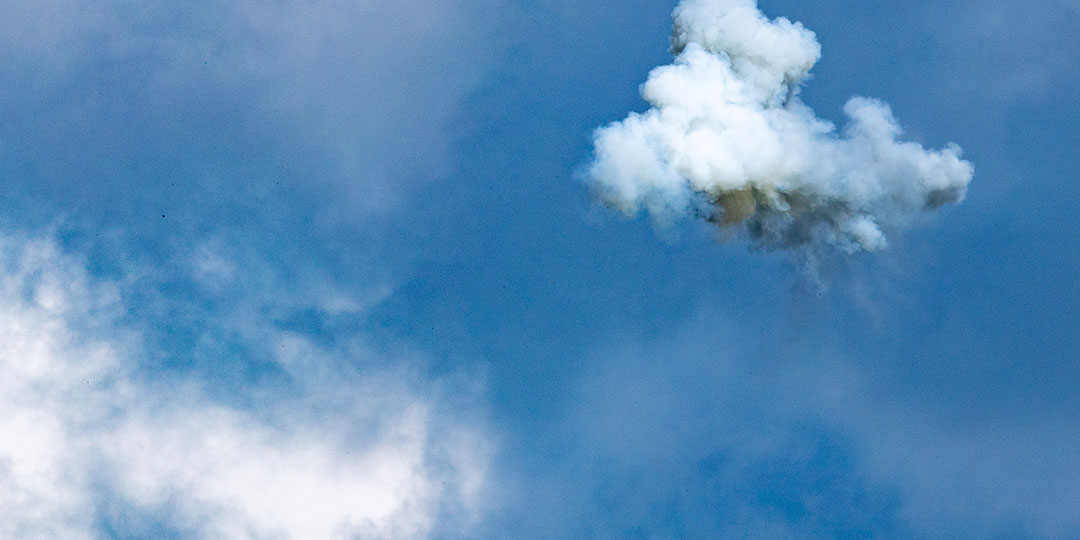

Israeli military aircraft flying at extremely low altitudes created thunderous sonic booms over Lebanon’s capital Beirut on the morning of Friday, March 20, just as millions of Muslims celebrated Eid al-Fitr. The warplanes generated two consecutive loud explosions, causing powerful shock waves felt across wide areas of the capital and surrounding regions. The sudden, deafening noise triggered acute panic and fear among civilians, particularly families and children, on a religious holiday sacred to Islamic communities.
The incident occurred amid relentless airstrikes and intensive bombardment of villages across southern Lebanon, where Israeli warplanes targeted towns including Baffieh, Hanine, Sultaniyya, Debaale, Bint Jbeil, and Aynata. Simultaneous heavy artillery bombardment pounded villages in the western and central sectors of the south, resulting in casualties and injuries transported to Tyre hospitals by civil defense vehicles. The operation reflects a deliberate Israeli strategy aimed at terrorizing civilians and breaking their psychological will to resist.
Sound Barrier Breach: Psychological and Military Terror Tactic Against Civilians
Deafening Roar Sweeps Across Beirut and Suburbs
Journalists from Agence France-Presse stationed in multiple areas of Beirut and surrounding neighborhoods witnessed the tremendous roar created by Israeli aircraft flying at dangerously low altitudes. Lebanon’s state news agency reported that “a powerful sound barrier breach on two occasions” had occurred in the skies above Beirut and its suburbs. The intensely loud sonic explosions reverberated through diverse Beirut neighborhoods, the southern suburb, and distant rural areas.
One social media user named Salah Hallawi posted on X (formerly Twitter): “On a day when there has been no bombing—so far—Israelis terrorized Beirut and the suburb with two sonic booms.” His message reflected widespread civilian anger at using this tactic on an important religious holiday, suggesting the objective was primarily psychological rather than military in nature.
Precedent from Last Week: Leaflet Drops and Sound Breaches
This was not the first incident of its kind. The previous week, Israeli warplanes conducted propaganda leaflet operations over Beirut’s airspace, generating similar deafening sounds that frightened residents. Repeated sonic boom incidents reflected a deliberate Israeli strategy to spread fear and terror among civilian populations, particularly before important religious dates and national commemorations.
Deliberately using this tactic during religious observances like Eid al-Fitr appeared calculated to maximize psychological and social impact. Civilians, especially children and families, were preparing to celebrate the holiday in their homes when the sudden roar shocked them, adding layers of terror and anxiety to a religious occasion already overshadowed by sadness and fear.
Psychological Impact on Civilian Populations
Sound barrier breaches by military aircraft represent a well-documented psychological warfare tactic in modern conflicts, designed to terrorize civilians and shatter their morale. The deafening noise produced by supersonic flight generates intense physiological responses, particularly among children and people with existing psychological disorders. The tactic serves clear psychological objectives: demonstrating absolute air superiority and terrorizing civilian populations into submission or hopelessness.
Lebanese Youth: Stolen Childhoods and Suspended Dreams
Hassan Kiki: Displaced Twice Before Age Sixteen
In just two years, sixteen-year-old Hassan Kiki experienced displacement twice due to escalating warfare between Hezbollah and Israel. Before reaching adulthood, he lost relatives and friends. He fled his hometown of Shehab in southern Lebanon’s Tyre district to settle in Beirut. Speaking to AFP, Kiki says: “We grew up before our time. We lived experiences no one else lived.”
While walking through Hamra Street, Beirut’s pulsing heart, Kiki recalls memories of his school and lost friends. He says sadly: “I miss my school and my friends. Two of my friends and my two cousins died in the Shehab massacre.” He refers to an Israeli airstrike on March 11 that killed at least seven people in his hometown.
Kiki expresses profound psychological loss: “My childhood was lost. Material losses can be replaced, but people cannot.” His words reflect a bitter truth: some losses cannot be compensated with money or possessions—they leave permanent psychological scars.
Zainab Fares: Life Suspended Since 2024
In 2024, Zainab Fares first confronted war as a teenager. She was displaced from Nabatieh in southern Lebanon. Fares recalls: “Back then, we were still discovering what we loved. What we enjoyed doing, how we spent our days, what activities fascinated us. Then they displaced us and we couldn’t do anything anymore.”
Now, she expresses her current psychological state bluntly: “Mentally, I’m at rock bottom.” Yet a glimmer of hope appeared this week when she participated in a drama workshop at the Lebanese National Theater in Beirut, specifically designed to provide support to war-affected teenagers.
Zainab’s story reveals a bitter reality: youth dreams are hostage to war’s end. Lebanese youth cannot think about their future or plan their lives amid these conditions.
Wissam Al-Halabi: Syrian Refugee Facing War Anew
Twenty-year-old Wissam Al-Halabi also participated in the National Theater workshop. His story is even more complicated: he is a Syrian refugee who fled his country’s war nine years ago. After years attempting to build a new life in Lebanon, he lost everything again.
Al-Halabi works in a restaurant after being forced to abandon his university studies due to the previous war in 2024. He speaks with suppressed desperation: “For two years, I’ve been trying to get back on my feet, starting from zero again, and then war returned.”
He concludes with a sentence reflecting millions’ suffering: “Our dreams are now hostage to war’s end.”
Laura Al-Haj: Questions Without Answers
Eighteen-year-old Laura Al-Haj stood at a gathering organized by the National Theater to support Lebanon’s war effort. She asked in a voice reflecting frustration and helplessness: “Why do I carry such heavy burdens at this age?”
She continues: “We carry worries too big for us and too big for our age. I’ve begun carrying the worry about whether I’ll even be alive tomorrow.” Her words encapsulate the bitter reality: teenagers don’t contemplate their futures or dreams—they simply contemplate surviving.
Laura feels “as though we’re living wars from generation to generation,” wishing desperately: “That no other child experience this.”
Medical and Psychological Facts: War Leaves Permanent Scars
Accumulation of Psychological Trauma in Children
Child psychiatrist Eveline Barou specializing in adolescent cases tells AFP: “Accumulated traumatic and negative experiences, combined with instability and inability to predict what comes next, make children far more susceptible to psychological disorders and negative mental health symptoms.”
Dr. Barou warns that “witnessing violence, physical assault, killing, forced displacement, and loss of home or parents” are all dangerous factors directly causing post-traumatic stress disorder diagnosis.
These warnings are not abstract: over 1,000 people were killed in Israeli airstrikes in March 2026 alone, including at least 118 children, according to Lebanon’s Health Ministry. Each death—directly or indirectly—affects millions of minds.
Children Who Never Knew Peace
Over one million people were displaced from homes since current warfare began on March 2, following Hezbollah’s attack on Israel in retaliation for Supreme Leader Ali Khamenei’s assassination in Israeli-American strikes on Iran. Many of these displaced are children and youth.
An entire generation of Lebanese children has known only wars and crises. From 2019 to present, Lebanon experienced an unprecedented financial crisis, COVID-19 pandemic losses, a devastating Beirut port explosion killing over 220 people in 2020, and multiple wars.
Historical Context: War Cycle Repeats Across Generations
Lebanese Civil War: Fifteen Years of Destruction
For decades, Lebanon has been trapped in endless cycles of war and crisis. The longest was the civil war lasting fifteen years from 1975 to 1990. This war killed 150,000 people and caused the disappearance of 17,000 others. The war divided the country into antagonistic religious sects and left social and political scars that remain unhealed.
Even after the civil war ended over thirty years ago, political divisions continue dominating Lebanon’s political landscape. During this period, Lebanon endured two Israeli military invasions and occupation of the south lasting until 2000.
Fathers Tell Stories, Children Live the Same Tales
Teenage Lebanese have often heard civil war stories from their fathers and grandfathers. Yet they never imagined experiencing similar traumas in their own lifetimes.
Zainab Fares says: “My mother used to tell us about bombardments and how they were displaced. I found it hard imagining how they lived in schools” converted to shelters. She adds sadly: “But now, I see it with my own eyes.”
Today, Lebanese teenagers live the same stories their fathers lived. Schools converted to shelters. Populations displaced and homeless. Loved ones killed. Childhoods stolen.
Ongoing Airstrikes: Continuous Targeting of Southern Lebanon
Towns Under Attack in the South
Israeli airstrikes continued targeting southern Lebanese villages Friday, March 20. Lebanon’s state news agency reported that Israeli warplanes struck:
Town of Baffieh in Tyre district
Town of Hanine in Bint Jbeil district
Sultaniyya
Debaale
Bint Jbeil
Aynata
Tibnin
Aerial bombardment coincided with heavy artillery shelling targeting villages in western and central sectors. Strikes resulted in casualties and damage, with wounded transported to Tyre hospitals.
Strategy of Systematic Destruction
These airstrikes reflect clear Israeli strategic intent: targeting infrastructure and civilian populations attempting to break resistance will and capability. Southern Lebanon, stronghold of Hezbollah’s base, endures continuous airstrikes and unending bombardment.
As strikes continue, more civilians flee. Losses accumulate. Psychological trauma multiplies. More children and civilians fall.
The Broader Impact: International Attention and Humanitarian Concerns
Global Recognition of War’s Civilian Cost
International human rights organizations have documented the escalating civilian toll. Amnesty International reports that deliberate attacks on civilian infrastructure, combined with indiscriminate bombardment of populated areas, may constitute war crimes under international law.
The United Nations Office for the Coordination of Humanitarian Affairs (OCHA) has warned of a deepening humanitarian catastrophe in Lebanon, with essential services collapsing, medical supply shortages, and displacement reaching unprecedented levels.
The Lost Generation
What distinguishes this conflict is its impact on an entire generation. Children born after 2000 have known only instability. They are growing up believing conflict is normal, displacement is expected, and death is inevitable.
Educational interruptions have caused learning regressions affecting future opportunities. Psychological impacts will likely persist for decades. Healthcare disruptions threaten long-term public health. The cumulative damage may reshape Lebanese society for generations.
Conclusion:
The sonic boom breach over Beirut on Eid morning represents far more than a military incident. It symbolizes war’s unrelenting presence and its devastating impact on civilian populations. While millions of Muslims celebrate Eid globally, Lebanese children live in terror and anxiety.
Lebanese teenagers like Hassan, Zainab, Wissam, and Laura represent a stolen generation. Their childhoods have been seized. Their dreams are suspended. Their lives hang by a thread of fragile hope that war will eventually end.
History repeats itself. Fathers experienced war; sons experience it today. If the cycle continues, grandsons will experience it tomorrow.
The sole lesson Lebanese learn across generations is that war never leaves them. Trauma accumulates. Scars compound. Losses multiply. The next generation inherits all of it.
The international community watches. Condemnations are issued. Humanitarian appeals are made. Yet the bombing continues. The displacement accelerates. The psychological damage deepens.
Lebanese youth face an existential question: will they have a future? Or will they become the lost generation, forever defined by trauma, displacement, and survival against impossible odds?