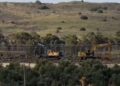
Israel warning messages were issued early Wednesday calling on residents in 16 towns and villages in south Lebanon to leave immediately as the military threatened new attacks against Hezbollah positions. The Israel warning came as cross border hostilities intensified and violence expanded into other parts of Lebanon.
The situation escalated further after Lebanese state media confirmed that four people were killed in an Israeli strike on a building in Baalbek in eastern Lebanon. These developments are unfolding amid a wider regional crisis sparked by joint Israel US strikes that killed Iran’s supreme leader Ayatollah Ali Khamenei which in turn triggered retaliatory actions by Tehran and its allies.
Israel warning and evacuation calls in south Lebanon
Israel’s Arabic language military spokesperson Avichay Adraee issued what he called an urgent warning urging residents in 16 south Lebanon locations to evacuate their homes and move to open areas near the border. The statement did not specify the timing of planned attacks yet indicated imminent military action against Hezbollah fighters.
Residents in these areas have been living under sustained tension as cross border fire has increased since Monday when Hezbollah resumed rocket and drone attacks targeting Israel. The movement said its renewed operations were in retaliation for the killing of Iran’s top leader an event that has reshaped the regional confrontation.
Explosion heard in Beirut as exchanges intensify
An AFP journalist in Beirut reported hearing a loud explosion shortly after midnight on Wednesday. The blast added to the fear gripping the capital as the conflict expands beyond traditionally targeted southern regions.
The Lebanese government has not yet released details regarding the source of the explosion although it occurred during ongoing exchanges of rockets and strikes between Hezbollah and Israel.
Israeli strike in Baalbek kills four
Lebanon’s National News Agency stated that an Israeli airstrike targeted a building in Baalbek killing four people and injuring six others. Rescue teams were working to extract families trapped beneath the rubble.
The Baalbek region is considered a stronghold for Hezbollah which has bases and logistical operations spread across the Bekaa Valley. Attacks in this area indicate a widening of Israeli military operations beyond border zones.
Regional context and Iraqi relevance
The escalation across Lebanon and Israel is part of a broader crisis triggered by large scale Israeli US strikes on Iran. Tehran responded with missile and drone attacks on US aligned states affecting airspace and aviation routes across the Middle East.
For Iraq the closure of regional air corridors and the risk of spillover remain crucial concerns especially as civilian flights over Iraqi airspace remain suspended according to aviation trackers.
Travel chaos as conflict spreads
Governments and airlines worldwide have been coordinating evacuation flights to repatriate stranded citizens after major disruptions across Middle Eastern skies. More than 12,900 flights were cancelled between Saturday and Monday affecting more than one million passengers according to Cirium data.
Countries organising evacuations
Several European states launched airlifts:
• Czech Republic Slovakia Romania Italy and Germany arranged return flights for their nationals.
• Russia repatriated citizens who had fled Iran to Azerbaijan along with others in Egypt.
• The United States organised charter flights from Jordan Saudi Arabia and the UAE and reported assisting more than 9,000 people.
Additional airlines including Indian carriers and British Airways scheduled evacuation services as operations slowly resumed in limited Gulf airports.
Continued suspensions
Airlines such as Air France British Airways LOT Norwegian SAS and Finnair have suspended routes to the region with several extending cancellations until the end of the month.
Conclusion:
The Israel warning to south Lebanon towns reflects a rapidly escalating conflict stretching from Beirut to Baalbek while regional air travel chaos underscores the broader instability triggered by recent military developments. The situation continues to evolve with rising concerns about humanitarian and security implications across the Middle East.