
Israel struck five oil facilities in and around Tehran on Sunday, March 8, 2026, marking a significant expansion of military operations beyond purely military targets to include civilian-industrial energy infrastructure. The strikes killed four workers and triggered fuel distribution disruptions across the Iranian capital, while damage to energy facilities and pollution warnings underscore the widening scope of the conflict that erupted following joint US-Israeli operations on February 28.
The Israeli military stated it had “initiated a wave of strikes targeting the Iranian terror regime military infrastructure across Iran,” with sources confirming that multiple oil depots and a petroleum products transport center in Tehran and surrounding Alborz province were hit. Keramat Veyskarami, CEO of Iran’s National Oil Products Distribution Company, confirmed on state television that four oil storage facilities were targeted, resulting in four deaths, including two oil tanker drivers. The fires were brought under control, though significant damage was sustained.
Toxic Fallout and Environmental Concerns
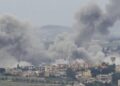
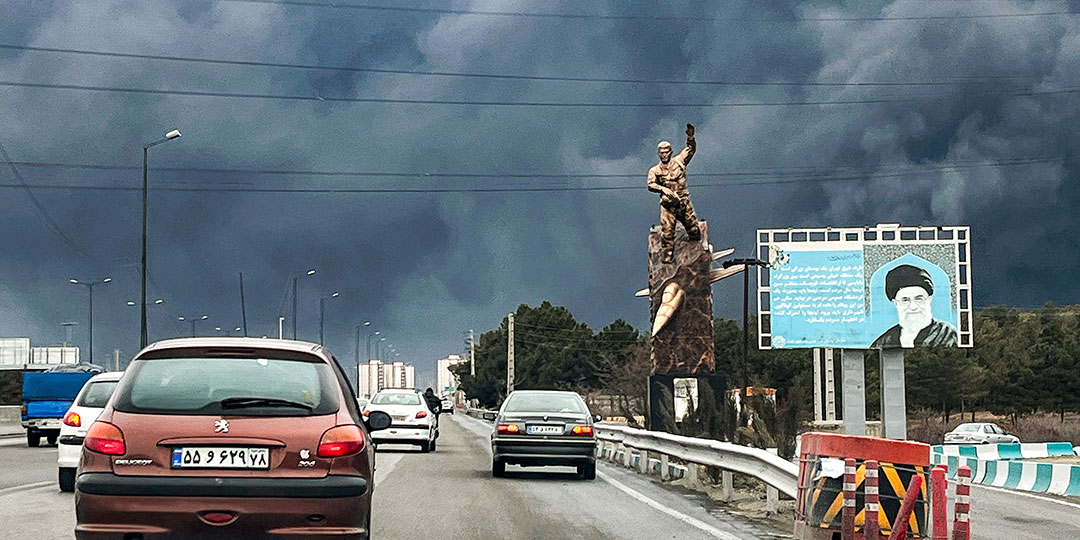
Smoke from the burning oil facilities hung over Tehran throughout the night and into Sunday morning, casting a dark haze across the city as AFP journalists reported. Residents described the lingering smell of burning fuel and noted the darkness persisted even as daylight broke and rain fell on the capital.
The Iranian Red Crescent raised serious environmental alarms, warning that the explosions at the oil depots released “significant quantities of toxic hydrocarbon compounds, sulfur, and nitrogen oxides” into the atmosphere. In a stark warning to residents, the organization noted that “in the event of precipitation, the resulting rain is extremely dangerous and highly acidic,” capable of causing skin burns and severe lung damage.
Iran’s environmental authorities instructed residents to remain indoors to avoid respiratory problems and other health consequences from exposure to the contaminated air.
Fuel Supply Disruptions in Capital
Tehran’s fuel distribution system was severely disrupted following the strikes. Mohammad Sadegh Motamedian, governor of Tehran, stated that “due to damage to the fuel supply network, distribution has been temporarily interrupted,” though he added that efforts to resolve the problem were underway. Despite the scale of the attacks, Veyskarami stated that Iran’s oil depots retained “sufficient gasoline reserves” to maintain essential operations.
Iran’s Military Response and Regional Escalation
In response to the attacks, Iran’s Revolutionary Guards issued statements underscoring the country’s readiness for prolonged conflict. Guards spokesperson Ali Mohammad Naini said on Sunday that “the Armed Forces of the Islamic Republic of Iran are capable of continuing at least a 6-month intense war at the current pace of operations,” according to the Fars news agency.
The Guards also claimed to have targeted “more than 200” locations related to American and Israeli bases and facilities across the region. This escalation occurred as Israeli strikes expanded beyond Iran to include new targets in Lebanon and the broader Middle East.
Beirut Hotel Strike and Regional Spread
On Sunday, the Israeli military also conducted a precision strike on a seaside hotel in central Beirut, claiming to have targeted “key commanders” of the Quds Force, the foreign operations arm of Iran’s Revolutionary Guards. Lebanon’s health ministry reported that the strike killed at least four people at the hotel, with AFP photographers documenting shattered windows and charred walls at the scene.
The conflict’s reach extended across the Gulf region as regional nations reported new attacks:
Saudi Arabia intercepted more than a dozen drones headed for targets in the kingdom, including the diplomatic quarter in Riyadh
Kuwait reported that attacks struck fuel tanks at its international airport
Qatar said Iran fired two cruise missiles and ten ballistic missiles at the country
UAE forces were intercepting incoming missiles and drones
Context and Path to Current Conflict
The current escalation began on February 28, 2026, when joint US-Israeli strikes killed Iran’s supreme leader, Ayatollah Ali Khamenei. This operation triggered a broader regional conflict, with Iran responding with drone and missile strikes targeting Israel and US interests across the Middle East.
The war has now spread into its second week with mounting casualties:
At least 926 civilians killed in Iran (according to Iranian health ministry figures on Friday)
Approximately 6,000 wounded in Iran
Over 294 people killed in Lebanon from Israeli airstrikes
Dozens of deaths across regional targets
Israeli Prime Minister Benjamin Netanyahu vowed to continue the campaign “with all our force,” stating that Israel had achieved “almost total control of the skies over the Iranian capital” and suggesting more strikes were planned.
US Involvement and International Reaction
US President Donald Trump attended a ceremony honoring six American service members killed in a drone strike on a US base in Kuwait on the previous Sunday. Trump repeated claims that Iran had been close to developing nuclear weapons and suggested that US troops might eventually be needed to secure Iran’s enriched uranium stockpiles.
Iran’s security chief Ali Larijani accused the Trump administration of attempting to replicate a scenario similar to the 2019 ouster of Venezuela’s Nicolas Maduro, saying their original plan had failed. “Their perception was that it would be like Venezuela, they would strike, take control and it would be over, but now they are trapped,” he stated.
China’s top diplomat Wang Yi called for an immediate halt to the conflict, stating on Sunday that “this is a war that should never have happened” and warning that “a strong fist does not mean strong reason. The world cannot return to the law of the jungle.”
Conclusion:
As the conflict enters its second week with no clear diplomatic path forward, the targeting of civilian energy infrastructure marks a shift toward economic pressure tactics. The disruption of Tehran’s fuel supply and the environmental contamination from burning oil facilities demonstrate that the war’s impact increasingly extends beyond military targets to civilian populations and critical services. With Iran’s Revolutionary Guards asserting a six-month capacity for sustained operations and Israeli leadership signaling continued military escalation, regional and international stakeholders face a prolonged and widening conflict with unpredictable economic and humanitarian consequences.