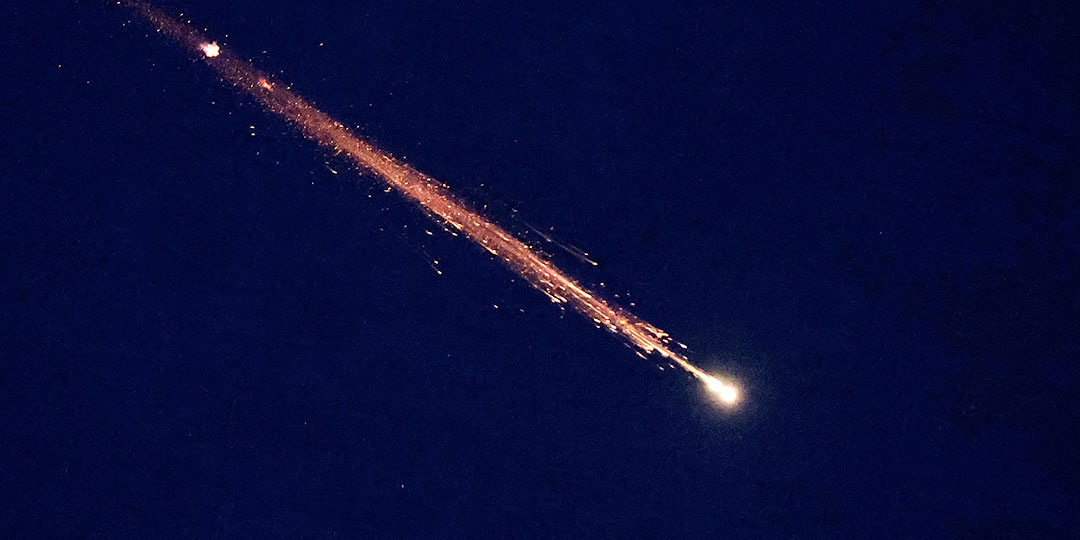

Iran escalated its military campaign against Gulf states on Sunday, launching a second wave of missile and drone attacks targeting infrastructure across the region. The United Arab Emirates, Kuwait, Bahrain, Saudi Arabia, and Qatar all reported active interceptions by their air defence systems. This latest assault marks a continuation of Tehran’s military response following a major air campaign launched by the United States and Israel against Iran, which has already caused significant casualties and damage across Gulf territory.
The attacks struck critical infrastructure, including fuel storage facilities at Kuwait’s international airport and civilian installations in Bahrain, while air defence systems across the region worked to intercept incoming threats.
Coordinated Air Defence Response Across the Region
Multiple Gulf states simultaneously activated their air defence systems on Sunday to counter the Iranian strike. The United Arab Emirates reported that its air defence network was “currently responding to incoming missile and drone threats from Iran,” with defence officials confirming that explosion sounds heard across the country were the result of active interceptions.
Kuwait’s military similarly announced it was “currently engaging hostile missile and drone attacks,” attributing explosion sounds to successful interception operations. Saudi Arabia’s defence ministry reported the most significant interception success, stating it had shot down 33 drones, with 26 targeting Riyadh and surrounding areas. Qatar reported intercepting 10 ballistic missiles and two cruise missiles without casualties.
Infrastructure Damage and Civilian Impact
The Iranian strikes caused tangible damage to Gulf infrastructure and civilian areas:
Kuwait’s international airport sustained damage to fuel storage tanks during a drone attack, with a fire brought under control by airport authorities
A water desalination facility in Bahrain was damaged in the attack, though officials later confirmed no impact on water supply capacity
Bahrain’s interior ministry reported three people injured by falling missile debris, with damage to a university building in the Muharraq area
Kuwait’s main social security building sustained material damage requiring temporary closure
Falling debris and fragments from interception operations caused damage to civilian facilities across multiple locations
Regional Casualty Toll Rises
Kuwait’s interior ministry confirmed that two border guards were killed while performing their duties, though details of the circumstances remain unclear. A Pakistani national in Dubai was killed by debris from an air defence interception on Saturday.
According to an AFP count, at least 16 people, including eight civilians, have been killed across Gulf states since the broader conflict began. The mounting civilian casualties reflect the expanding scope of the regional military escalation.
Critical Infrastructure Under Threat
Beyond military targets, civilian and economic infrastructure has become a focal point of the Iranian campaign. Kuwait’s national oil company announced a precautionary cut to crude production in response to the attacks, signaling economic concerns across the region. The targeting of desalination plants and airport fuel facilities highlights Iran’s strategy of pressuring Gulf states economically and strategically.
Mixed Messages from Tehran Leadership
Iran’s leadership has sent contradictory signals regarding future strikes. On Saturday, Iranian President Massoud Pezeshkian apologized to neighbouring countries hosting US military bases for attacks on their territory. However, hours later, Iran’s judiciary chief announced that military strikes would continue against sites in Gulf countries deemed to be “at the disposal of the enemy,” undercutting the presidential apology.
President Pezeshkian also warned on Sunday that Iran “will be forced to respond” if neighbouring countries allow their territory to be used for attacks on the Islamic republic, signalling ongoing tensions despite the apology.
Dubai Airport Closure and War-Time Footing
Dubai’s main international airport, the world’s busiest for international traffic, was briefly closed on Saturday after authorities reported the interception of an unidentified aerial object nearby. A verified AFP video recorded the sound of a drone followed by a loud explosion and smoke plumes near an airport concourse.
UAE President Mohammed bin Zayed Al Nahyan delivered a rare televised address stating that the Emirates were in “a period of war” and pledged that the country “will emerge stronger” from the conflict. The statement underscored the gravity of the security situation across the Gulf region.
Context of the Broader Regional Conflict
These attacks represent Tehran’s response to a sustained US and Israeli air campaign against Iran. The escalating cycle of strikes and counter-strikes has drawn multiple Gulf states into the conflict, with their air defences becoming frontline assets in the regional power struggle. The involvement of civilian infrastructure indicates a shift toward broader economic and strategic pressure on Gulf nations, particularly those hosting Western military assets.
Conclusion:
The second wave of Iranian attacks on Gulf states demonstrates the deepening military escalation in the region, with critical infrastructure increasingly in the crosshairs. While Gulf air defence systems have successfully intercepted the majority of incoming threats, civilian casualties and infrastructure damage continue to mount. The contradictory messages from Iranian leadership regarding future strikes leave the region in a state of heightened uncertainty and military readiness.