
Israel’s military launched a major new offensive on Friday, March 13, striking over 200 targets across western and central Iran while simultaneously renewing intensive air campaigns against Hezbollah in Lebanon. The escalation marked the 14th day of Israel’s bombing campaign against Iran and represented a dramatic intensification of operations across multiple fronts in the Middle East conflict.
Prime Minister Benjamin Netanyahu issued a stark ultimatum to Lebanon’s government during a press conference, warning that if Beirut failed to disarm Hezbollah, Israel would accomplish the task “on the ground” using ground forces. The warning signaled Israel’s readiness to expand military operations into Lebanese territory on a larger scale if diplomatic pressure failed to achieve disarmament of the Iran-backed militant group.
Israeli Military Strikes Over 200 Targets in Iran
Israel’s military announced Friday that it had struck more than 200 targets in western and central Iran during the previous day. The strikes specifically targeted ballistic missile launchers, air defense systems, and weapon production facilities across the Iranian landscape.
Israeli fighter jets carried out what the military described as “20 wide-scale strikes” concentrated on infrastructure critical to Iran’s military capabilities. The targeting pattern reflected a strategy aimed at systematically degrading Iran’s capacity to conduct offensive operations and defend against continued Israeli air operations.
Tehran Targeted on 14th Day of Campaign
The Israeli military announced a new wave of strikes targeting Tehran itself on Friday morning, describing it as an attack on “infrastructure of the Iranian terror regime across Tehran.” The targeting of Iran’s capital represented a significant escalation, bringing the bombing campaign deeper into Iranian territory and hitting what Israeli military officials characterized as core regime facilities.
The announcement indicated that Israeli planners were expanding the geographic scope and intensity of operations, moving beyond primarily military and energy infrastructure to target what they described as regime infrastructure broadly.
Netanyahu Issues Ultimatum to Lebanese Government
Prime Minister Netanyahu held a press conference Thursday warning Lebanon’s government of the consequences of allowing Hezbollah to continue operations. “You are playing with fire,” Netanyahu told Lebanese authorities, referencing Beirut’s stated commitment to disarm the militant group.
Netanyahu’s warning was explicit and unambiguous: “If you do not do so, it is clear that we will do so. How will we do it? On the ground. With ground forces and other things.”
The Israeli premier added that he had conveyed this warning to the Lebanese government “a few days ago,” indicating that the ultimatum represented a deliberate policy position rather than an impulsive statement. The timing of the warning coincided with intensified Israeli strikes on Beirut and a marked increase in Israeli ground force deployments along the Lebanese border.
Renewed Israeli Strikes on Beirut and Lebanon
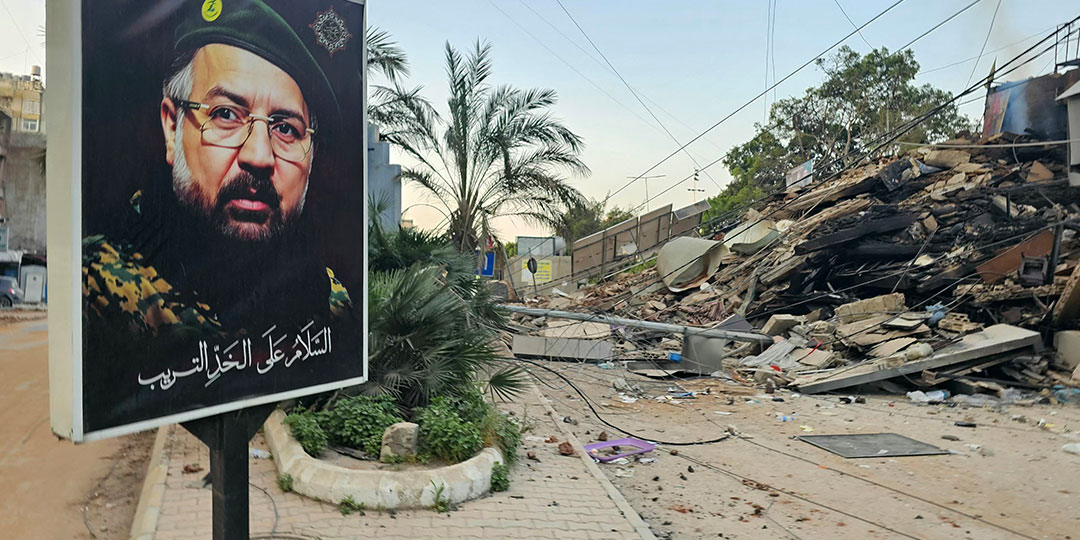
Israel renewed intensive air strikes on Beirut Thursday, with multiple waves hitting the capital’s southern suburbs, areas historically associated with Hezbollah operations. The Israeli military announced “a wave of strikes targeting Hezbollah terrorist infrastructure across Beirut,” with video footage showing dark smoke rising from multiple districts in the city center.
One strike targeted a building in Bashoura, adjacent to Beirut’s commercial center where major companies and government institutions are located. An Israeli army spokesperson accused Hezbollah of concealing “millions of dollars” under the building, suggesting that the targeting extended beyond strictly military infrastructure to financial assets.
A second strike hit a Beirut branch of Al Qard Al Hassan, a financial institution linked to Hezbollah, located in the downtown neighborhood of Zoukak El-Blat. The targeting of financial infrastructure indicated Israeli strategy to disrupt Hezbollah’s economic operations in addition to military capabilities.
Later Thursday, Israel’s military struck multiple Hezbollah command posts in additional waves targeting Beirut and southern Lebanon. The military released video footage allegedly showing destruction of command centers, though AFP could not immediately verify the authenticity of released materials.
Civilian Casualties and Displacement
The escalated Israeli campaign has produced significant civilian casualties and displacement across Lebanon. An Israeli overnight strike on Ramlet al-Bayda, Beirut’s public beachfront, killed 12 people and wounded 28, according to Lebanon’s health ministry.
An AFP correspondent at the scene documented blood stains on pavement and damaged vehicles, with the normally crowded public beach sealed off by security forces. Aseel Habbaj, a displaced woman sheltering in a tent after fleeing bombings elsewhere, witnessed the strike: “We saw dead people on the ground.”
Israeli strikes on southern Lebanon killed at least nine people in the town of Arkey, including five children, four of them siblings, according to municipal sources. A separate strike on the Christian village of Ein Ebel killed three men who were installing a satellite TV dish on a roof.
A strike on the Lebanese University campus killed the head of the faculty of sciences and another professor, striking what should be a civilian educational institution protected from military targeting.
Displacement Crisis and Humanitarian Impact
The violence has killed more than 687 people in Lebanon according to national authorities, while more than 800,000 people have been registered as displaced. World Food Programme Deputy Executive Director Carl Skau, visiting Beirut, described the displacement as “unique” in the context of regional conflict.
“Some 800,000 people in a week. That’s massive,” Skau told AFP, highlighting the unprecedented scale of internal displacement within Lebanon.
Displaced persons have been sleeping rough or sheltering in tents on Beirut streets, including in Ramlet al-Bayda beach area, where some shelters were struck by shrapnel from Israeli strikes. Dalal al-Sayed, who fled bombings in southern Lebanon and pitched a tent at the seaside because “the last thing we expected was Israel to hit Beirut,” expressed the desperation of displaced families.
“My family could not afford to rent an apartment,” she said. “We won’t leave, we will stay here even if we die.”
Lebanese Government Response and Iran-Hezbollah Coordination
Lebanese Prime Minister Nawaf Salam addressed the nation Thursday, acknowledging the crisis: “I address you today while Beirut is being bombed, as are its suburbs, our south, and our Bekaa. It is a war we did not want; on the contrary, we are working day and night to bring it to an end.”
The Lebanese government’s foreign ministry drew a “firm objection” to a joint Iranian-Hezbollah missile and drone operation announced Thursday by Iran’s Revolutionary Guards. The operation targeted Israeli military positions, but the Lebanese government’s objection indicated concerns about being drawn into direct Iran-Israel confrontation.
Hezbollah Military Response
Hezbollah announced Thursday that it had carried out multiple attacks against Israel, including an operation targeting an air defense system near Caesarea, where Prime Minister Netanyahu maintains a private residence. The militant group’s continued operational capability despite Israeli strikes indicated that air campaigns alone had not neutralized the organization’s capacity to conduct attacks.
Israeli Ground Force Preparations
Israeli Defense Minister Israel Katz announced that he had ordered troops to “prepare for expanding” attacks in Lebanon, signaling plans for intensified ground operations. Israel issued an evacuation warning to all residents south of the Zahrani River, approximately 45 kilometers from the Israeli border, suggesting preparation for expanded ground operations in Lebanese territory.
The combination of air strikes, artillery fire, and ground force positioning indicated Israeli strategy to establish military control over southern Lebanon regardless of Hezbollah’s organizational capacity to resist.
Strategic Context and Regional Escalation
Lebanon was drawn into the Middle East war the previous week when Hezbollah attacked Israel in retaliation for the killing of Iranian Supreme Leader Ayatollah Ali Khamenei in US-Israeli strikes. Israel, which had maintained strikes against Lebanon even during the 2024 ceasefire period, escalated operations dramatically following the Khamenei killing.
The joint Iranian-Hezbollah operation announced Thursday indicated deepening coordination between Tehran and its Lebanese proxy, suggesting the conflict had evolved from a bilateral Israeli-Hezbollah dispute into a triangular Iran-Israel-Lebanon confrontation with significant implications for regional stability.
Conclusion:
Israel’s escalated campaign involving 200+ strikes in Iran and renewed intensive operations in Lebanon, combined with Netanyahu’s ultimatum to disarm Hezbollah, signals a new phase of the Middle East conflict. The expanding geographic scope, increased civilian casualties, and unprecedented displacement in Lebanon, coupled with continued Iranian military operations, indicate the conflict is intensifying rather than waning despite Trump’s earlier optimistic assessments. The Lebanese government faces impossible pressure from both Israeli military force and Iranian-Hezbollah coordination, while civilian populations bear the humanitarian cost of the expanding war.